According to a recent study by GVM Gesellschaft für Verpackungsmarktforschung mbH, the proportion of recycled PET (R-PET) in bottle production and the recycling rate in Germany have increased significantly. At the same time, material consumption has fallen due to optimised bottle weights.
In 2023, a total of 380.6 kilotonnes of PET preforms and bottles were produced in Germany - 45 kilotonnes less than in 2021, which corresponds to a decrease of 10.5%. This result is due in particular to due to continuous weight optimisation of PET bottles. The use of short threads and the Conversion to tethered caps material consumption has also been reduced. These measures help to conserve resources and at the same time improve the recyclability of the bottles.
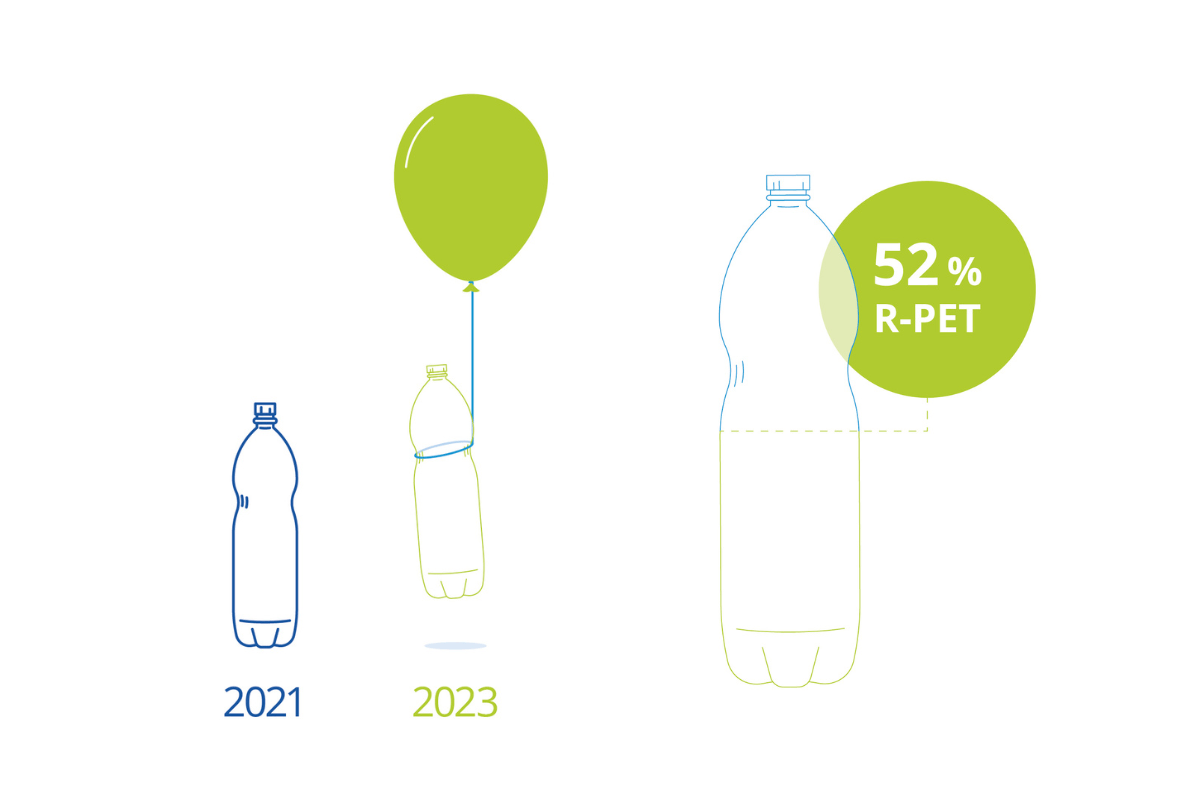
There is a particularly positive trend in the use of recyclates. In 2023, the Share of R-PET in German preform production exceeds that of virgin material for the first time51.2 per cent of the material used came from recycled PET. In terms of consumption, the proportion of R-PET also rose significantly to 46.9 per cent of all bottles processed in Germany and 48 per cent of single-use bottles with a deposit. This means that the use of R-PET has increased by 6.4 and 9.2 percentage points respectively since 2021.

„The continuous increase in the proportion of recycled material demonstrates the innovative strength and commitment to sustainability of the German PET industry.“
Dr Isabell Schmidt, Managing Director Circular Economy of the IK Industrievereinigung Kunststoffverpackungen
Circular economy and foreign trade in the PET sector
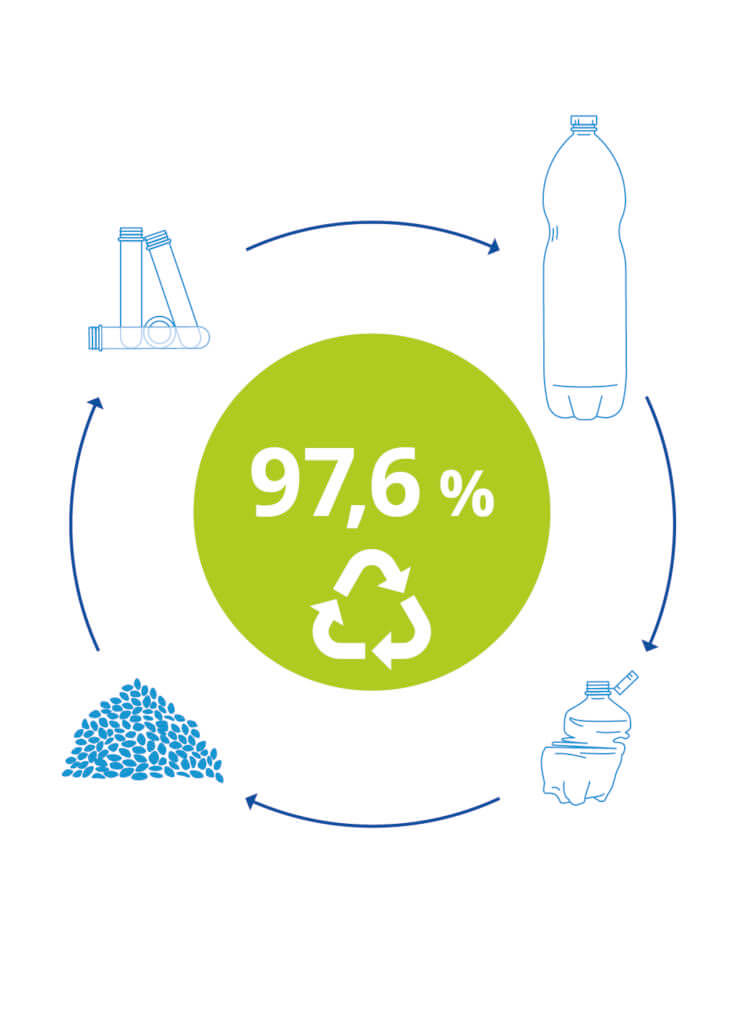
According to the GVM study, Germany also remains a pioneer in the PET circular economy. In 2023, 97.6 per cent of PET beverage bottles were recycled, which once again confirms the effectiveness of the deposit system. 99 per cent of all PET bottles were collected in Germany, meaning that almost all PET waste was recycled. „With a recycling rate of almost 98%, we are a global leader,“ emphasises Schmidt. A large proportion of the recycled material is fed directly back into the production process: 194.8 kilotonnes of R-PET were produced in 2023 from the bottle-to-bottle cycle, which emphasises the recyclability of the material.
On the trade side, both imports and exports of empty preforms and bottles have decreased compared to 2021. The GVM estimates the import surplus for 2023 at 39 kilotonnes. At the same time, 77 per cent of the beverages bottled in Germany are filled into bottles or preforms that have been produced domestically. There was an export surplus of 11 kilotonnes in the trade in filled bottles, although this has fallen by 7 kilotonnes compared to 2021.
R-PET demand remains high despite price increases
The study also shows an increase in the use of R-PET despite price turbulence on the market for recycled plastic. Large bottlers have increasingly committed to higher recycled content, which has contributed to stable growth in the proportion of R-PET. These voluntary commitments by companies have played a key role in the corresponding increase. This trend is expected to continue in the coming years, particularly with regard to future requirements due to stricter legal requirements at EU level.
Today, German PET recycling plants are so efficient that they can now process more material than is available in Germany. The import of PET bottles therefore remains a necessary measure, to utilise the existing recycling capacities. An import surplus of around 20,000 tonnes was necessary in 2023 in order to fully utilise the capacity of the plants.
Source: Forum PET