Pla.to develops recycling solution for cosmetic bottles made of HDPE

Pla.to Technology has now presented the first industrial technology solution for bottle-to-bottle recycling of cosmetic bottles made of high-density polyethylene (HDPE).

Pla.to Technology presents the first industrial technology solution for bottle-to-bottle recycling of cosmetics bottles made of high-density polyethylene (HDPE). In addition to the machine and plant manufacturer, Beiersdorf AG and the Fraunhofer Institute for Process Engineering and Packaging IVV were involved in the development.

At the Pla.to technical centre in Görlitz, used shampoo and shower gel bottles were recycled almost completely and without any loss of quality in a water-saving process. The material obtained from the bimodal high-density polyethylene rHDPE granulate could be completely reintroduced into the production cycle. New cosmetic bottles were then produced exclusively from recycled granulate, which met the quality standards of new products.

Pla.to thus offers the technology for a closed HDPE cycle - a closed-loop system. without the addition of new granulate, which is necessary for other processes.

„Our solution is a sustainable and water-saving way to fully recycle HDPE in large quantities.“

Display

Heinz R. Schnettler, Pla.to-Managing Director 

HDPE is suitable due to its high stability and tear resistance very good for numerous areas of application. In the cosmetics industry, bottles are usually produced by extrusion blow moulding and labelled. The closure is usually made of polypropylene (PP).

Cosmetic bottles made from rHDPE
rHDPE bottles with new PP closure (image: Pla.to Technology).

Efficient recycling with little waste water

Pla.to has the used bottles on our own systems in our in-house demonstration centre processed. For recycling, they are first sorted by colour with the caps and crushed using a granulator.

A dry cleaner Then removes wastewater-free ingredients inside the bottles. Stubborn dirt is first soaked in the friction washer using friction and hot water and then removed from the plastic.

The label adhesive is then removed and the material is mechanically and thermally dried. The air flow of the zig-zag sifter Finally, separates the bottle, cap and label particles according to their bulk density.

To separate the HDPE from the other components for reuse at the end, the polypropylene is separated using near-infrared spectroscopy (NIR). After compounding, it is regranulated into rHDPE and can be reused directly to produce new bottles.

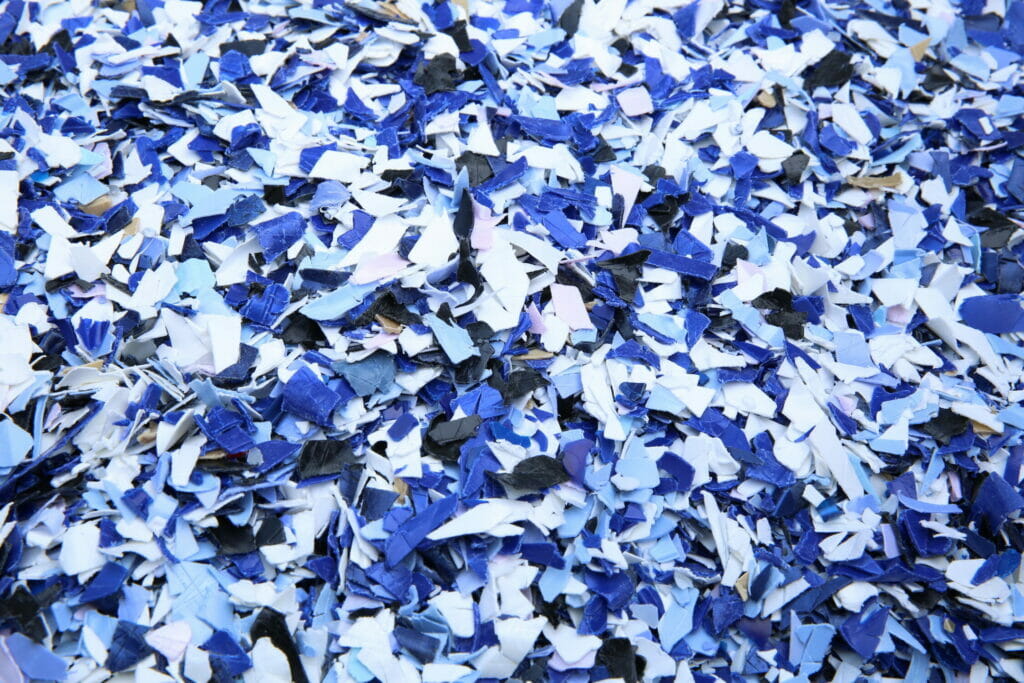
Flakes before sorting
HDPE and PP flakes before sorting using near-infrared spectroscopy (NIR) (image: Pla.to Technology).

Can be used like HDPE bottles made from virgin material

In the project, Pla.to was able to recycle rHDPE for the production of 20,000 bottles in this way. These have passed all the necessary testsThey are dimensionally stable, stable, odourless and have no defects such as specks or inclusions. Like containers made from virgin material, they can be labelled and close tightly with a newly fitted PP closure.

„This proves that HDPE is efficient, sustainable and low-water Fully recycled on an industrial scale can be realised,“ emphasises Managing Director Heinz R. Schnettler.

SourcePla.to GmbH 

Recycling - More news

VerpackDG: What will change with the new Packaging Act

With the new VerpackDG, the German government is setting the course for the implementation of the EU Packaging Regulation (PPWR). From massively expanded approval obligations and binding waste prevention budgets to ambitious recycling quotas from 2028 - find out here what bureaucratic and financial changes your company will face from 12 August 2026.
Read more "