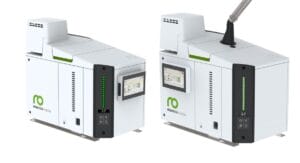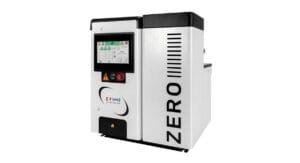
Valco Melton shows new adhesive application systems
Valco Melton will be presenting innovative adhesive application systems at Interpack 2026 that are designed to increase both efficiency and sustainability.
Read more " 




Scientists at the University of Berkeley (California, USA) have set themselves the goal of to convert plastic bags and their material - polyethylene (PE) - into something of higher quality in the future. PE itself does not have good adhesive properties. The research team led by John Hartwig (Chair of Organic Chemistry at the University of Berkeley) therefore wanted to find out whether functionalisation with hydroxyl and keto groups would improve the adhesion of the plastic. They chose a ruthenium-based catalyst for this purpose.

The result: a PE connection that retains the original properties of the plastic, but also adheres firmly to metal, for example and can be painted at the same time. Even the introduction of a relatively small amount of functional groups was able to increase the adhesion of the PE by a factor of twenty. At the same time, the modified PE retains its original material properties and would therefore be a Option for numerous bonding applications.
The scientists' process is not yet economically viable for industrial use. However, the research results are an important milestone on the way to recycling plastics into sustainable, high-quality products.
Source: Industrieverband Klebstoff e.V.