The recently published Green Paper by the VDI Verein Deutscher Ingenieure e. V. (Association of German Engineers) describes how industry and politics can actively drive forward the transformation to circular value creation in the plastics sector. A VDI round table brought together experts from various sectors to develop the paper.
The results and recommendations for action developed as part of the round table, which was initiated by the VDI, have just been published in the so-called Green Paper under the title „Rethinking the circular economy for plastics. How the transformation to circular value creation can succeed.“ has been published. The green paper uses a closed-loop diagram to illustrate and describe the Tasks and responsibilities of those involved in the cycle.
Circular economy as a top corporate goal
The authors of the paper have defined four key areas of action: the plastics industry must be (re)organised for the circular economy. Closing the loop must be made a task for everyone involved. Real incentives for a circular plastics economy are to be created and finally products are designed for the cycle. This will create the conditions for successfully implementing the necessary transformation from linear value creation to a circular economy.

„For the transformation to a circular economy, we need a paradigm shift along the entire value chain. It is precisely this systemic perspective that the VDI Green Paper addresses.“ Matthias Lesch, Managing Director of the Pöppelmann Group
The Pöppelmann Group is already involved in this process: in a position paper published on the Group's website under the heading „Circular Economy“, the Group defines the path to a genuine circular economy as follows one of the key strategic challenges - both for the company itself and for the entire plastics industry. The commitment to a turnaround towards a functioning circular economy has long been one of the Group's most important corporate goals. To this end, the company founded the initiative Pöppelmann blue, which bundles all efforts for circular concepts of the four divisions.
Taking responsibility together
To realise the circular economy Pöppelmann at all levels of the value chain. „We are convinced that we can only succeed in bridging the innovation gap by working together. This is achieved through the right framework conditions, targeted incentives and guidelines, secure material flows, joint innovations - and above all through conscious decisions and consistent action“ emphasises Matthias Lesch.
In this way, decision-makers at brand manufacturers can promote a genuine circular economy with recyclable packaging. Consumers exert influence through their purchasing decisions and support recycling through the proper separation of waste. Political decision-makers ensure a successful circular economy with appropriate framework conditions. Decision-makers in the retail sector provide support by demanding proof of circularity for packaging. Recyclers supply PCR recyclates in accordance with uniform standards and achieve acceptance for higher prices.
Implementation in all divisions
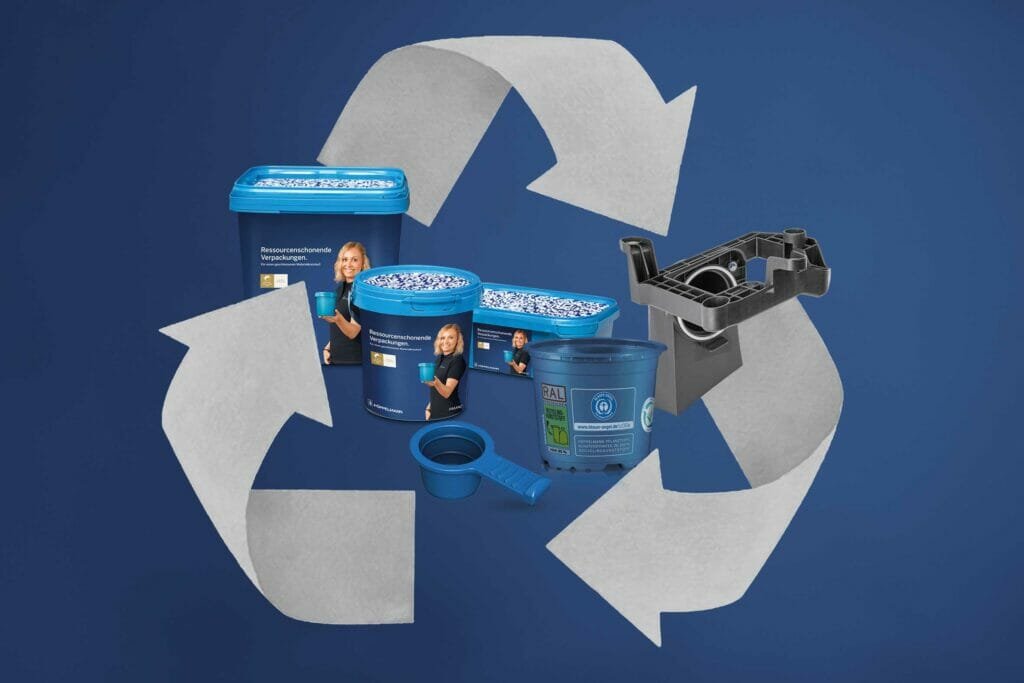
The Lohner plastics processor itself has already closed-loop solutions in all business areas that are ecologically sound, technically feasible and economically viable - and therefore sustainable. This starts with fully closed-loop plant pots made from post-consumer recycled material and continues with PCR protective caps and stoppers for industrial applications as well as non-food universal packaging, also made from 100 per cent PCR in the plastic used.
Source: Pöppelmann