If several polygon scanners are used in sorting machines, the scanners must be synchronised with each other. Kugler GmbH uses a frequency inverter from Sieb & Meyer for this purpose.
18 March 2020
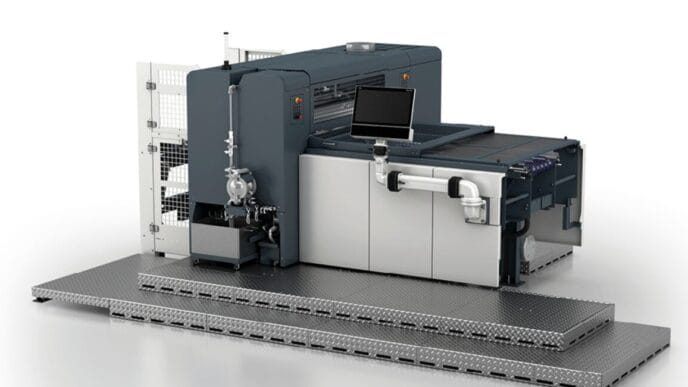
Polygon scanner in use for sorting food. (Image: Adobe Stock/Sunshine Seeds)
When several polygon scanners are used in sorting machines, for example for food, the scanners must be synchronised with each other. The SD2B plus frequency inverter from Sieb & Meyer, Lüneburg, in conjunction with encoders, makes this possible for polygon scanners from Kugler GmbH, based in Salem.
In 1983, Lothar Kugler built an interferometer for the first time in Salem on Lake Constance. Non-contact optical flatness measurement. A flourishing company was created on the basis of this innovation, as there was great interest in the market. Today, Kugler GmbH manufactures precision machines that are among the best in the world.
The second business division is the High-power laser optics. „Some of our products and solutions are at the interface between optics and mechanical engineering. These include the polygon scanners, for example,“ says Dr Michael Lehndorff, responsible for research and development at Kugler GmbH.
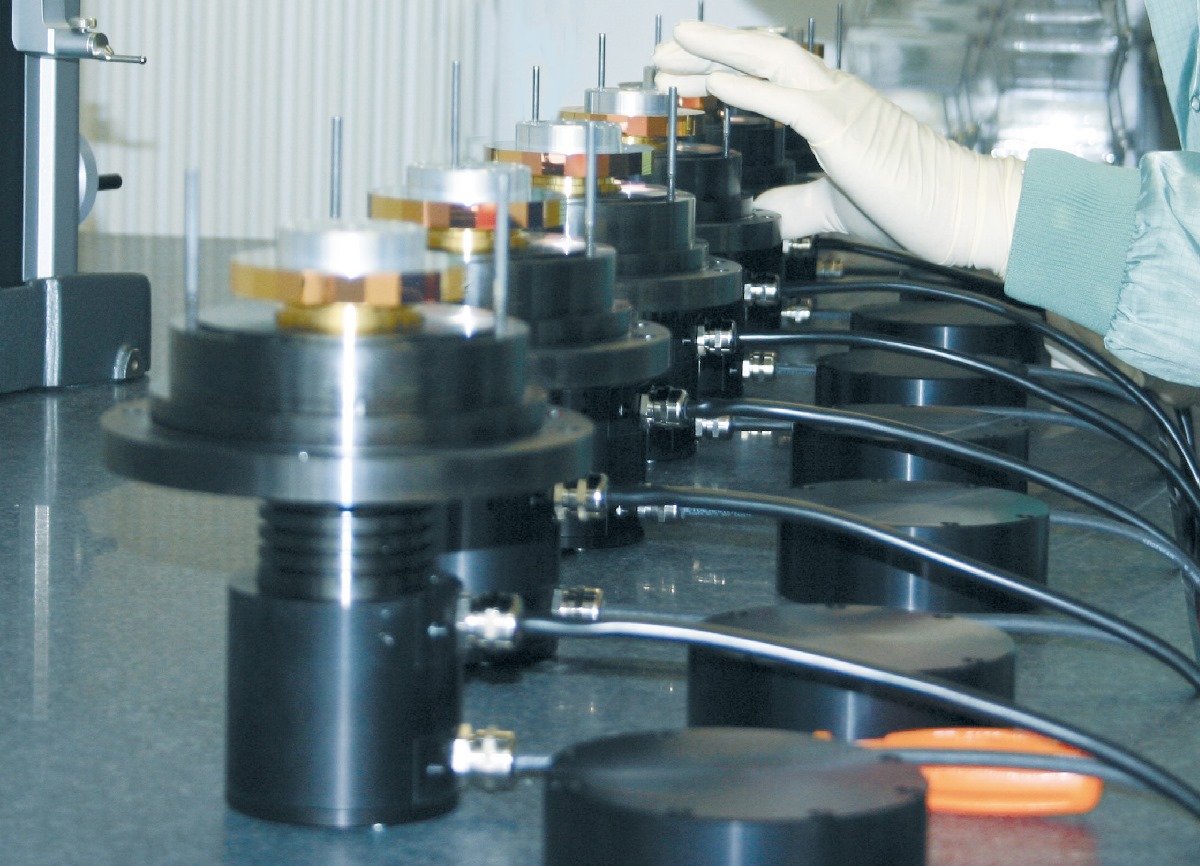
With the help of polygon scanners, parts such as sweets can be optically captured and assigned. (Image: Kugler)
Sorting food with polygon scanners
Polygon scanners are based on special optics that can be used to deflect laser beams, among other things. They can Mounted on rotary motors so that the optics are flexible. The beam angle depends on the position of the individual facets and can be varied by rotation.
Display
„Polygon scanners are used in many different areas and products, from barcode scanners to eye lasers,“ explains Dr Michael Lehndorff. „A relatively new development is that we are also supplying manufacturers of sorting machines.“
These customers' machines mainly sort foodstuffs, such as sweets. The piece goods to be sorted fall over a width of typically one metre. like a curtain down. With the help of the polygon scanner, the laser can Visualise and assign parts. In the next step, the piece goods are then blown into the right channel and sent for further processing.
For Kugler, the new clientele also meant a rethink regarding the Control of the polygon scanners. This is because several scanners are required in sorting machines, which are interconnected. synchronised have to be made.
The manufacturers demanded a complete package including an inexpensive but precise control system - and in larger quantities. This was also new for Kugler: the customers usually took care of the controls and drive controllers themselves.
„In addition to the frequency inverters for our in-house machines, which drive tool spindles, for example, SIEB & MEYER had a suitable frequency inverter in its programme for us: the SD2B, which has been available in a Plus version with additional functions since 2017,“ recalls Dr Michael Lehndorff.
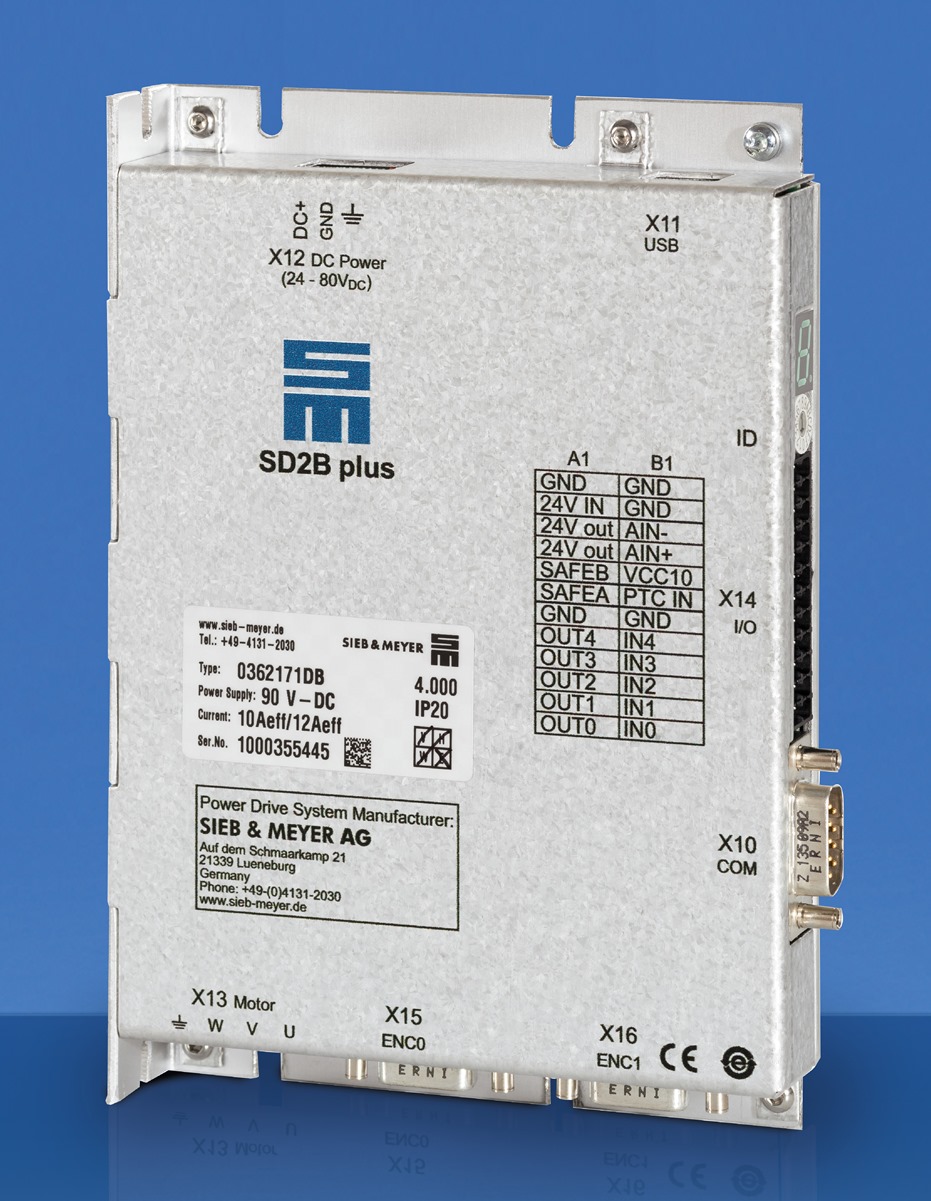
The SD2B plus from Sieb & Meyer enables flexible control in the polygon scanners. (Image: Sieb & Meyer) [infotext]The SD2B plus enables sensor-based control on the basis of TTL encoders. This allows several high-speed motors to be operated at synchronised angles up to a speed of 120,000 rpm in master/slave mode. The IP20 housing takes up very little space thanks to its low overall height of 25 millimetres. [/infotext]
Synchronise multiple scanners
The sensor-based control on the basis of TTL encoders is a great advantage for Kugler, as it allows the Synchronisation of multiple scannersEach scanner has an encoder that is read by the SD2B plus. This allows the speeds and the position of the facets in relation to each other to be precisely determined and controlled.
Further advantages of the SD2B plus are the many already integrated functions such as the braking resistor and the internal logic power supply. The SD2B plus is also very compact and takes up little space: this is a clear added value for many end customers.
Torsten Blankenburg, Sieb & Meyer AG (Image: Sieb & Meyer)
„Maximum performance at low system costs, low space requirements and a long service life: that's what our frequency inverters and servo drives from the SD2x series stand for.“ Torsten Blankenburg, Chief Technology Officer of Sieb & Meyer AG (Image: Sieb & Meyer)
Sensorless and yet extremely precise
The experts at Kugler are particularly enthusiastic about the fact that the rotary encoder on the motor can be omitted in applications with a single scanner, as the SD2B plus also has a sensorless control made possible.
Enormous precision with signal stability in the range of a few nanoseconds is possible when the SD2B plus receives the synchronisation signal from a so-called facet detector: This involves an additional laser beam hitting the polygon outside the effective range. Whenever a facet passes, the laser signal is reflected onto the detector and triggers a synchronisation signal. Trigger pulse out. This principle, which is used very successfully by one of Kugler's customers, enables much more precise operation than with an encoder.
Markus Finselberger, Sieb & Meyer (Image: Sieb & Meyer)
„Encoders are not necessary for systems with individual polygon scanners: Here, the SD2B plus frequency inverter provides encoderless control. The Flexible design of the systems with just one frequency inverter is not only an advantage for Kugler, but also for the end customer.“ Markus Finselberger, Key Account Manager Drive Electronics at Sieb & Meyer
Generally speaking, the polygon scanners from Kugler are mostly customised to the respective requirements This is especially true for customers who only require a single scanner. This in turn means that the frequency inverter must also be able to adapt flexibly to changing electrical conditions.
„In the past, we actually had to do this by hand and re-solder resistors and capacitors on the circuit board,“ recalls Dr Michael Lehndorff. „Today, you can do this quickly and easily digitally. The Software drivemaster2 from Sieb & Meyer supports us very well.“
[infotext icon]With the SD2x product series, Sieb & Meyer provides its customers with a wide range of standard devices. The portfolio of innovative frequency inverters and servo drives covers a power range from 0.3 to 432 kVA and output frequencies from 0 to 8,000 Hz, which corresponds to a speed of 480,000 rpm. Different control methods and device topologies ensure that the optimum solution can be found for every application. In addition, Sieb & Meyer also offers customised adaptations and individually designed devices - allowing frequency inverters and servo drives to be integrated into an overall system in the best possible way. [/infotext]