Printing inks for packaging and labels only make up a small part of the packaging, but are crucial for its attractiveness and the provision of information. Domino Printing Sciences has analysed the requirements that the European Packaging Regulation places on the development of printing inks.
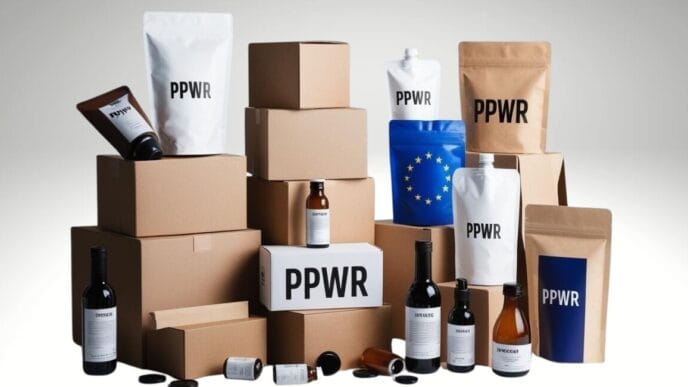
The EU Packaging and Packaging Waste Regulation (PPWR) affects the entire lifecycle of packaging, and packaging designers, ink developers, material suppliers, converters, brands and recyclers must work together to comply. Natasha Jeremic, Ink Development Manager at Domino Printing Sciences, has been analysing the Effects of the PPWR on the development of printing inks for printed packaging and labels.
„Reducing packaging weight and volume is one of the main objectives of the PPWR. Ink consumption is also limited to a certain proportion of the total weight of the packaging in order to minimise contamination during the recycling process. This limit is currently ten per cent of the packaging weight, including printing inks, adhesives, varnishes and decorations - a value that can be reduced in the future.“
Natasha Jeremic, Ink Development Manager at Domino Printing Sciences
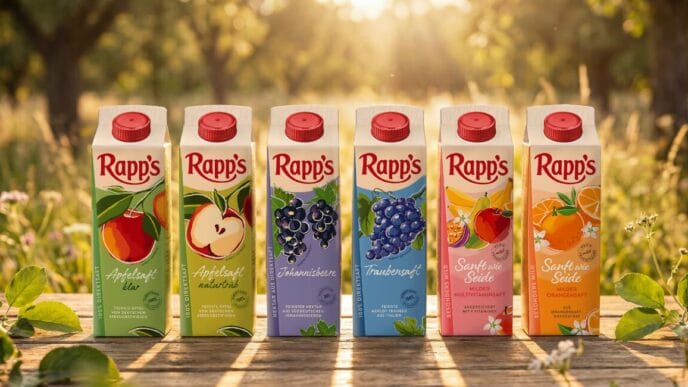
Brand manufacturers could therefore dispense with printed labels in future and opt for printing directly onto the object. „It is expected that printing directly onto the packaging using inkjet technology, QR codes on bottle caps, for example, are becoming increasingly popular. QR codes contain all the information that is usually on the label,“ says Natasha Jeremic.

Optimisation for packaging recycling
In future, PPWR-compliant packaging must contain more recycled material or consist of fibre-based, compostable materials. However, the performance of printing inks is heavily dependent on the substrate; an ink that works well on one substrate does not necessarily produce the same print quality, durability and colour intensity on another. New materials therefore pose challenges for processors and ink developers.
However, one of the biggest challenges for printing ink and packaging manufacturers will be to maintain the functionality and advertising value of the packaging and at the same time - particularly in the case of food packaging - to guarantee the safety and freshness of the products. Developers of printing inks must therefore New functional coatings, printing ink formulations and primers to ensure the performance and safety of inks when printing on the new PPWR-compliant materials.
In terms of recyclability, the focus is on the residue-free removal of labels, adhesives and printed products. The main issue here is deinking, as colour pigments and large-area UV coating impair the recycling process. Labels are currently removed in a hot, alkaline water bath between 65 °C and 85 °C. However, these temperatures and the effect of alkalis dissolve the colour pigments. However, at these temperatures and when exposed to alkalis, the colour pigments dissolve, discolouring the water bath and affecting the colour, quality and future use of the recyclate.
Work has already begun on the development of processes, materials and adhesives that facilitate the deinking and removal of labels at lower temperatures. This also includes hazardous substances on the EuPIA (European Printing Ink Association) exclusion list are removed from the printing inks, to ensure that they do not end up in the recycling stream and contaminate the recyclate.
The implementation of PPWR requires close co-operation between brand manufacturers and suppliers of printing inks, materials and packaging. As packaging materials and recycling technologies will continue to evolve in the future, the printing colours must adapt.
Source: Domino Printing Sciences