Price trends for flexible packaging

Flexible Packaging Europe presents the price development for flexible packaging materials in the last quarter of 2021 Rising energy prices and shortages of raw materials have had a negative impact on the industry.

Flexible Packaging Europe (FPE) presents the impact of rising energy prices on the flexible packaging industry for the last quarter of 2021. Raw materials and materials used in the production of flexible packaging were affected by price increases. Bottlenecks and failures in supply chains also had a negative impact on prices. 

According to the FPE, the Demand remains strong in most markets, but the dynamics in the supply chain remain. The volatility of oil prices and the availability and cost of auxiliary materials such as adhesives, printing inks and solvents remain problematic for the time being. Primary production and the supply of aluminium remain disrupted and the cost of processing aluminium foil has increased by around 50% year-on-year. Wood Mackenzie assumes that a new round of talks took place in the fourth quarter, essentially aimed at further increases in the first quarter.

Dynamic events in the market

„A key feature of substrate price dynamics in the fourth quarter was the contribution of rising energy costs, which began to increase in early 2021 and have accelerated sharply since August. To put this into perspective, energy costs in BOPP film production in the fourth quarter were almost six times higher than the average of the last four years for some manufacturers and now account for almost 20 per cent of total costs. The volatile environment has meant that the Film and resin manufacturers are increasingly favouring monthly contracts over longer-term agreements with quarterly reviews."

David Buckby, Senior Analyst at Wood Mackenzie

Display

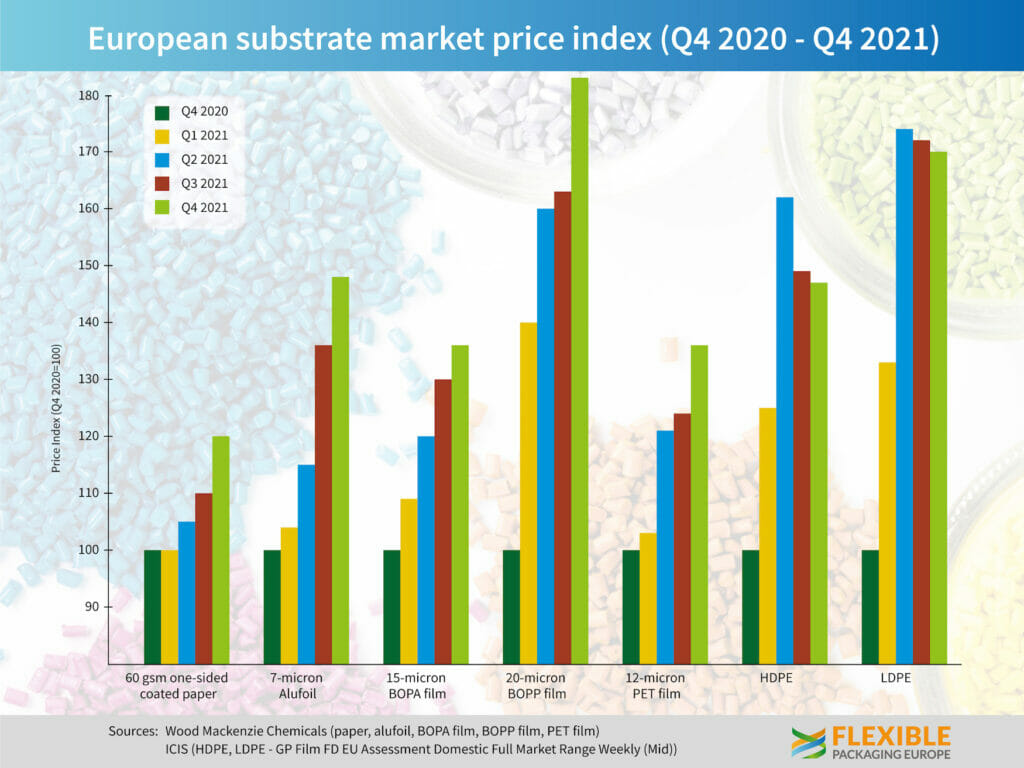
Colourful graphic with bar charts.
Flexible Packaging Europe monitors price trends for substrates. (Image: Flexible Packaging Europe)

While the steep rise in the second quarter slowed somewhat in the third quarter, prices for 12-micron PET rose by 10 per cent. 20-micron BOPP and 7-micron aluminium foil rose by 12 and 9 per cent respectively in the fourth quarter, ending the year at record levels compared to the end of 2020. 20-micron BOPP now costs over 80 per cent more than a year ago, while 7-micron aluminium foil has risen by almost 50 per cent. The 12-micron PET grade and 15-micron BOPA film are both more than 35 per cent more expensive. On a positive note, both the LDPE and HDPE prices fell slightly by 2 per cent compared to the previous three months are. At 70 per cent and 48 per cent respectively, they are still above the prices of Q4 2020, as shown in the latest figures from ICIS and Wood Mackenzie Chemicals.


„There are some signs that aluminium production is starting up again and that oil prices could stabilise. The continuing downward trend in LDPE and HDPE prices is encouraging, but the Prices for all flexible packaging materials remain well above 2020 levels. Supply chain factors are also likely to improve over the course of 2022. However, external factors, such as rising energy costs due to geopolitical circumstances, could easily derail a sustained recovery, so we remain vigilant. Flexible packaging suppliers have done very well to maintain supply and delivery during the pandemic and members hope that they will be able to adapt to future circumstances.“

Guido Aufdemkamp, Managing Director of FPE

Source: Flexible Packaging Europe

Mondi - More news

Modernising coffee packaging for the future

The PPWR at the latest will put coffee packaging to the test. Mondi is already supporting the coffee industry with solutions for a wide range of packaging formats that combine sustainability, product protection and process reliability.
Read more "