Flexible Packaging Europe reports partly falling and partly rising prices for flexible packaging materials in the second quarter of 2025. Geopolitics and trade tensions are influencing the market.
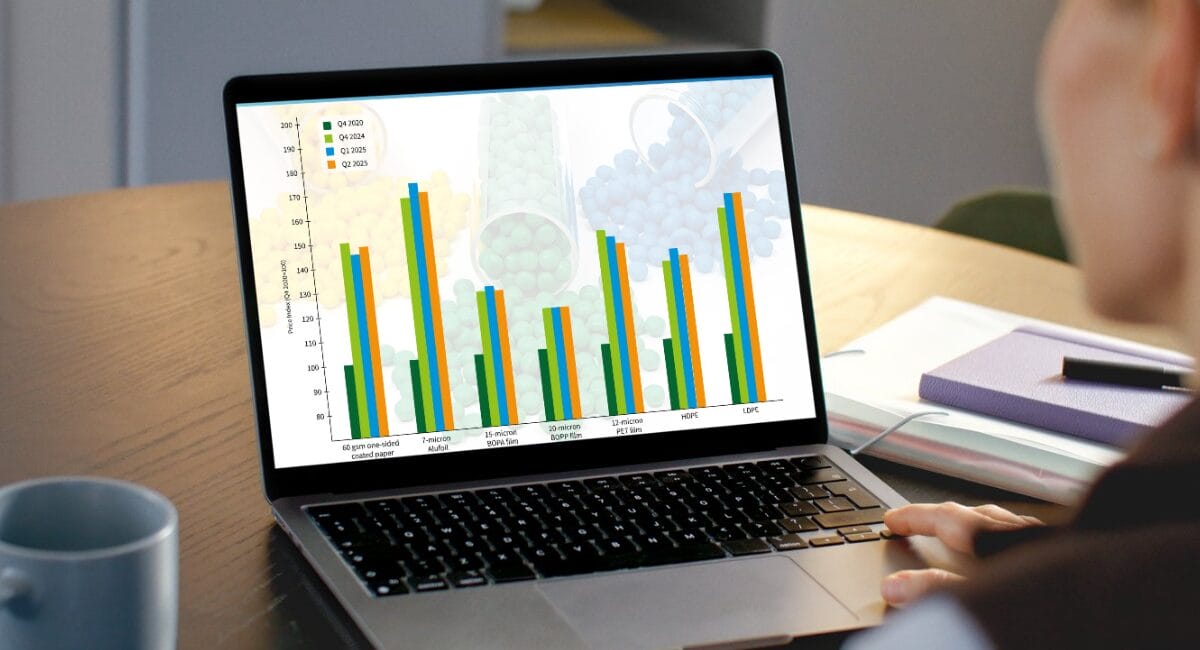
Prices for flexible packaging materials were volatile in the second quarter of 2025. According to surveys by Flexible Packaging Europe (FPE), the price of one-side coated paper (60 g/m²) rose by 2 % compared to the previous quarter, while aluminium foil (7 micron) fell by 4 %, BOPA film (15 micron) by 1 % and PET film (12 micron) by 2 %. The price of BOPP film (20 micron) remained stable, HDPE fell by 2 % and LDPE remained at the previous quarter's level.
Market analyst Alexander Tkachenko (Wood Mackenzie) attributed the decline in BOPET film prices by around 5 ct/kg primarily to higher import volumes from Asia and a strong euro. Aluminium foil fell in price by an average of 25 ct/kg due to falling raw material and storage costs. Rising energy and production costs were responsible for paper prices.

According to Kaushik Mitra (Chemical Market Analytics by OPIS) The PE markets were characterised by tariffs, geopolitical tensions and fluctuations in the price of crude oil. Following a temporary easing of the trade conflicts between the US and Europe, prices stabilised before geopolitical developments in the Middle East once again put upward pressure.
FPE Managing Director Guido Aufdemkamp emphasised that the markets are characterised by contradictory trends. While some materials are falling, others are recording moderate increases. The first signs of stabilisation in certain applications could be a cautiously positive signal for the second half of the year.
Source: Flexible Packaging Europe