Cartonboard packaging is sustainable and popular with consumers. Pro Carton commissioned a survey to find out whether European brand owners and retailers attach similar importance to sustainable packaging. „Pro Carton“ President Roland Rex categorises the results. #
Roland Rex is President of „Pro Carton“. He is Head of Customer Focus and Business Development at the Weig Group in Mayen. His conclusion on the sustainability study: „What appears to be better at first glance may only be the second-best solution from a sustainability perspective.“

pj: Mr Rex, the market research institute Smithers Pira was commissioned by „Pro Carton“ to survey European brand owners and retailers on the importance of packaging sustainability. Why did you initiate this survey and what conclusions do you draw from the results?

Roland Rex: Consumers have realised that packaging made from Cardboard box are the most sustainable form of packaging. We asked ourselves: Do those who decide on the type of packaging and the packaging material think so too?
The result did not really surprise us: yes, packaging decision-makers at brand owners and retailers in Europe's five largest economies are aware of the importance of sustainability for packaging material decisions. They confirm that the Folding box offers great advantages. A great result!
pj: Folding cartons perform very well in almost all sustainability criteria compared to other packaging materials. However, glass is ahead in terms of refillability and returnability. Do you think that cartonboard will be able to compensate for this „product disadvantage“?
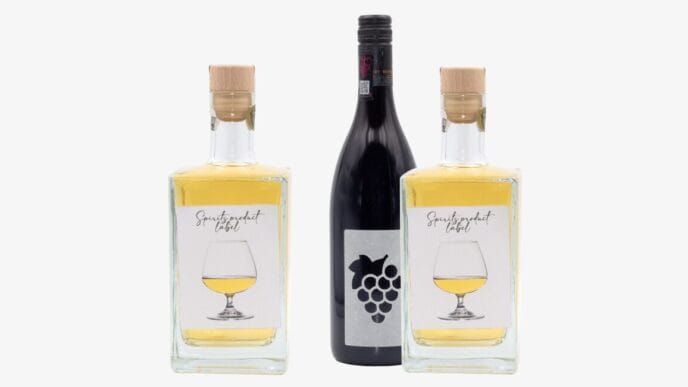
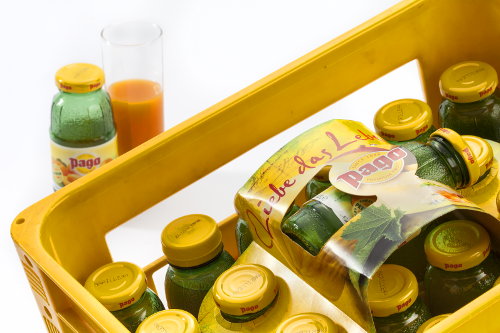
Roland Rex: Refillability is not fundamentally more sustainable. Glass is heavy and voluminous, even when returned to the circuit. With the functional Recycling for example, the overall food technology and economic costs are very high. A much lighter folding carton has a small volume when folded and can be recycled at low cost. What appears to be better at first glance may only be the second-best solution from a sustainability perspective.
pj: Cardboard packaging for food can be problematic in terms of food safety. Users often prefer plastic or glass here. Innovative coatings or composite materials nevertheless make food-safe cardboard packaging possible. How do you rate these in terms of sustainability aspects?
Roland Rex: This is a very important point. Consumer protection is the top priority. Glass is considered to be ideal in this respect. In the recent past, it has become increasingly clear that plastic packaging releases certain harmful substances, which are then released into the environment. Food can get through. There are solutions for cardboard packaging that largely prevent such transitions.
Composite solutions are indeed more difficult to dispose of and recycle. As a rule, they do not come from the cartonboard industry itself. However, several cartonboard manufacturers now offer fully recyclable barrier solutions for Cardboard packaging on. These special types of cardboard can be disposed of and reused in the familiar paper cycle like all others.
pj: While recyclability is the outstanding product advantage of folding cartons, flexible plastics are ahead in terms of weight and material usage and hard plastics in terms of strength and stability. Do you think that cartonboard packaging will be able to compensate for these disadvantages in the future?
Roland Rex: Cardboard packaging will probably never be as light as plastic packaging. But this „gap“ can be reduced: The cartonboard industry is working on so-called „lightweighting projects“. The aim is to reduce the grammage while maintaining the technical parameters. There is a lot of potential in terms of design and better harmonised packaging components. For example, a differently designed outer packaging can help to make the product packaging lighter because it no longer has to support the stability of the overall system.
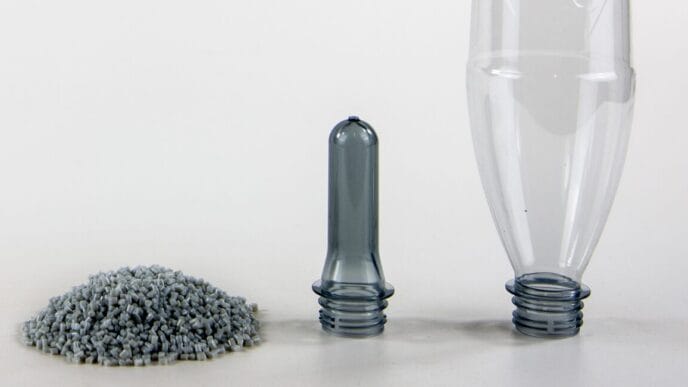
Plastic packaging is always made from fossil raw materials - with the exception of bioplastics. From a sustainability point of view, there should really be no plastic packaging at all - no matter how light or heavy it is.
pj: Compared to other packaging materials, the folding carton is the most versatile type of packaging for complex distribution channels. With the exception of Spain and Italy, this is the view almost everywhere. Spanish companies, on the other hand, rate the beverage carton as particularly versatile, while this aspect plays no role at all in France and the UK. Are the Spanish „outliers“ or is the industry there revealing new uses for beverage cartons?
Roland Rex: In fact, there are sometimes considerable differences in individual markets in terms of functionality and innovation. This results in a very different perspective, also with regard to the versatility of a packaging solution. In Germany and other countries, beverage cartons have been established for decades. Their advantages are already taken for granted. In this respect, the Spanish are not „outliers“, but rather show that there is even more potential for sustainable carton packaging.
pj: Let's move on to the market outlook: German brand owners and retailers in particular do not believe that the demand for sustainable packaging will grow strongly over the next five years. The situation is different in the UK: Here, well over 80 per cent of companies are forecasting at least fairly strong growth. What do you attribute these differences to?
Roland Rex: This is indeed a surprising result at first glance. However, it is important to bear in mind that we in Germany already think and act much more sustainably than many other countries. At this high level, further strong growth is more difficult. In our view, recycling that makes sense in terms of materials is only just beginning in the UK. Valuable Secondary raw materials are still too often dumped. There, the large retail chains propagate sustainability in an exemplary manner, but sometimes act in the opposite way themselves. This clearly explains the different assessments of growth potential.
pj: According to the Federal Environment Agency, a total of 8.1 million tonnes of packaging made of paper, cardboard and paperboard were used in 2014. The vast majority of packaging is therefore paper-based and becomes recycled raw material or waste. Plastic packaging accounted for 2.7 million tonnes and glass for three million tonnes. Wouldn't the most sustainable packaging solution be to avoid packaging waste?
Roland Rex: Absolutely right! But packaging today fulfils a whole range of tasks and is therefore the guarantor of a well-functioning economic and supply system.
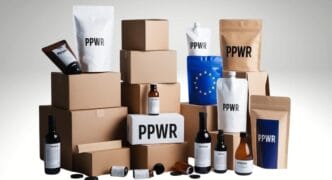
If the right packaging material is chosen - I'm thinking of cardboard here, of course - then the consumer is actually acting in an ecologically responsible manner. Cardboard packaging is originally made from fibres from sustainably managed forests in Europe. These forests grow in area year after year, absorbing the carbon from the CO2 and thus contribute to climate improvement. By recycling the fibres several times, natural resources are conserved. Plastic packaging does not have any of these positive environmental aspects. And last but not least: cardboard does not produce any plastic waste. [infotext]
Association of the European Cartonboard and Folding Carton Industry
„Pro Carton“ is the association of the European cartonboard and folding carton industry. The aim of „Pro Carton“ is to draw attention to the economic and ecological advantages of cartonboard and folding cartons as packaging media. The study „The importance of packaging sustainability“ was conducted by the consulting agency Smithers Pira. Companies in the UK, Spain, Italy, Germany and France were surveyed. It can be downloaded from the „Pro Carton“ homepage.
http://www.procarton.com[/infotext]