Flexible and modular in the pharmaceutical sector

A complex product range requires a complex packaging process? You might think so. But the automation of the packaging process at Siemens Healthcare Diagnostics Products GmbH shows that it is: With a competent partner like R.WEISS Packaging GmbH & Co. KG, flexible solutions based on a modular design can be realised.

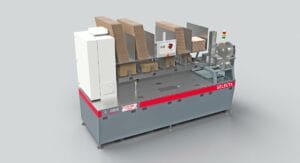
A complex product range requires an elaborate packaging process? You might think so. But the automation of the packaging process at Siemens Healthcare Diagnostics Products GmbH shows that it is: With a competent partner like R.WEISS Packaging GmbH & Co. KG, flexible solutions based on a modular design can be realised. This is also the case here, where an intelligent UNIROB-turnkey system was developed for packaging diagnostic products.

Multi-packs are part of the Siemens Healthineers product range. There are different pack sizes, and the contents of the multi-packs consist of a wide variety of semi-finished components with various product-specific arrangements within the folding carton. Value tables are also included with the sales packs.

In order to automate the process of manually filling these folding cartons, a suitable partner was to be found that met Siemens Healthineers' requirements. In addition to the automated filling of the folding cartons with a wide variety of products in numerous variable sizes and arrangements, as well as the value tables, the company also wanted the highest possible autonomy of the system, for example through sufficient storage capacity of the material feed, are guaranteed.

The Siemens Healthcare Diagnostics Products GmbH a subsidiary of Siemens Healthineers, is a global leader in the diagnostics industry and supplies laboratories worldwide with performance-orientated product solutions for diagnosis and therapy monitoring. The company combines science, technology and practicality in its products and services, providing users with the information they need to improve personalised healthcare for patients.

Display

The packs should then be sealed, labelled and checked for completeness. Process reliability should also be increased, by subjecting the product feed, the entire packaging process and the labels subsequently applied to the folding carton to constant quality control and by providing a corresponding option for the controlled ejection of faulty packs after each process step.

R.WEISS Packaging: the right partner

In view of these requirements for a packaging solution, the company turned to a competent partner in R.WEISS Packaging, with which the automation of the packaging process was now to be implemented and the packaging concept additionally optimised. Instead of the plastic inlays previously used to arrange and stabilise the products, environmentally friendly cardboard inlays were to be used, which were developed in partnership with the packaging supplier.

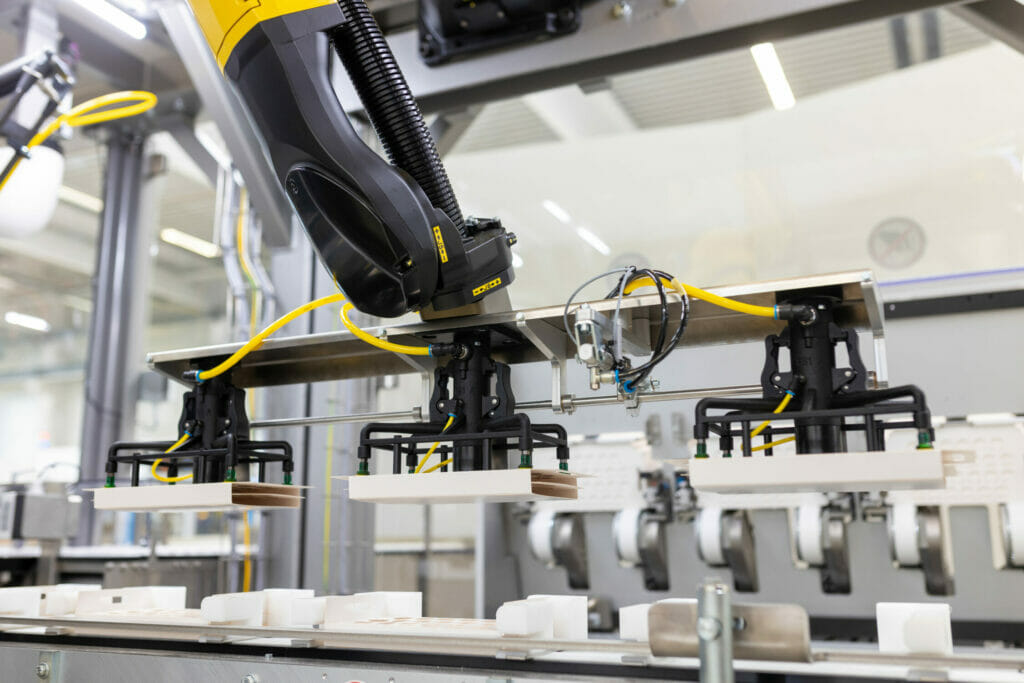
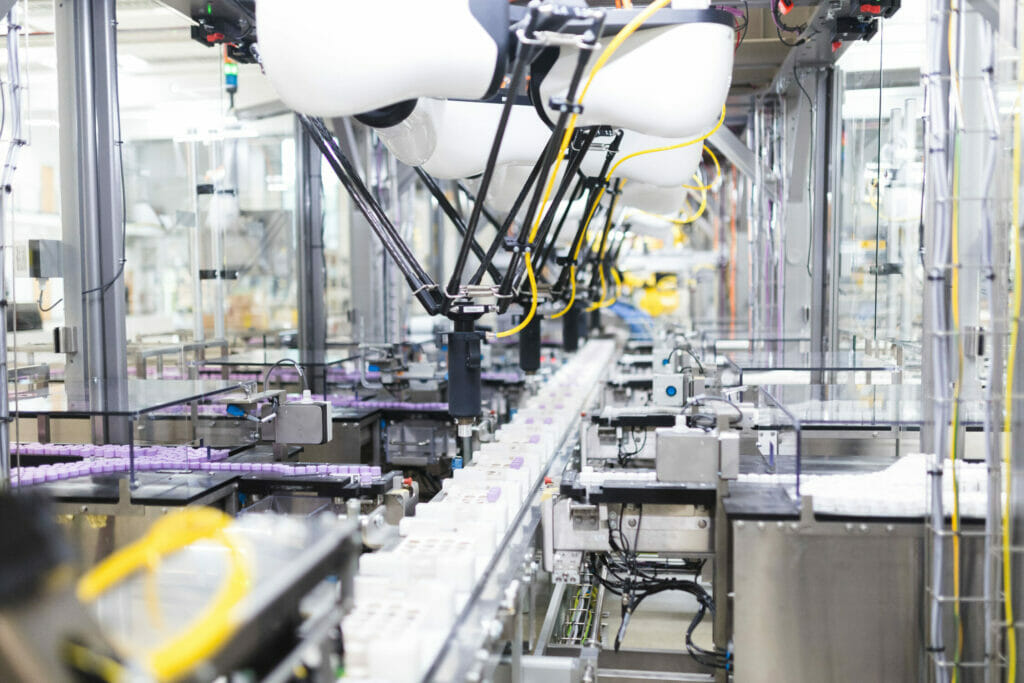
A total of five R.WEISS delta pickers process the products and bottles from ten infeed lanes. (Image: R. Weiss)

The visual appearance for the customer, ensuring safe product transport, the nature of the material to be used and the suitability of the packaging concept for use in machines were particularly important. The substitution of the previously used plastic material not only enables laboratories, hospitals and doctors' surgeries to simplify the recycling process for the packaging material, Rather, it underlines the philosophy of both companies to always act in the spirit of sustainability and thus act as role models in the industry.

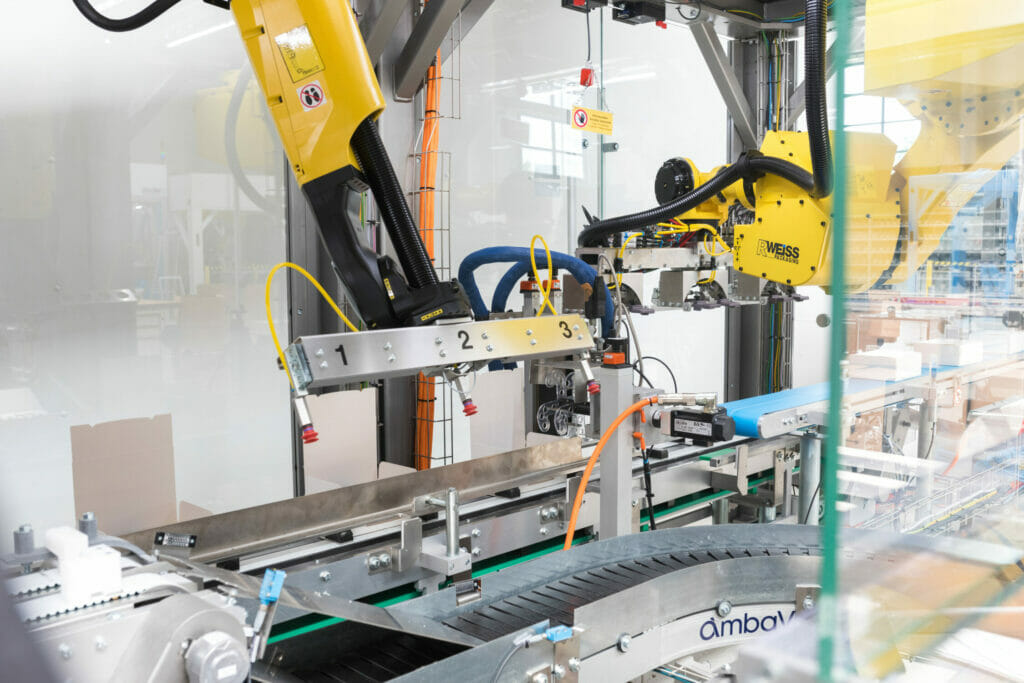
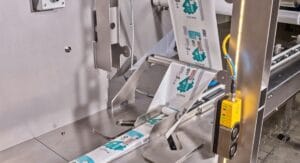
A six-axis robot sucks the cardboard inlays from the magazine, unfolds them and then inserts them into the carrier conveyor. (Image: R. Weiss)

After making initial contact at interpack 2017, the two companies quickly established a partnership. Siemens Healthineers and R.WEISS Packaging worked hand in hand during both the planning and realisation phases, This not only generated a smooth project flow, but also enabled the realisation of a packaging solution that was optimally tailored to the needs of Siemens Healthineers.

UNIROB: a clever system ...

In the first step, the cardboard inlays are supplied to the inlay denester via a magazine, which must be filled manually by the operating personnel. Previously, the inlays were made of plastic and manually inserted into the folding carton by Siemens Healthineers employees, A six-axis robot now sucks the cardboard inlays from the magazine to the designated area, unfolds them and then places them in the carrier conveyor one, which can be flexibly and fully automatically adapted to the respective formats. The conveyor transports these to the next station in the system, where they are loaded by the pickers in the next step in a completely flexible manner, depending on the selected format or recipe. The glass or plastic bottles contain liquid or lyophilised products.

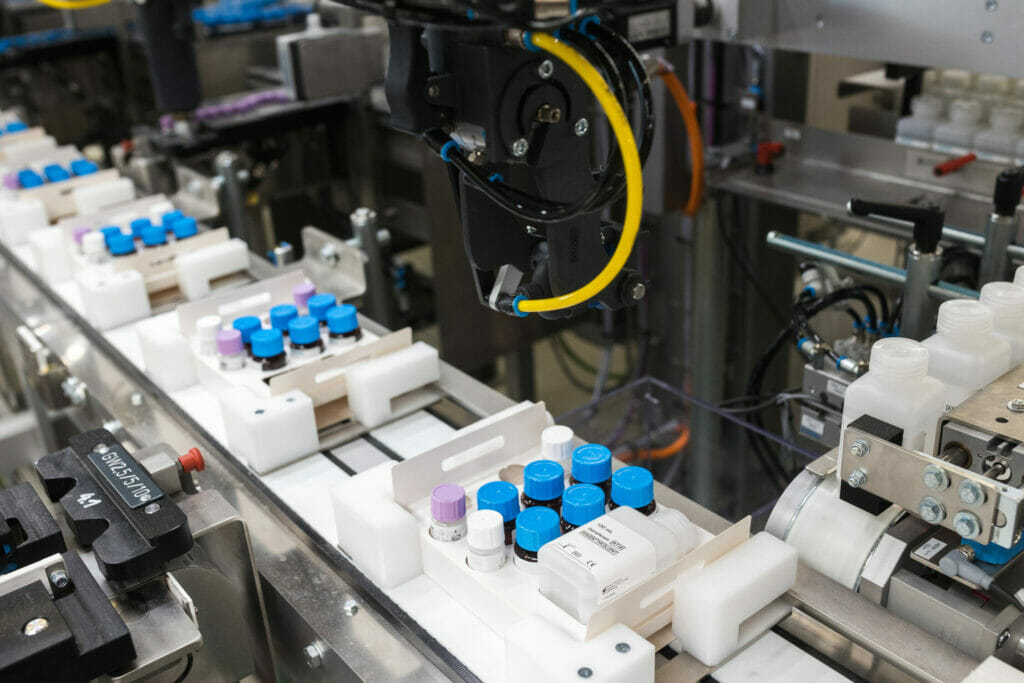
Round products are provided to the picker individually on the feed conveyors. Square plastic bottles are processed on a feed table (right). (Image: R. Weiss)

The picker area of the system consists of two UNIROB-cells, in which products and bottles from ten infeed lanes are processed by a total of five R.WEISS delta pickers. Nine of the infeed lanes are only intended for round products, which are separated and supplied to the picker. The tenth infeed table rounds off the product range; cuboid plastic bottles can also be fed here and processed accordingly. To ensure that no incorrect products are fed in, a barcode must be read out before the products are fed in manually, which is checked by the system. The operating personnel can only load products once they have been authorised by the system control. The release is carried out both by a blocking device on the feed area and supported by a visualisation of the respective product task and the selection of the corresponding feed table via additional assignment screens.

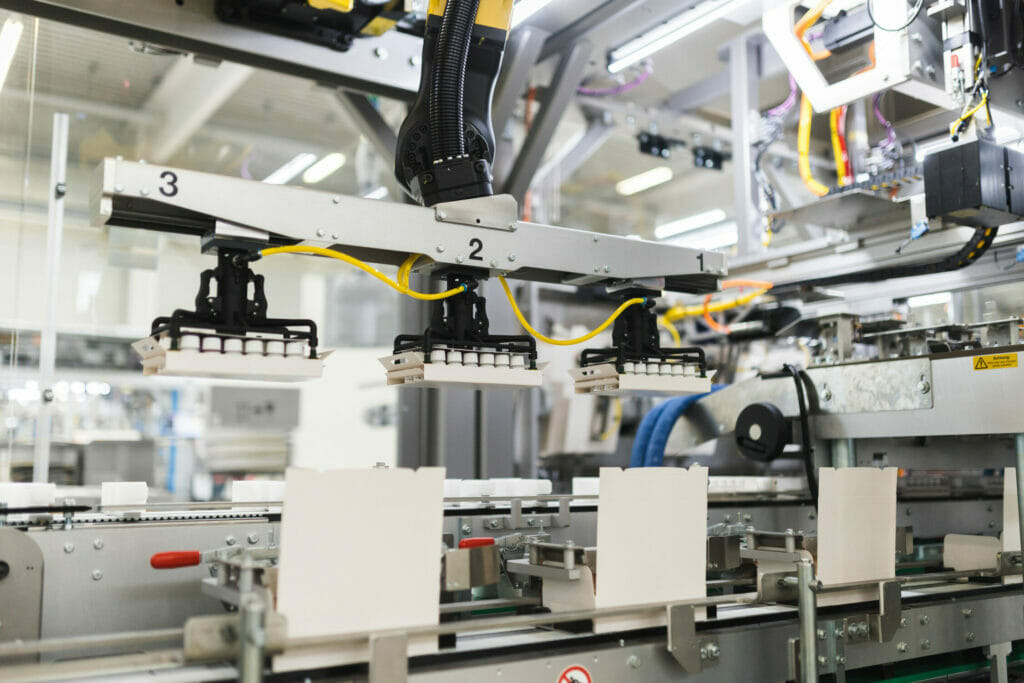
The completed inlays are removed from the carrier conveyor using a six-axis robot and inserted into the folding boxes in a reliable process using filling centres. (Image: R. Weiss)

Once the products have been separated, they are picked up by the five delta pickers in the next step and inserted into the erected inlays at the designated position. They are picked up using special picker tools that are adapted to the contour of the individual lids. The tools are equipped with quick-change devices for fast format changes. This means that format parts can be changed without tools in just a few seconds.

... also for handling the boxes

The filled inserts are then inserted into the designated folding boxes. For this purpose, the folding carton blanks are stored in an ergonomically accessible blank magazine, which can be filled during operation. The folding carton blank is sucked in by a robot axis, separated from the magazine and glued. A folding punch moves the blank through the folding tool, whereby the cardboard sides with hot melt are glued together and the previously flat die-cut blank is formed into a folding box. The loaded inlays are now inserted by removing the inlays from the carrier conveyor using a six-axis robot. This places the inlays in the folding cartons, which are transported in advance by a side conveyor from the erector to the filling position in the UNIROB-cell were clocked in. The loaded inserts are inserted reliably by means of filling centres. In addition to the inlays filled with products, the flexible design also makes it possible to insert the products directly into the folding box. An inlay is not used here.

After the value tables have been inserted, the folding boxes are sealed with hot glue and labelled with two labels each. (Image: R. Weiss)

The filled folding boxes are then transported to the next station of the UNIROB-packaging line. Here too, the value tables are placed in the folding box by another six-axis robot. To do this, the robot removes the value table from a magazine using vacuum suction cups. Before removal, the data matrix code of the insert pack in the magazine is checked. After the folding boxes have been sealed with hot glue, they are labelled with two labels each. The printed labels are always checked before dispensing and are only applied if approved. Siemens Healthineers is also taking a new approach to closure technology: whereas an over-corner label was previously used as a tamper-evident closure, an efficient perforation is now used to simplify handling of the product.

Success through teamwork

Thanks to the close cooperation between Siemens Healthineers and R.WEISS Packaging, it was not only possible to realise an efficient system for automating the previously manual handling. Thanks to the system from R.WEISS, Siemens Healthineers now has a process that is reliable and failsafe, extremely flexible and also sustainable, which has a major influence on the satisfaction of laboratories, hospitals and doctors' surgeries. The close contact during the entire planning and implementation process, the joint innovations and ideas utilise synergies: The new packaging system does not simply modernise the company's internal packaging process, it is a product of the combined expertise of the two industry-leading companies.

http://www.r-weiss.de

More news on the subject of packaging technology