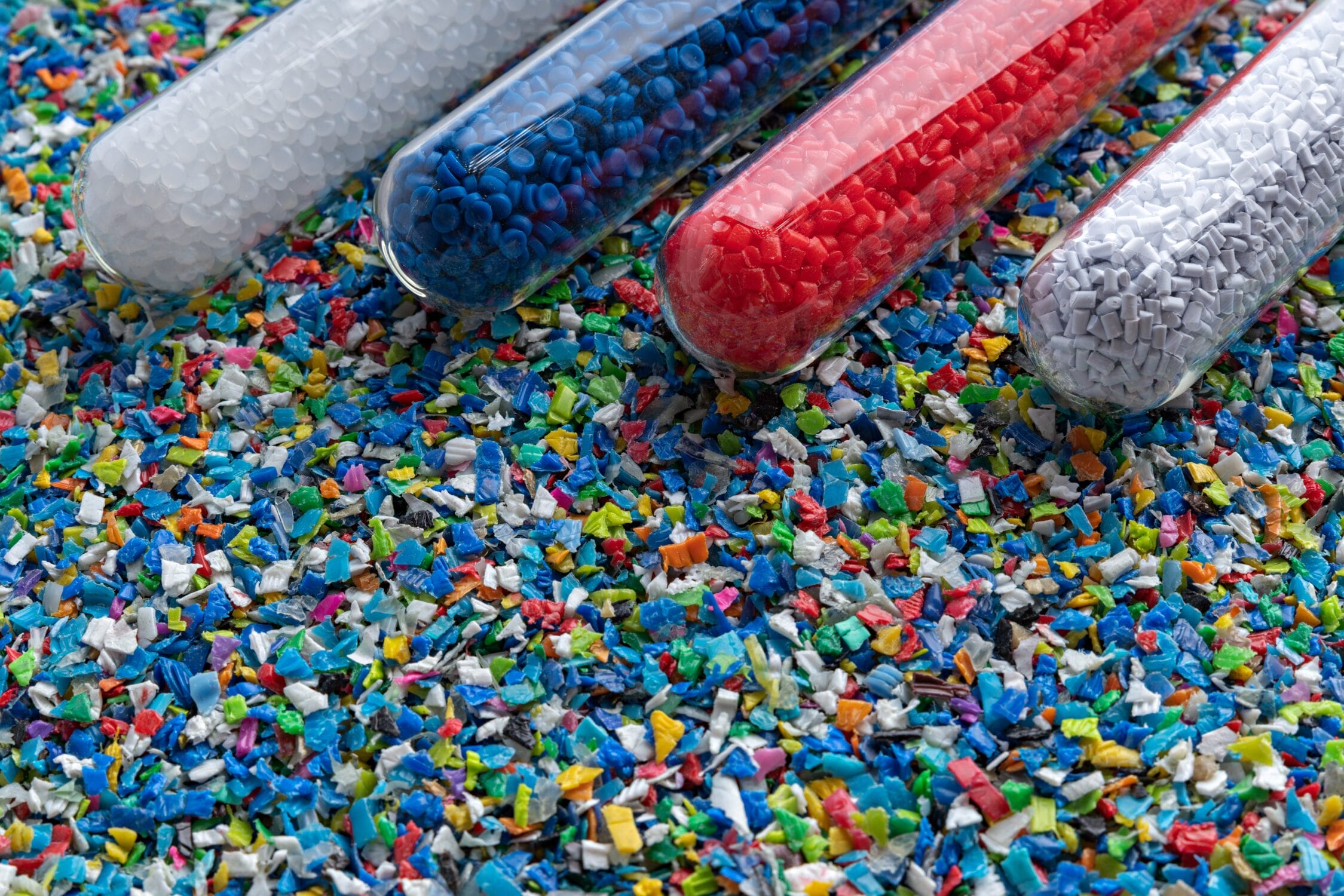
In the international CORNET research network, various partners are working on extensively analysing plastic recyclates. The aim is to further improve the safety of recyclates and thus pave the way for their use in new food packaging, as will be necessary by 2030.
The new EU Packaging and Packaging Waste Regulation (PPWR) requires mandatory recycled content for plastic packaging. But how can this be implemented? International companies have already spoken out in favour of more recyclate in their products in the past as part of „plastic pledges“. While these requirements for PET beverage bottles are already within sight thanks to tried and tested materials and processes, the situation is much more difficult for the majority of food packaging - polyolefins such as polyethylene (PE) and polypropylene (PP), as well as polystyrene (PS). For these currently only exist as niche solutions, and there is hardly any material on the market that is suitable for sensitive applications such as food packaging. Nevertheless, the proportion of recycled material in this packaging must be ten per cent by 2030, a mammoth task for the industry.
With the new Plastics Recycling Regulation (EU) No. 2022/1616, the EU is taking steps to promote innovative processes and thus to promote polyolefin recycling. One of its aims is to collect data on materials and any impurities that may occur in recyclate from household collections (= post-consumer recyclate, PCR). But the hurdles are high.

„The European Food Safety Authority (EFSA) checks the recycling processes according to strict worst-case scenarios that take into account possible misuse such as filling packaging with petrol, pesticides or toxic substances. Critical substances such as mutagens may only be present in minimal concentrations and extremely low limit values must be adhered to. For PET, data on the practical probability of misfilling by consumers is already available from various research projects. However, the level of contamination of polyolefin and polystyrene recyclates remains uncertain for the time being.„
Elisabeth Pinter, OFI research project coordinator
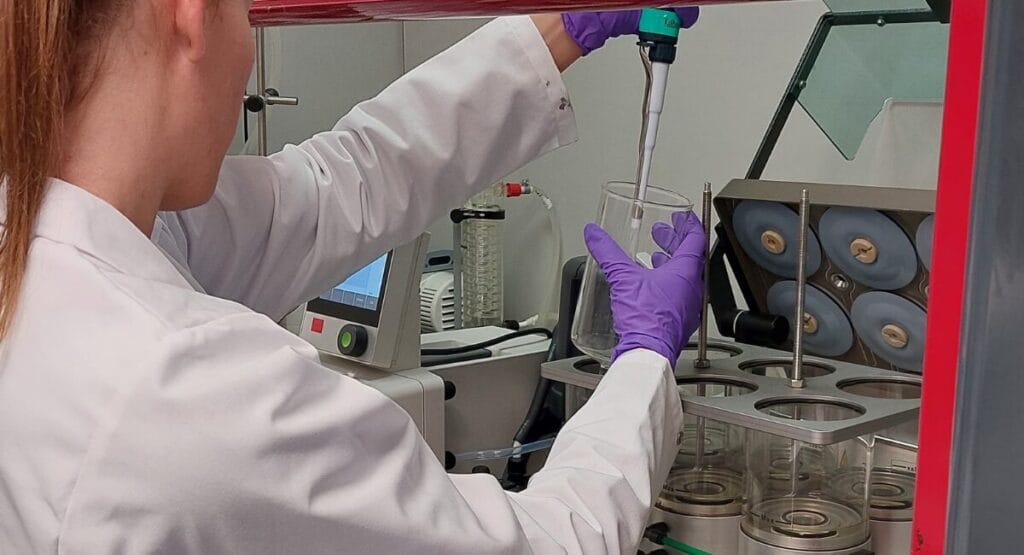
Research - the key to efficient implementation
Projects such as „PolyCycle“ and „SafeCycle“ are working on this in the international CORNET research network, to analyse plastic recyclates extensively. In Austria, the Austrian Research Institute for Chemistry and Technology (OFI) and the FH Campus Wien are involved, while in Germany the Fraunhofer Institute for Process Engineering and Packaging (IVV) is participating. Expertise is being pooled under the coordination of the Plastics Cluster of ecoplus (Lower Austria's business agency) and the Industrial Association for Food Technology and Packaging (IVLV). The initiative is complemented by numerous corporate partners from the EU region. The aim is to, to efficiently record and promote the entire value chain of plastic packaging recycling.
„To analyse the recyclates, we rely on a combination of chemical analysis and biological test systems, known as in vitro bioassays. This method has already been developed and validated in the ‚Migratox‘ research project. It is already being used in the virgin plastics sector, but its use in analysing recyclates is a novelty.“ Natascha Matausch, researcher at the OFI
How do the methods work in combination? Chemical analysis detects possible substances and contaminants in the recyclates, while the in vitro bioassays assess health effects on the human body. The Ames test is used here in particular. It detects even small quantities of mutagenic substances that can trigger critical effects and must be avoided at all costs. Finally, the results of the various methods are combined in order to identify systematic problems.
Labels and direct prints critical after recycling
Thanks to the active support of the company partners, a considerable number of recyclates were analysed using the methods. PET materials stood out particularly favourably. These showed hardly any contamination or toxicologically questionable effects. An unsurprising result, as PET has been successfully recycled for many years and the beverage bottle fraction and associated technologies have already been tested several times by the EFSA and classified as safe.
The result was different for polyolefins and polystyrene. On the one hand materials have been identified that have promising potential for reuse in food packaging. show. On the other hand, however, systematic problems occurred in a large number of recyclates, which (still) make their reuse more difficult.
„In order to investigate the cause of these anomalies in more detail, we defined samples in collaboration with our company partners and put forward various theories on the origin of the impurities. It quickly became clear that diversity and the decorative variety of polyolefin and polystyrene packaging play a key role.“
Christian Kirchnawy, OFI Project Manager
Labels in particular contribute to the formation of numerous reaction products during the recycling process, which can complicate the safety assessment after reprocessing. Christian Kirchnawy: „Our analyses showed that, above all heavily printed materials such as labels, in-mould labels or flat direct prints are critical after recycling. While the samples were still considered harmless in the ‚virgin‘ state, toxicological effects were identified after strong heating and recycling.“
The exact causes and mechanisms for the formation of critical substances could not yet be conclusively clarified within the scope of the project. In a planned follow-up project, the research partners want to address these open questions and analyse the impact of decorative elements on the safety of recyclates in more detail. The focus here is on the suitability of various colour systems and innovative approaches such as deinking or delabelling to efficiently remove these substances. The overarching goal remains to further improve the safety of recyclates and thus pave the way for their use in new food packaging, as will be necessary by 2030.
Source: OFI