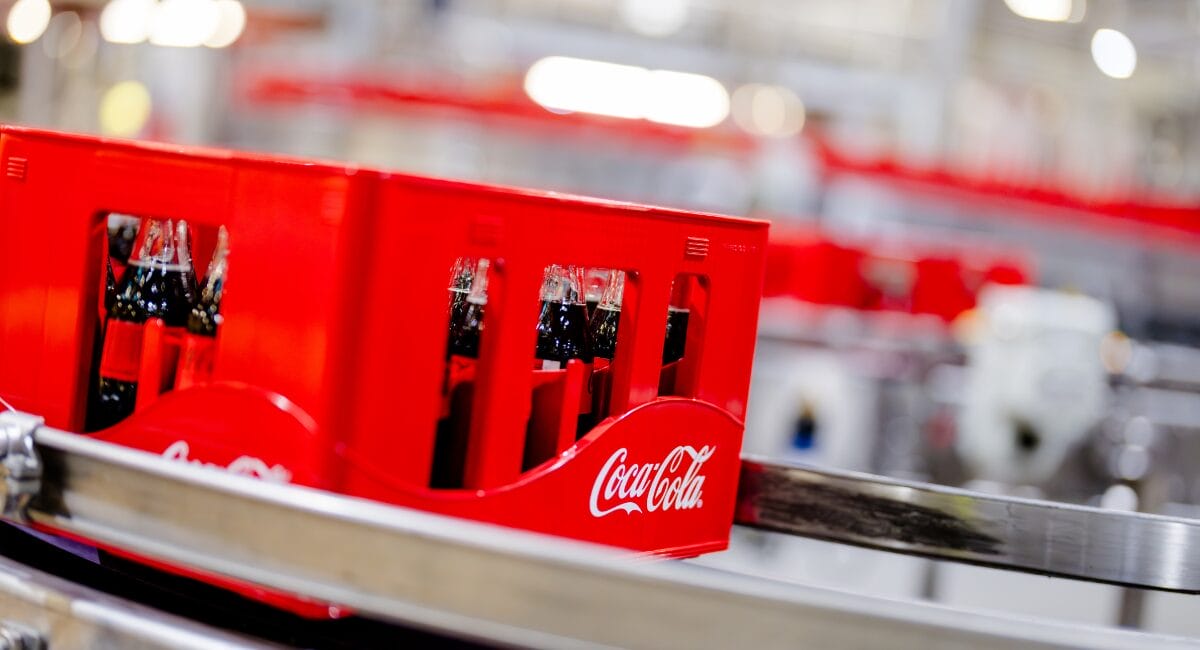
Schoeller Allibert, Coca-Cola Europacific Partners and recycler Healix have worked on sustainable reusable packaging and are now producing the red Coca-Cola drinks crate from 97 per cent recycled plastic. Compared to conventional crates made from new plastic, the crates save around 64 per cent CO2-emissions during production.
The Netherlands is the first country to implement this in the soft drinks and beverages industry. Coca-Cola Europacific Partners Netherlands has undertaken to Reduce the use of new plastic and already sources the majority of its plastic from recycled materials, including plastic bottles (without caps and labels) and transport packaging.
The Coca-Cola bottler in the Netherlands is now implementing another initiative for wholesalers and on-trade markets that supply the catering industry. The famous red drinks crates for returnable glass bottles are now produced according to the principles of the circular economy: from 97 per cent recycled plastic. As a pioneer in the field of bottle crate production Schoeller Allibert the ideal partner to pull out all the stops in this area.

„These boxes have an average lifespan of 15 years. However, it is not unusual for them to still be in use after 20 or 30 years. If they break down, they can now be used as raw material for new boxes.“
Eva Amsterdam, Sustainability Manager at Coca-Cola European Partners
Schoeller Allibert has developed an innovative technology that makes it easier to recycle used beverage crates. can be recycled. The new crates are made from 97 per cent recycled material. This is made up of 85 per cent old red crates and 15 per cent plastics that are normally difficult to recycle - in this case old tulip nets that were recycled by Healix.
„The majority of the recycled plastic used for the crates does not come exclusively from Coca-Cola crates. Nevertheless, we were able to ensure that the typical Coca-Cola red remains recognisable. We achieve this through a sophisticated ‚swirl effect‘ in the colour. This reduces plastic waste during production.“
Julie De Bruyckere, Key Account Manager at Schoeller Allibert
The new recycling crates were extensively tested at the Schoeller Allibert test centre in Hardenberg and found to be just as stable as the previous ones4 . They should therefore similarly long service life as the previously used containers. Julie De Bruyckere is delighted about the collaboration: „Thanks to the ground-breaking material innovation, Schoeller Allibert is revolutionising the production of beverage crates by Previously unused streams of recycled materials can be utilised make. This significant step not only reduces CO2-emissions, but also reflects our commitment to driving the sustainability agenda forward together with our customers. To achieve this, we have developed cutting-edge technologies that expand the possibilities of colour variations in the materials we use.“
„It's great to see a large, international company like Coca-Cola Europacific Partners Netherlands championing sustainability and innovation and looking for local support. By turning discarded nets into new raw materials, we are helping to reduce plastic waste and create valuable materials for new products that can last for many years to come.“
Marcel Alberts, the founder of Healix
This year alone, the Dutch market will gradually become 150,000 crates made from recycled plastic introduced. Existing crates will continue to be in circulation until they are broken and can be replaced by the new, recycled crates. With every purchase of a new crate, the changeover progresses. The partnership with Coca-Cola Europacific Partners Netherlands is a step towards promoting sustainability and the circular economy while setting new industry standards. Schoeller Allibert's material innovation is not only a local success story, but can also serve as a role model for others.
Source: Schoeller Allibert