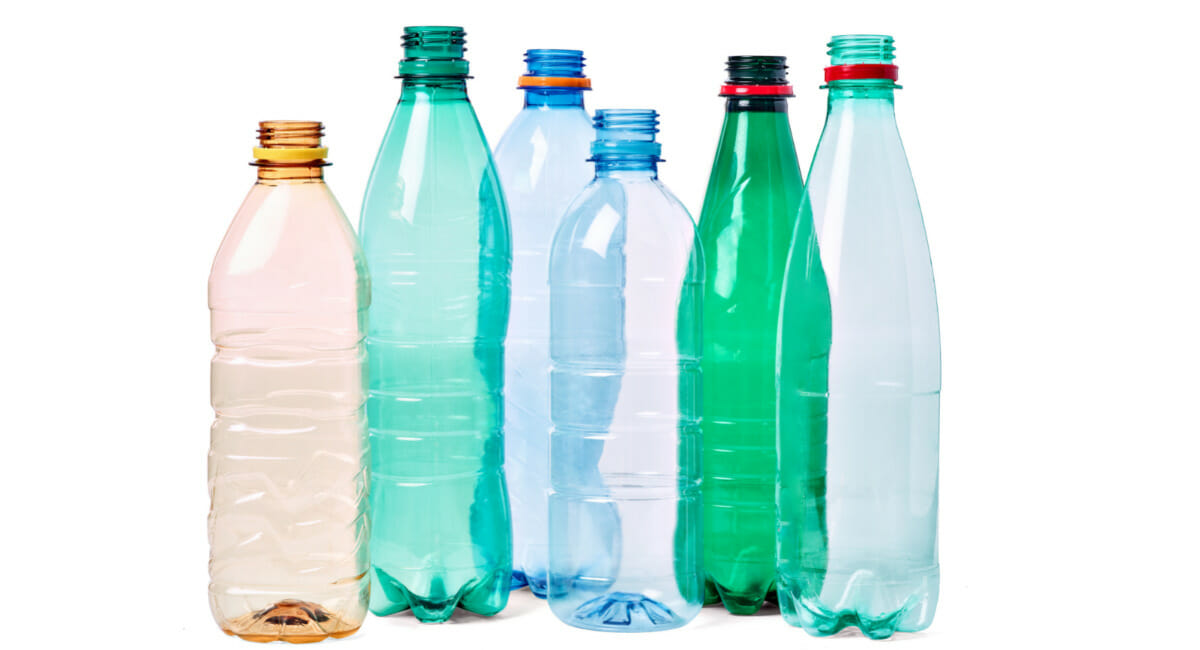
Whether at the lake, on a shopping trip or at the gym: the PET bottle is a constant companion. For many people, it has become an indispensable part of everyday life.
Their market share has risen continuously in recent years: Whereas the market share for non-alcoholic beverages 2003, the year the one-way deposit was introducedstill at just under 30 per centhe reached 2017 according to a survey by the GfK Consumer Panel already 71.6 per cent.
Even beer, the liquid sanctuary of the Germans, is now available in plastic bottles in many places - something that would have been unthinkable in the past. Plastic bottles are not only lightweight and therefore Convenient to transportbut also almost unbreakable.

They are also 100 per cent recyclable. Its high recycling rate of 97.9 per cent also speaks in favour of the PET bottle. But what actually happens on the Away from the deposit machine back to the supermarket shelf?
The rebirth of the PET bottle begins in the supermarket
By returning the emptied non-returnable PET bottles to the deposit machines in supermarkets and discounters, consumers are putting the Recycling cycle in motion. The recycled PET, the so-called Recyclateis a valuable raw material for many products.
Behind the deposit machines, the disposable bottles are waiting for the so-called Compactor. This machine pre-sorts the bottles: Reusable bottles are collected, disposable packaging is crushed by the compactor. This allows lorries to transport the PET bottles Space-saving transport.
The crushed PET bottles are collected in central warehouses and stored there. pressed into bales.
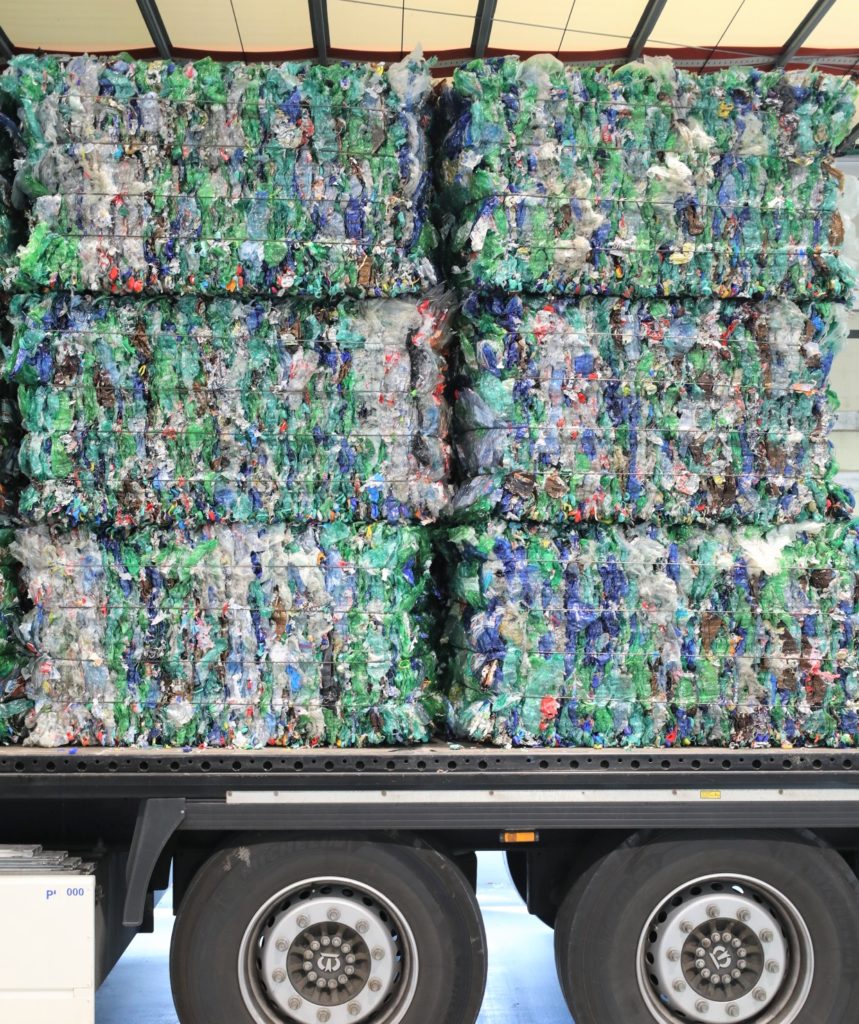
"A single bale can consist of more than 10,000 bottles and weighs around 250 kilograms. weigh."
Uwe Röhn, Managing Director of SRH Kunststoffe GmbH
In high demand: recyclate
PET recyclates (rPET) are sought-after raw materials, especially in the Fibre and film industry and are sought after by producers of the so-called preforms from which PET bottles are made. The recyclate is produced in the Recycling plantwhere the PET bales are broken open and the Pre-sorting separates foreign matter from PET.
The individual bottles are sorted by Colours sorted and washed. A grinder crushes the bottles into the coveted PET flakeswhich are then washed and dried.
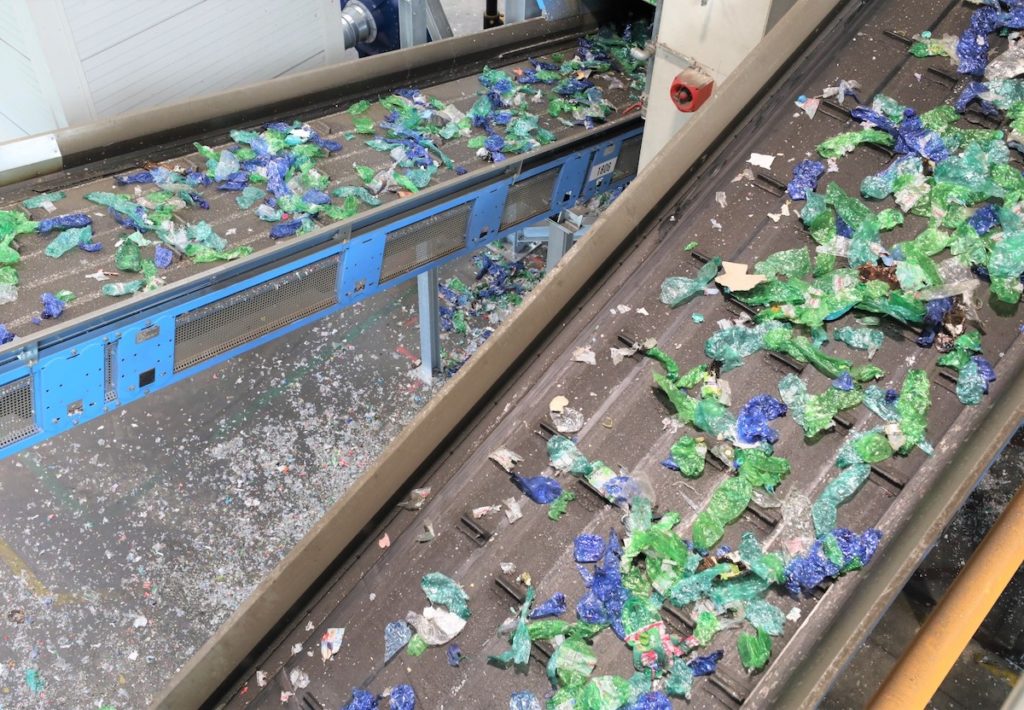
"Thanks to highly automated processes, PET recycling works very well in Germany. We can recycle around 3.3 million disposable bottles per day in our factory."
Herbert Snell, Managing Director of the recycling company MultiPet, a Veolia company
Trend: recycled products made from old PET bottles
A large proportion of the recyclate, namely around 50 per centis used in fibre and film production for new packaging used. The Range of products The range of products made from recycled PET bottles is enormous: it extends from water-repellent functional jackets and school satchels to carrier bags, car headliners, prams and pleated blinds through to kitchen fronts.
The major disadvantage of these products: You can only Reused once become.
However, if the recyclate is used as Raw material for the production of PET bottles used, this problem is eliminated. Already more than one in three disposable bottles is now recycled into rPET bottles - and the trend is rising.
"Theoretically, there are No limit on how many times a PET bottle can be recycled. However, as it is plastic, the chemical compounds can be affected when heated."
Uwe Röhn, Managing Director of SRH Kunststoffe GmbH
For this reason, there may be harmless discolouration which appear less attractive to some consumers.
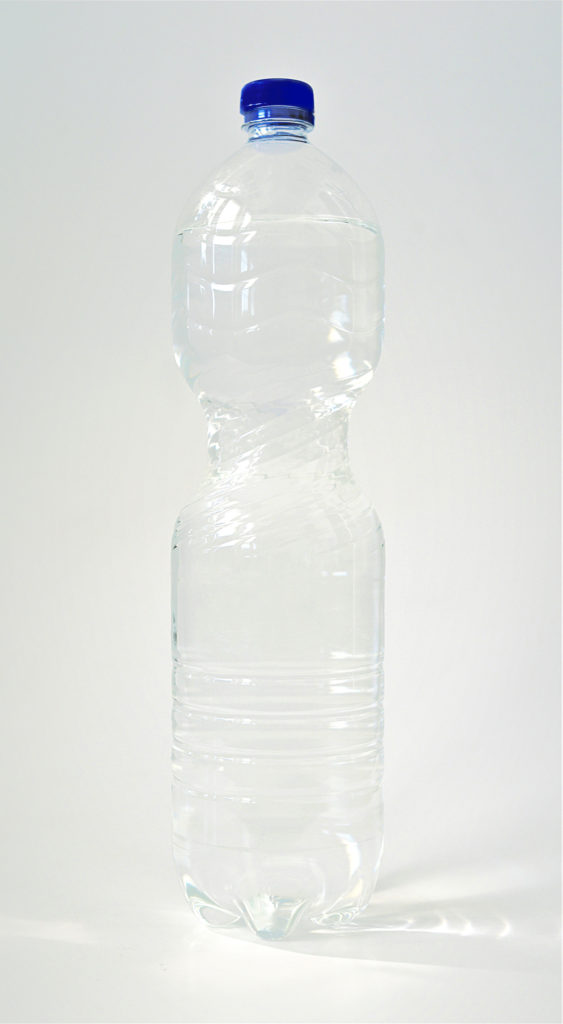
"Reprocessed waste paper has stood for exemplary recycling for years - despite the grey discolouration. I hope that in future consumers will also Slightly discoloured rPET bottles as a symbol of ecological processing see."
Uwe Röhn, Managing Director of SRH Kunststoffe GmbH
Turning old into new - the production of recycled PET bottles
Prerequisite for the so-called Bottle-to-bottle production is the food suitability of the recycled material used. To ensure this, additional process steps are required in the production of rPET bottles. These increase the quality of the recyclate.
As with film and fibre production, the starting materials for the production of recycled plastic flaps are the Dried flakes. These are melted, homogenised and purified again. In this way, the PET flakes are freed from odours and any foreign materials that may be present.
Filled in large sacks or silo vehicles, lorries then transport the food-grade recycled material to the producers of preforms, also known as preforms. PET blanks called. These are produced by mixing the recyclate with new PET pellets before injection moulding.
Preforms in Germany today consist on average of a good quarter from recyclatebut can also already be 100 per cent recycled material are produced. Consumers make a valuable contribution every time they go to the deposit machine.
"As a member of Forum PET, I hope that retailers will also make greater use of the opportunities available to them and accept their responsibility by specifically returning the collected bottles to the Recycling cycle for PET beverage bottles to the company."
Uwe Röhn, Managing Director of SRH Kunststoffe GmbH
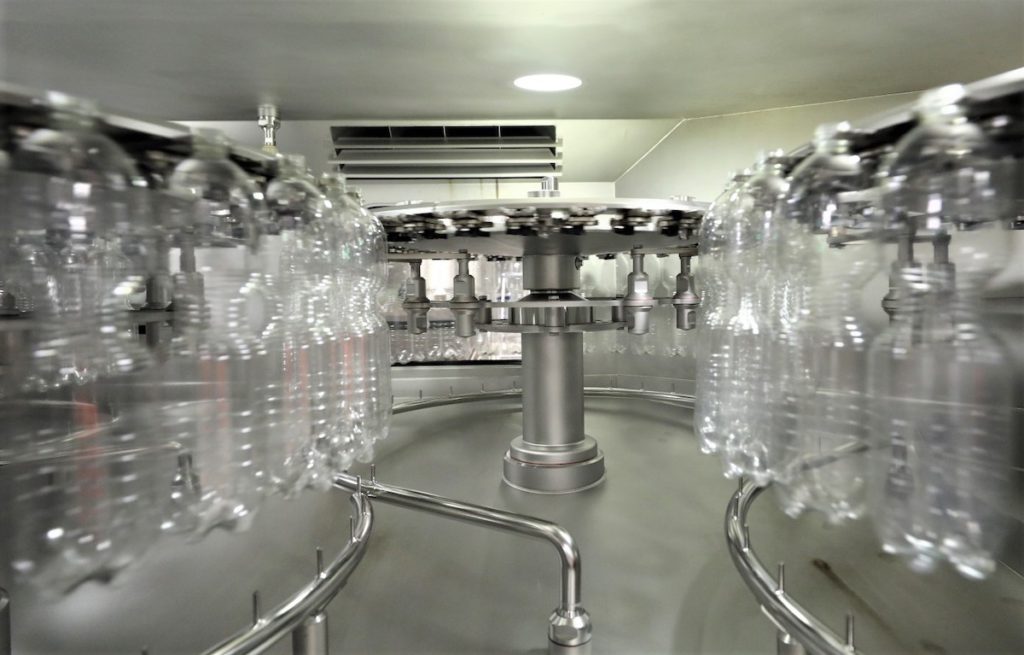
The recycling process for disposable PET bottles finally comes to an end at the bottlers. Here the Preforms moulded into new PET bottles and then filled, labelled and sealed.
Source: IK Industrievereinigung Kunststoffverpackungen e.V. / Forum PET