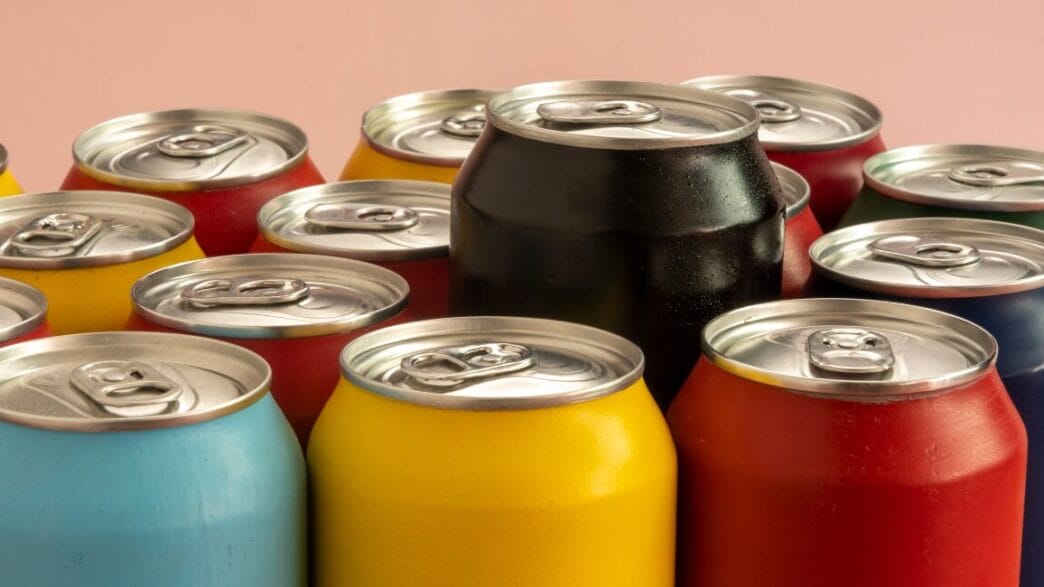
The recycling rate for aluminium beverage cans in Europe rose to 76.3% in 2023. This is shown by the latest figures from Metal Packaging Europe and European Aluminium. The industry thus sees itself on course for full recycling by 2050.
According to the latest report from Metal Packaging Europe (MPE) and European Aluminium (EA), 76.3% of all aluminium beverage cans were recycled in the EU, the UK, Switzerland, Norway and Iceland in 2023. Both the quantities placed on the market and the tonnages recycled increased compared to the previous year - by four and seven per cent respectively. Record quantities of recycled aluminium thus flowed back into the European circular economy.
The amount of aluminium recycled corresponds to a saving of 5.7 million tonnes of CO₂ equivalents. This is roughly equivalent to the annual greenhouse gas emissions of a European city with more than half a million inhabitants, such as Lyon or Gdansk. Aluminium recycling requires around 95 percent less energy than primary production and is therefore considered a key lever for reducing emissions.

Deposit systems show effect
The effect of deposit return schemes (DRS) is particularly clear. Malta introduced a deposit system in 2023 and increased the recycling rate for aluminium beverage cans from 50 to 80 percent within a year. Latvia and Slovakia also recorded strong increases following the introduction of a DRS in 2022. Latvia increased its rate from 60 to 74 per cent in 2023, Slovakia from 58 to 91 per cent.
According to the associations, twelve EU member states will have introduced a deposit system for aluminium beverage cans by 2023, with more countries to follow. Europe wants to further expand closed-loop can-to-can recycling with nationwide DRS systems and an export tax on aluminium scrap. The industry's goal is to achieve full recycling of aluminium beverage cans by 2050.
Source: European Aluminium