
By co-processing renewable raw materials, Neste offers a climate-friendly alternative to the production of plastics and chemical products. The company is expanding its portfolio of renewable raw materials with a new product under the Neste RE brand.
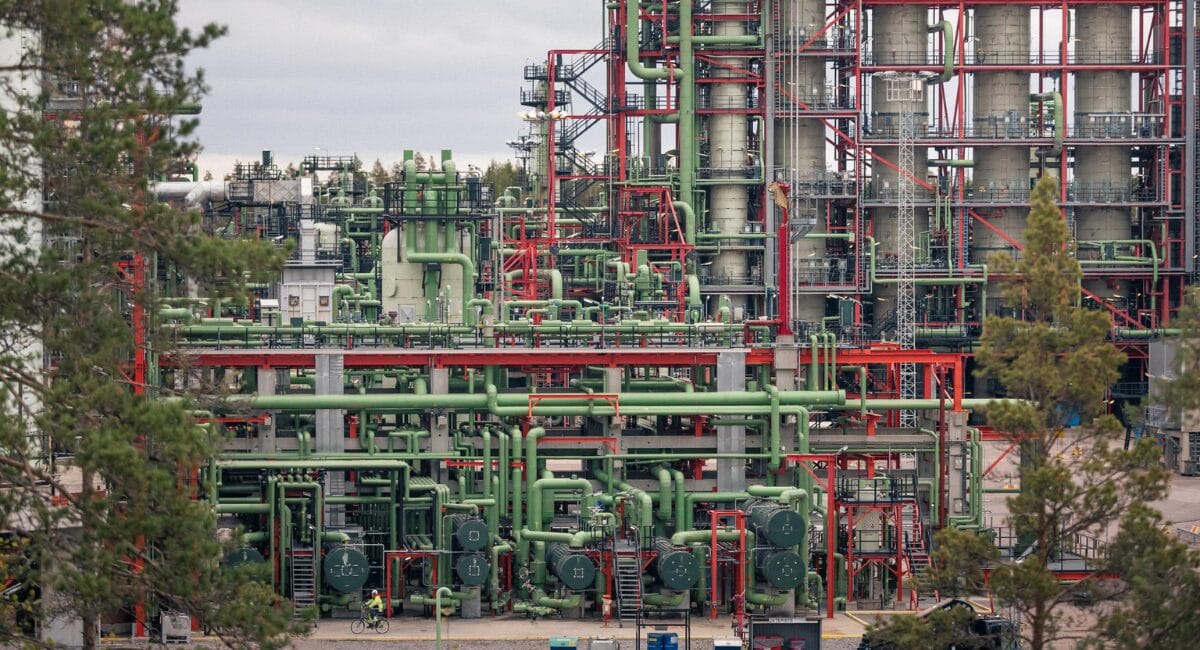
The raw material is produced by co-processing, in which renewable raw materials such as used cooking oil are processed together with fossil crude oil in the conventional oil refinery in Porvoo, Finland. This process makes it possible to utilise fossil raw materials in the production of plastics and chemical products and thus reduce CO₂-footprint compared to conventional solutions.
The benefits in terms of sustainability and the renewable raw materials used are added to the product through a Mass balance method allocated. This produces a pure hydrocarbon that can directly replace fossil components such as naphtha or propane in the production of plastics and chemicals.

„Our goal is to gradually reduce the use of fossil resources in the chemical industry. The co-processing of renewable raw materials is an important step in expanding our offering and at the same time driving forward the transformation of the Porvoo refinery into a centre for renewable and circular solutions.“
Jeroen Verhoeven, Commercial Director Polymers and Chemicals at Neste
The company is thus introducing a third production route for Neste RE. In addition to the existing NEXBTL technology, which uses only renewable raw materials, and the chemical recycling projects, which utilise hard-to-recycle plastic waste as a raw material, co-processing offers a new production route for Neste RE. Additional opportunity to decarbonise the industry.
Neste is building on its many years of experience in the co-processing of renewable raw materials for the production of marine fuels and heating oil. With this expansion, the company is strengthening its position as a provider of solutions for the reduction of fossil raw materials in the chemical and plastics industries.
Source: Nests