Figures from the Federal Environment Agency show that waste volumes are also increasing due to packaging in out-of-home sales. Reusable systems can be a resource-saving alternative. The state capital of Kiel was the first local authority in Germany to be awarded the Blue Angel for its reusable cup system for Kieler Woche.
You can get and return the cup at any drinks stand. A standardised deposit of 2 euros per Kieler Woche cup was introduced at Kieler Woche. This is intended to visitors to return the cups instead of throwing them awayto make the life cycle as long as possible.
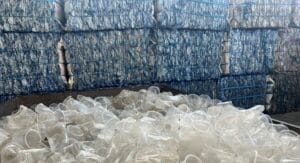
The deposit system for Kiel Week 2022 will be operated by the service provider cup&more Mehrweglogistik e.K. from Bad Segeberg was realised. The company offers cups with different designs - based on the year of production. Only the The number of so-called loss cups is reproduced in the new design. Cleaning takes place centrally on Wilhelmplatz, where a mobile dishwashing unit has been set up.

Waste from out-of-home consumption
According to a study by the Federal Environment Agency (UBA) According to the study, Germans use 2.8 billion disposable cups for hot drinks every year, which equates to 34 cups per capita. This means that in Germany alone, around 28,000 tonnes of waste are generated every year from the consumption of hot drinks in disposable cups. One answer to the increasing amount of waste is environmentally friendly reusable packaging. The Blue Angel supports the Establishment of resource-saving and waste-avoiding reusable systems in the to-go sectorby labelling these sustainable alternatives.
The label guarantees that labelled products and services have less impact on the environment than conventional products and services - with the same usability and quality. The criteria for the award of the eco-label for reusable systems (DE-UZ 210) include both Requirements for the material and manufacture of reusable cups and bowls as well as for the suppliers. Manufacturers undertake not to use materials that are harmful to the environment or health for either cups or lids. These include melamine resins and polycarbonate plastics.
So as not to increase the volume of waste, the cups must enable material recycling. This means that plastic cups may only be made from single-origin plastic without being coated with other materials. Reusable cups with the Blue Angel must also be able to be washed at least 500 times without being damaged. Life cycle assessment calculations from a UBA study on the reduction of disposable coffee cups show that the frequency with which the cups are reused is an important criterion for reducing environmental impact.
Source: Blue Angel
More news on reusable systems


Looije Group puts new packaging site into operation

Peyer Group takes over Walke AG

Confectionery: Flavour alone is no longer enough

Henkel expands coating business