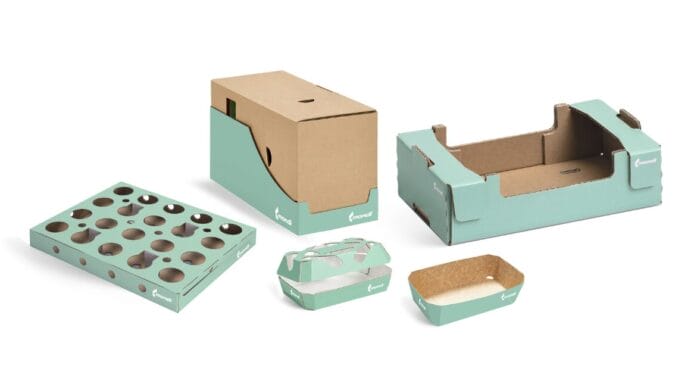
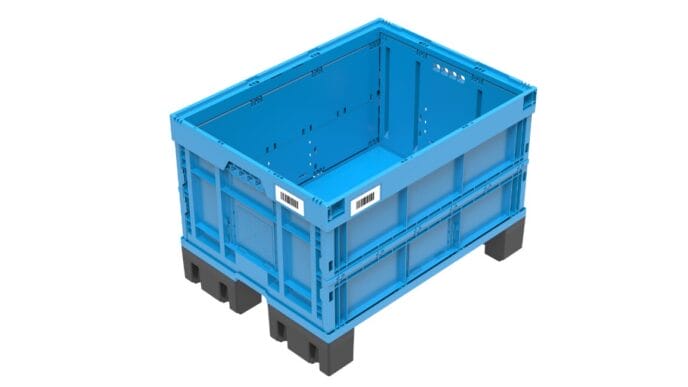
DS Smith is launching a new development on the market with the quick-erect tray, which can simply be folded up after use and stored to save space until it is needed again.
The new reusable tray is equipped with With two automatic shelves at the side and can be erected in no time at all. When the tray made of 100 per cent corrugated cardboard is no longer needed, it can be folded up again just as easily and stored in a space-saving manner until it is needed again. Whether for transport, storage or product presentation - the reusable tray is easy and safe to stack. is suitable for various industries and applications.
In display and packaging development DS Smith a holistic approach that takes the entire supply cycle into account. The designers apply the cycle design principles the company together with the Ellen MacArthur Foundation has developed. This was also the case with the development of the quick-erect reusable tray.

Material-optimised reusable tray
Thanks to the design with automatic side shelves the solution not only simplifies logistical workflows. It is also characterised by its high recyclability: The tray is material-optimised (reduce), reusable (reuse) and made from 100% recyclable corrugated cardboard (recycle).
The new solution is delivered flat and pre-glued. The integrated stacking lugs allow several upright trays to be stacked safely and without slipping. The reinforced corners ensure high load-bearing capacity. When the trays are no longer needed, they can be folded up again quickly and easily thanks to the automatic side shelves. And without damage, so that your Full functionality retained for the next use remains.
SourceDS Smith