
At LogiMAT, system integrator RFID Konsortium will be showcasing its innovative outgoing goods gate that utilises artificial intelligence (AI) for RFID-based item recognition.
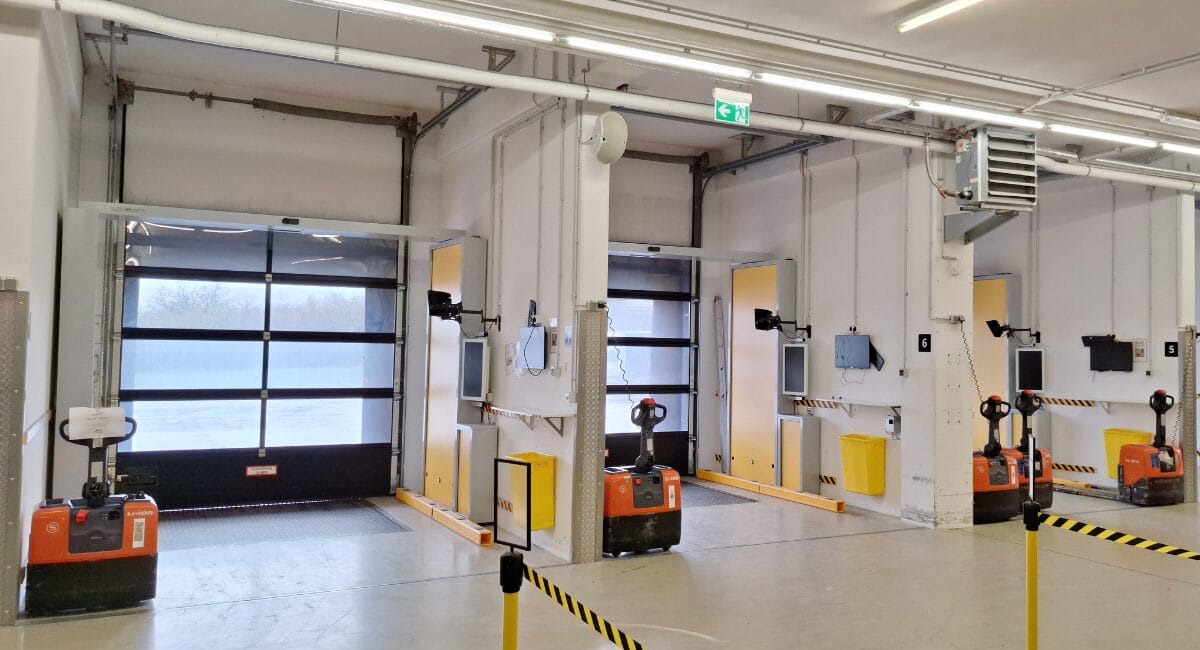
The RF KonSys KI-Gate takes centre stage at the trade fair. It is regarded as the So far the only RFID door solution available on the DACH market, which utilises machine learning technology. AI is used to differentiate in real time whether an item has physically passed through the gate or has been made available behind it. Even items that are travelling past the gate on a forklift truck at the time of reading, for example, are not accidentally detected. This helps to avoid stray rejects.
In addition, articles no longer have to be measured in a time-consuming process to obtain an exact reading result. This means that the gate can be set up quickly and flexibly at other loading and storage locations and without in-house RFID expertise can. The target customers include companies with many loading gates and a high volume of items in the staging and loading zones, particularly with mixed pallets.

The outgoing goods solution is also suitable for CEP service providers with an international presence for 100 per cent loading control due to its remote commissioning. The RF KonSys AI gate can be seen live at the trade fair stand. Interested visitors can also find out more about the nine RF KonSys modules for logistics and production processes. They eliminate errors and reduce costs in all phases of the value chain.
Further development of gate technology
The RFID Consortium's classic RFID goods-in and goods-out gates have been used by major logistics customers for many years. With them checks that all items on the pallet are correct and complete and are going onto the correct lorry at the designated loading gate. The aim is to avoid costly errors in outgoing goods. The consistent further development of this automated quality assurance was to train the gate with anonymised article data in such a way that even the most complex readings are possible in practical use. This applies in particular where a lot of goods are available in the loading zones. The technology was developed as part of a joint research project with BrAIniacs GmbH, a spin-off of AI researchers from Goethe University Frankfurt, as a practical application. With the AI gate, the RFID consortium aims to play a pioneering role in logistics as a driver of innovation for the digital transformation.
How the AI gate works
Forklift cross-traffic at the gate or parallel loading at two neighbouring gates are challenging in reality. After all Ensure that the RFID tags of the neighbouring gate or items provided in the loading zone are not also scanned. In practice, such stray readings are prevented by a sophisticated calibration process. This takes into account how transponders on the products behave in terms of distance and stray readings at the gate. The AI-trained gate can automatically classify new items without any calibration effort. Users can thus flexibly expand their article master or install additional RFID gates.
„Companies want a guarantee that such an innovative goods issue solution will work for them. We set up the AI gate in just three hours and test the recording for the desired items. The effect: seeing live that it works. Visitors to LogiMAT 2025 will be able to see it for themselves.“
Dominik Steickert, Head of Development at the RFID Consortium
Source: RFID Consortium
RFID Consortium at LogiMAT 2025: Hall 4, Stand 4D09