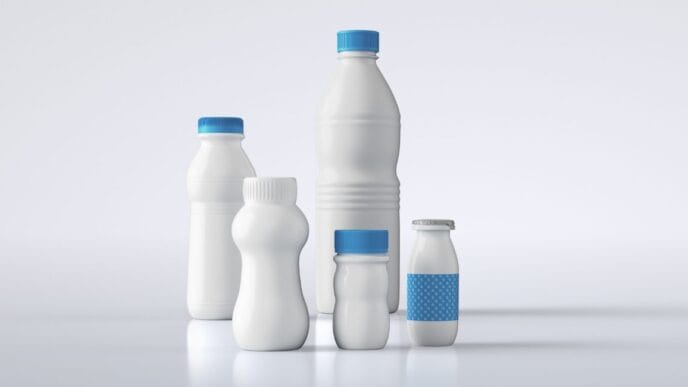
Glass packaging is very popular for cosmetic products, but it harbours a residual risk. Even a single shard of glass in the end product can seriously jeopardise the health of the consumer. Manufacturers and bottlers can protect themselves against this risk with an X-ray inspection system customised to their individual requirements.

Today, X-ray inspection systems are the method of choice for detecting glass-in-glass contaminants. However, not every system is equally suitable for every application. Rainer Mundt, Head of Marketing at Mettler-Toledo Product Inspection Germany, explains what to look out for before making an investment decision.
packaging journal (pj): Recyclable, odourless and tasteless, a positive image, versatile in design, comparatively inexpensive and environmentally friendly - the advantages of glass packaging are well known. Mr Mundt, how do you see glass as a packaging material from the perspective of a product inspection specialist?

Rainer Mundt When using glass packaging, I can only warn against underestimating the risk of possible glass-in-glass contamination. Conveyor belt vibrations, misaligned filling heads or over-tightened lids are just some of the possible causes that can lead to glass splintering and thus introduce chips into the product. If errors occur with glass as a packaging material, this always harbours a high risk of health and injury for the end consumer due to the properties of the material. Not to mention the associated long-term damage to the brand and image.
pj: X-ray inspection is a very demanding and complex technology compared to other inspection methods ...
Rainer Mundt That's right. Let's not beat about the bush: X-ray inspection is therefore also at the upper end of the price scale for inspection technologies. This quickly raises the question: Do I really need this? I think the question is quickly answered. Imagine you go to the American market with your cosmetic product with high expectations after years of preparation, and a customer injures her face with a glass chip while applying cream. Would you fancy the headlines and the compensation claim? From a technical perspective, glass-in-glass detection is the supreme discipline in foreign body detection, as the packaging and foreign body are identical in terms of material and density.
pj: Apart from the identical material properties of packaging and foreign bodies, are there other challenges that make it difficult to recognise glass-in-glass contamination?
Rainer Mundt Shape factors such as varying outer wall thicknesses and inwardly curved base crowns can lead to so-called blind spots on the X-ray image, which superimpose the glass foreign body. Impurities in the glass itself, such as metallic inclusions during the manufacturing process, can in turn affect X-ray absorption and detection.saffect sensitivity. Embossing, glass screw threads and varying glass thicknesses make inspecting the lid and shoulder area of glass containers very challenging. Conversely, the viscosity of the product is a valuable indicator of where foreign bodies are more likely to be deposited. Cold fillings of a semi-solid or viscous product can keep them in suspension. In the case of hot fillings with a lower viscosity, the foreign bodies tend to move towards the bottom of the container; in the case of liquids, they are very likely to be located exclusively there. It therefore makes a huge difference whether you are inspecting a facial toner, a skin care cream with a high water content or a more ointment-like skin cream. The viscosity of the product - as well as the shape factors of my container - must be included in the application analysis before I decide on a particular system design.
pj: Does this mean that I also need to look into the technical options of X-ray inspection technology to protect myself from making a bad investment?
Rainer Mundt Basically, yes. The complexity of the technology does not allow a one-size-fits-all approach. Expert advice is the top priority here. To roughly outline the topic here: In principle, horizontal beam systems are best suited for glass-in-glass detection. Simple single-beam systems along the surface of the conveyor belt achieve good detection inside the jar, but not in the often critical areas of the base crown, thread and lid. If I opt for a split-beam system, it is easier to recognise irregularly shaped glass fragments inside the container.
pj: ... but the problem areas are, as you said, mostly the crown, cover and thread ...
Rainer Mundt Correct. With a so-called combination beam system with a horizontal and a vertical X-ray beam, I increase the detection performance at the base of the vessel. I would consider angled beam systems, which use a single angled X-ray beam to illuminate the vessel floor and interior simultaneously, to be state of the art. A top view of the vessel base and lower vessel body makes the crown appear flat, and the X-ray beam runs flush with the vessel shoulder below the glass screw thread and lid. This avoids blind spots, has less image complexity and a higher detection performance both on the vessel floor and lower part of the vessel body as well as inside the vessel. Incidentally, I can also use such angled beam systems to carry out product conformity tests such as fill level checks. However, other factors determine the return on investment.
pj: Can you give us the most important Name parameters?
Rainer Mundt Customers are demanding ever higher belt speeds and throughput rates. As far as throughput rates are concerned, a multi-lane variant can bring significant increases. I would consider the minimisation of downtimes and set-up times and the avoidance of operator errors and false rejects to be even more important. Today, we are talking about X-ray inspection systems that no longer require manual set-up of the product. The operator learns the system for a new product by carrying out the inspection process for this product just a few times. The inspection system recognises and saves the product characteristics and automatically adjusts the required power and the settings of the inspection tools. This eliminates the need for time-consuming and costly operator training. At the same time, device and line availability as well as energy efficiency are improved thanks to the combination of power and X-ray contrast that is customised for each product. Going one step further, I bundle the data from the product inspection systems in data management software, such as the one we market with ProdX.
pj: What advantages do I gain from bundling data in this way?
Rainer Mundt This allows me to achieve a new level of quality in terms of automation and compliant documentation of my compliance requirements. I have real-time access, even remotely, to the data from all the inspection systems and can use their evaluation and analysis to initiate further incremental improvements in my production line. This goes far beyond glass-in-glass inspection. We are happy to advise and support our customers in advancing corresponding integration projects step by step - also with a view to Industry 4.0.