Sappi is consistently developing its product range. In addition to high-quality fine papers, it now also includes packaging papers and speciality papers for the ecological packaging of the future.
11 August 2020
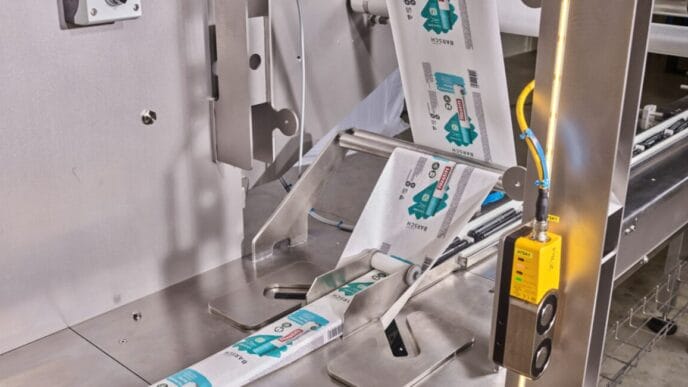
Sappi already offers its customers a broad portfolio of barrier papers. (Image: Sappi)
For decades, Sappi has held a leading position among paper manufacturers thanks to continuous innovation and investment. The product portfolio has been continuously developed. Today, it ranges from high-quality fine papers for publications and chemical pulp to packaging and speciality papers for the ecological packaging of the future.
The company was founded on 17 December 1936 near Springs as South African Pulp and Paper Industries. It quickly became the abbreviation SAPPI, which has been used officially since the name was changed in 1973. At that time Graphic papers of the finest quality. Anyone who wants a particularly classy-looking annual report, a brilliantly coloured invitation card or a flyer with an impressive degree of whiteness still uses Sappi paper today.
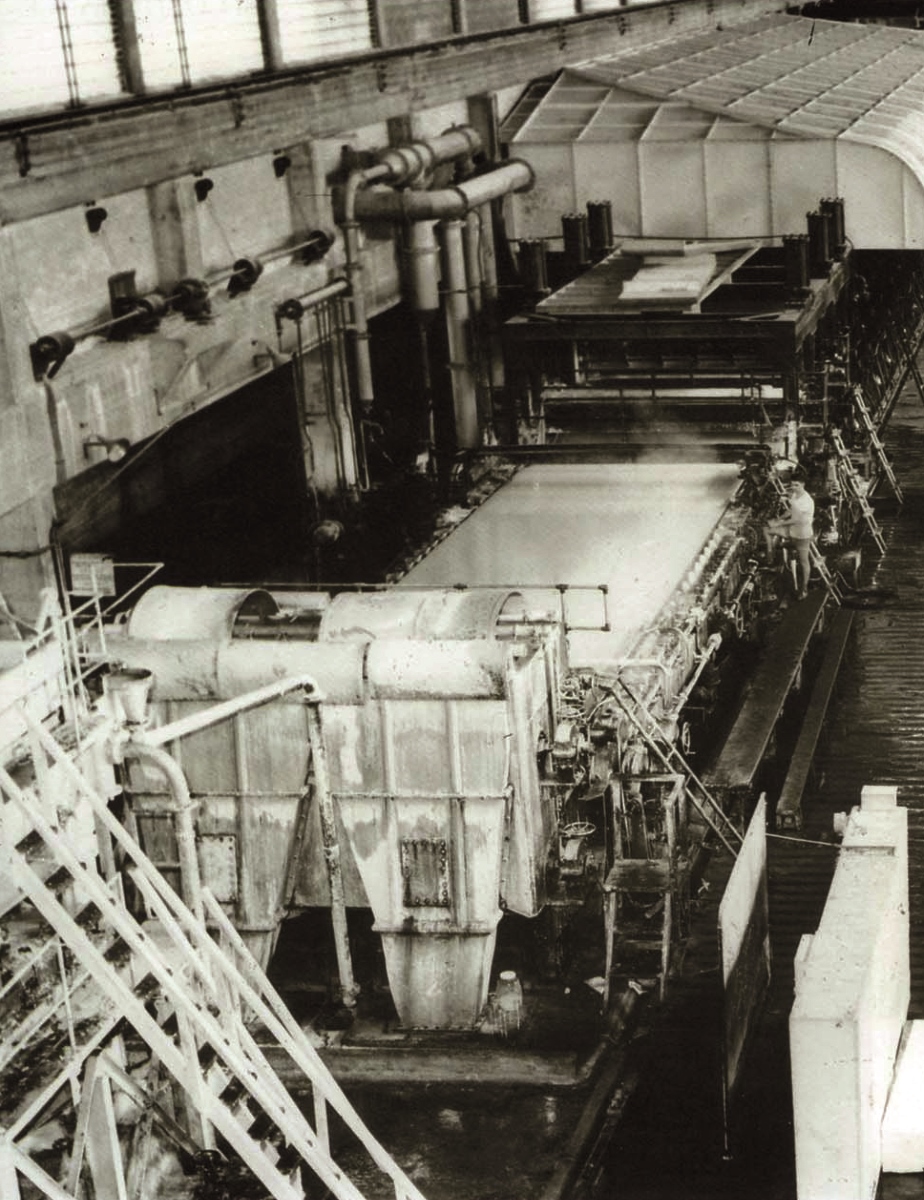
Production took place here from 1936 to 1943. (Picture: Sappi)
As digitalisation progressed, demand for these products fell. This required a rethink. The management of the Sappi Group identified the area of Packaging and Speciality Papers exactly the right division for the expansion.
With the „2020 Vision“, developed in 2015, the managers restructured the expansion of the packaging and speciality papers division and made substantial funds available for research and development as well as the acquisition of several paper manufacturers, such as the Cham Paper Group, and the conversion of various paper machines. In Europe, the focus was on Germany, the UK, the Netherlands and Belgium.
Display
Sappi offers its customers Back-up solutions, because papers and cartons can be produced on more than one paper machine or in different paper mills. This guarantees brand manufacturers, converters and agencies Long-term security of supply for the products they use - worldwide.
The company now employs more than 12,800 people. They manufacture various products based on wood as a raw material and conduct research into new innovations. With a total of 18 production sites on three continents, the company has a global presence and supplies customers in more than 150 countries.
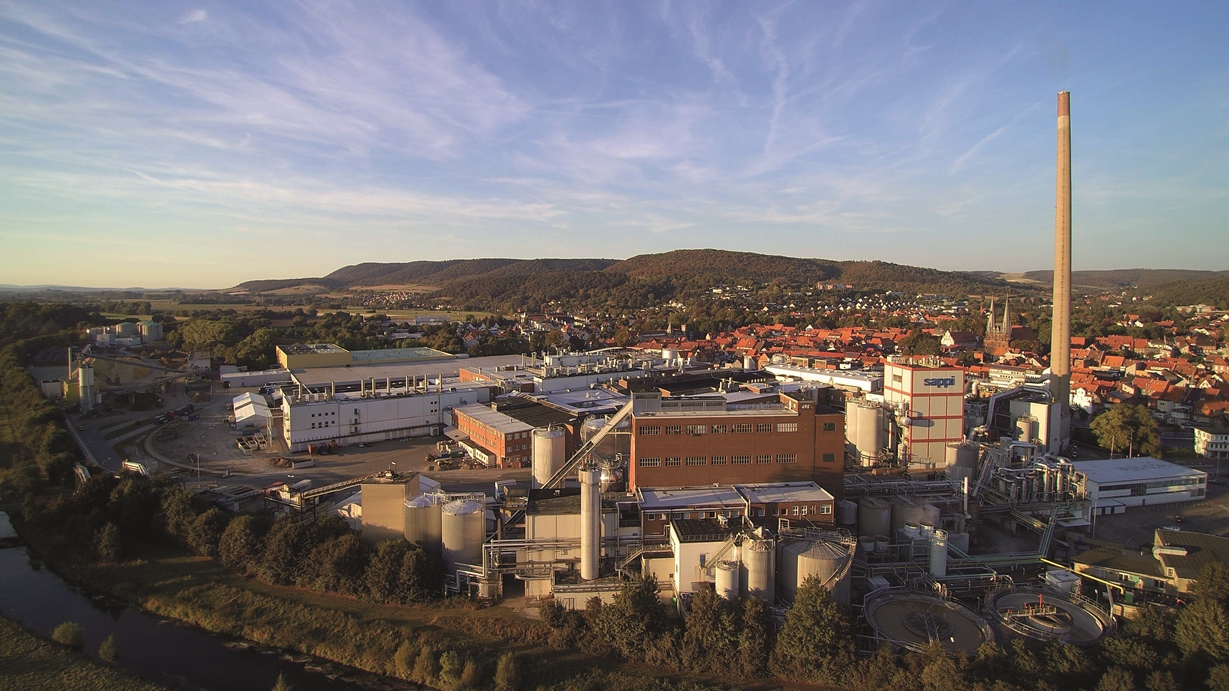
The Sappi plant in Alfeld today. (Picture: Sappi)
Investments in production capacity and technology
Sappi's largest business area is and remains paper, and the company's investments over the past three years have also been geared towards this. More than 300 million US dollars have been invested in the Conversion of various paper machines, to convert mainly graphic arts mills to the production of packaging and speciality papers and to increase production capacity.
Two projects in Europe should be emphasised. In Maastricht, Sappi produces the outstanding Algro Design pulp board and the Atelier mechanical pulp board, among others. „We have rebuilt our PM6 paper machine in Maastricht in order to be able to reliably offer our customers these high-quality qualities. The multi-million euro investment resulted in a globally unique and innovative production technology,“ says Matthew Campbell, Product Group Manager Paperboard at Sappi Europe, explaining the path to the product launch.
Back in 2014, the plant was Alfeld in Lower Saxony completely converted to the production of packaging and speciality papers. Thanks to the 68 million euro investment in the rebuild of the PM, all five paper machines Packaging and speciality papers produced.
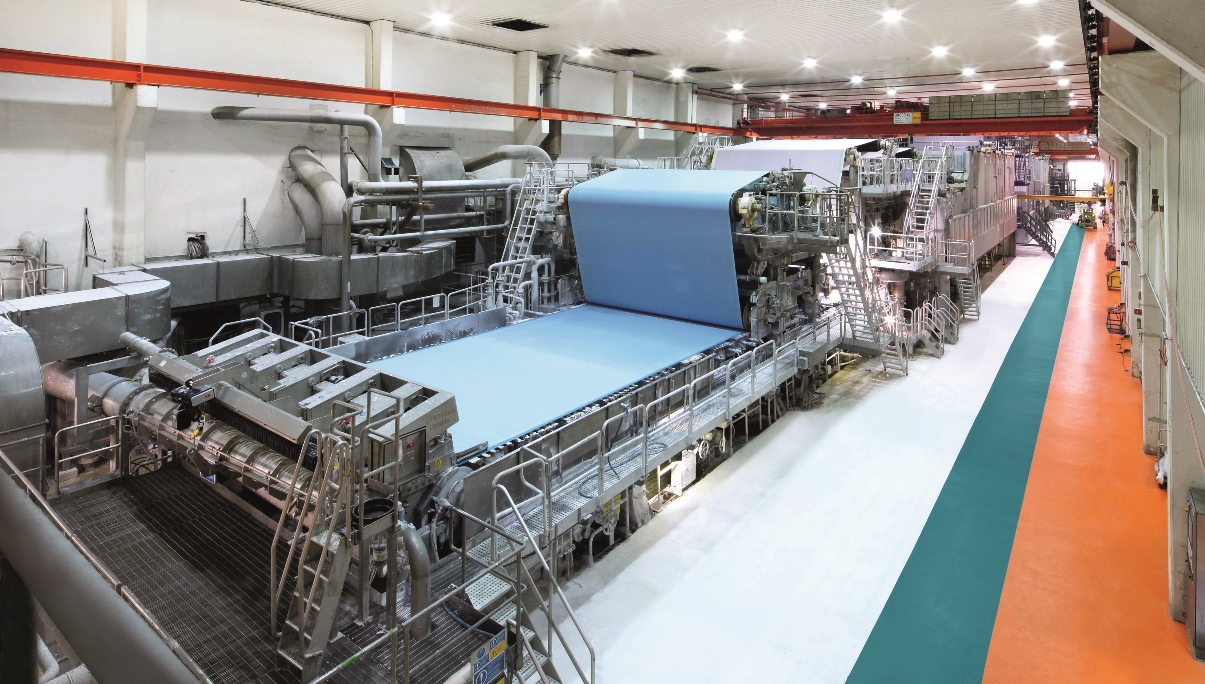
The rebuilt PM2 paper machine was inaugurated in March 2014. Since then, the state-of-the-art inline machine in Alfeld has been producing speciality papers coated on one side. (Image: Sappi)
Two further plants in Carmignano and Condino (both in Italy) for the production of exclusively packaging and speciality papers were added with the Acquisition of the Cham Paper Group added.
This strategic reorientation is now bearing fruit. Last year alone, Sappi produced and sold Worldwidemore than one million tonnes of packaging and speciality papers.
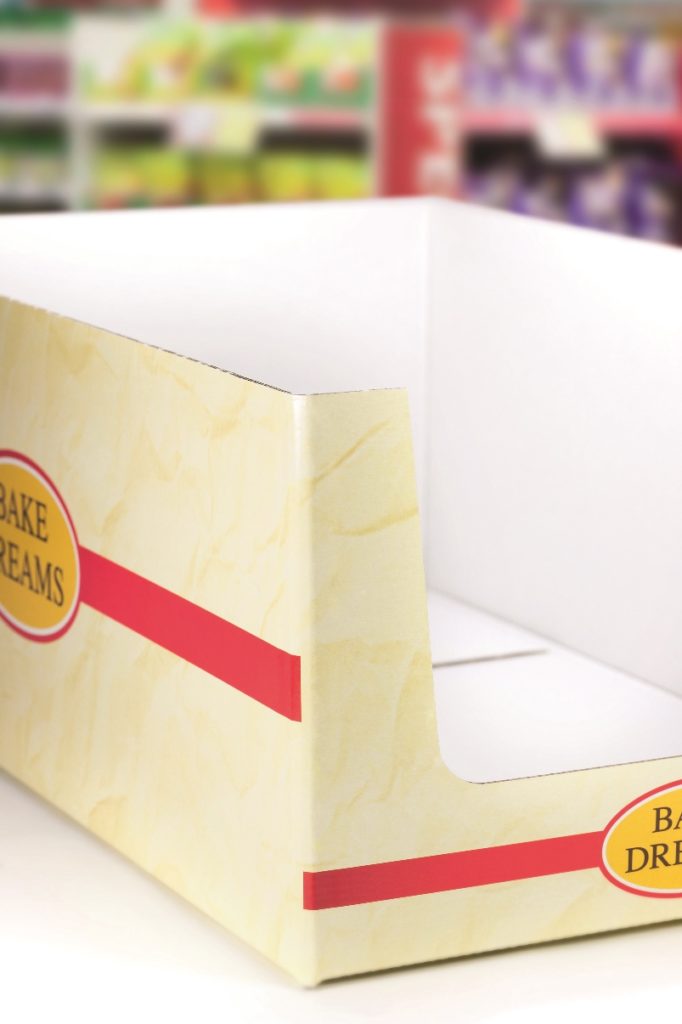
Sappi's Fusion Topliner turns shelf-ready packaging into an eye-catcher (2017). (Image: Sappi)
Ecologically manufactured product in sustainable packaging: Sappi's containerboard portfolio makes it possible (2017). (Image: Sappi)
Benchmark for an entire industry
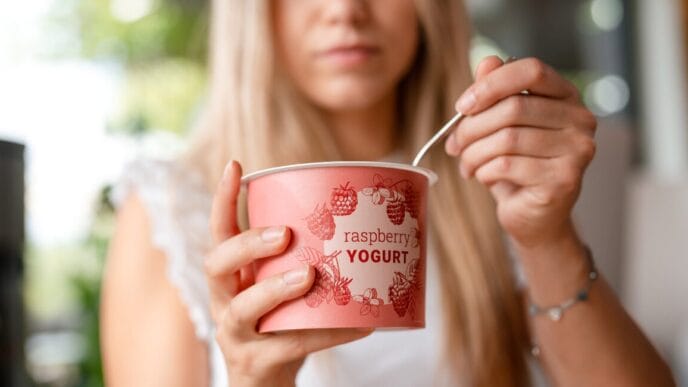
The portfolio includes more than 100 different papers and cartons: The „Flexible Packaging Papers“ are ideal for tea bag outer packaging, yoghurt pot sleeves and lids, sachets (e.g. for dried soups), chocolate wrappers and much more. They are often regarded as the benchmark for an entire industry: „The paper must be of the same quality as Sappi's Algro Finess,“ is one of the things we hear.
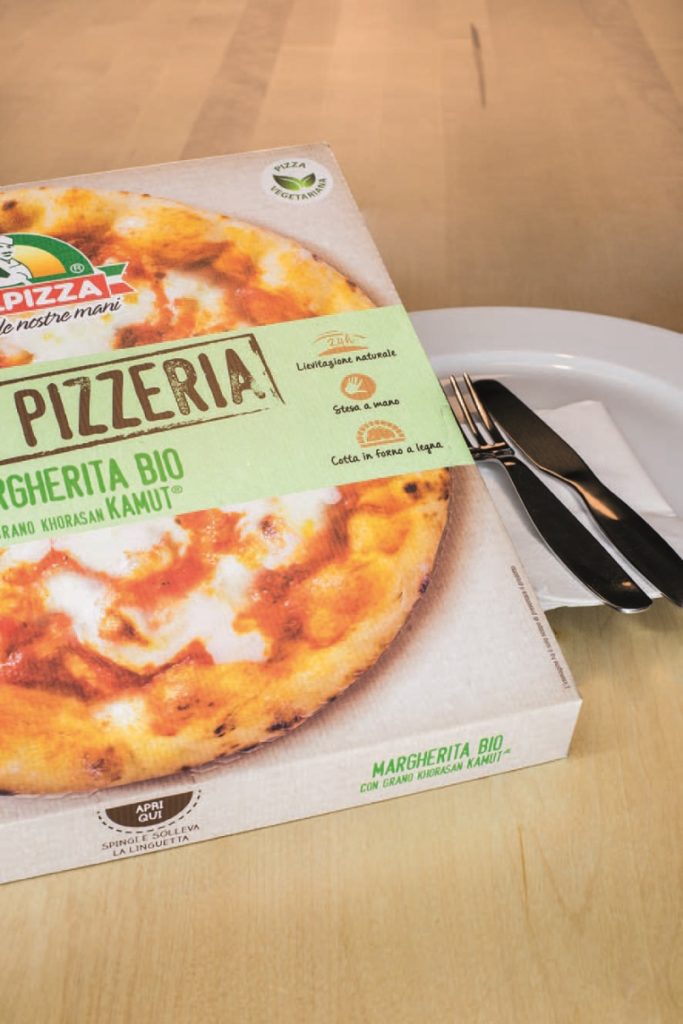
Label papers that are made from the „Label Papers“ The high-quality materials used by Sappi give the products a high-quality appearance. Added to this are the areas Container boardd with products for corrugated board applications, such as packaging and displays, and Paperboard with a wide range of applications for folding carton packaging of high-quality products in the highest quality and with the most brilliant colour reproduction.
Thomas Kratochwill, Vice President Sales & Marketing Packaging and Speciality Papers at Sappi Europe (Image: Sappi)
„The variety of functional papers that Sappi offers the market today is unique in the world. No other paper and board specialist has a comparable range.“ Thomas Kratochwill, Vice President Sales & Marketing Packaging and Speciality Papers at Sappi Europe
Perfectly matched to the respective product requirements ...
The most innovative area among packaging papers is „Functional Paper Packaging“, a new category of the „Flexible Packaging Papers“. Thanks to their diverse integrated functions, such as barrier properties and heat sealability, they fulfil the market requirements for a sustainable and recyclable mono-material for packaging. And has been for over ten years.
„With our innovative ‚functional paper packaging‘, plastic films and composite solutions can be substituted in the interests of sustainability,“ explains René Köhler, Head of New Business Development Packaging Solutions, Innovation & Sustainability Division at Sappi Europe. The papers can also be added to the very well established Recycling cycle are supplied.
One of the latest results of an intensive collaboration with branded goods manufacturers and other partners is the ecological packaging for a new range of nut and fruit bars made from Sappi Guard. To this end, the world's largest food group co-operated with Sappi and Constantia Flexibles.
Together with the world's largest food manufacturer and strong partners, Sappi developed a sustainable packaging solution for nut and fruit bars in 2019. (Image: Sappi)
The solution fulfils all requirements in terms of packaging recyclability, food protection and shelf life. Sappi raised the bar even higher and developed a Completely chlorine-free and therefore extremely sustainable high-barrier paper. Sappi AvantGuard, the second generation of functional barrier papers, is set to make its debut at interpack 2020.
Through a cooperation with the Felix Schoeller Group and the acquisition of Rockwell Solutions, the manufacturer has once again significantly expanded its production expertise and can thus offer its customers customised solutions: perfectly tailored to the respective product requirements. Brand manufacturers and converters are now benefiting from the expertise that the innovation leader has acquired.
[infotext icon ]The fact that Sappi is the global market leader in functional paper packaging is due to the foresight of the company's management, which recognised this more than ten years ago: Papers with integrated functionalities, such as barrier properties and heat sealability, will be the Top seller among packaging papers be. Made from renewable raw materials, they can be recycled and can replace plastic films and laminates made from various materials.
... and the trends of the market
Another unique selling point of the application-oriented solution approach is: „In the many projects that we have already realised together with leading brand manufacturers, one thing has become clear: Every application requires a specific solution. This is because each product has its own very specific requirements for the properties of the packaging paper. Added to this are the various parameters of the packaging process. Our approach is therefore both exciting and unique,“ says Thomas Kratochwill, Vice President Sales & Marketing Packaging and Speciality Papers at Sappi Europe, with conviction.
Customers can rely on the Intensive and competent advice The experts' expertise is essential: from product selection and product development through to the packaging process, because the product, material and machine must form a functional unit.
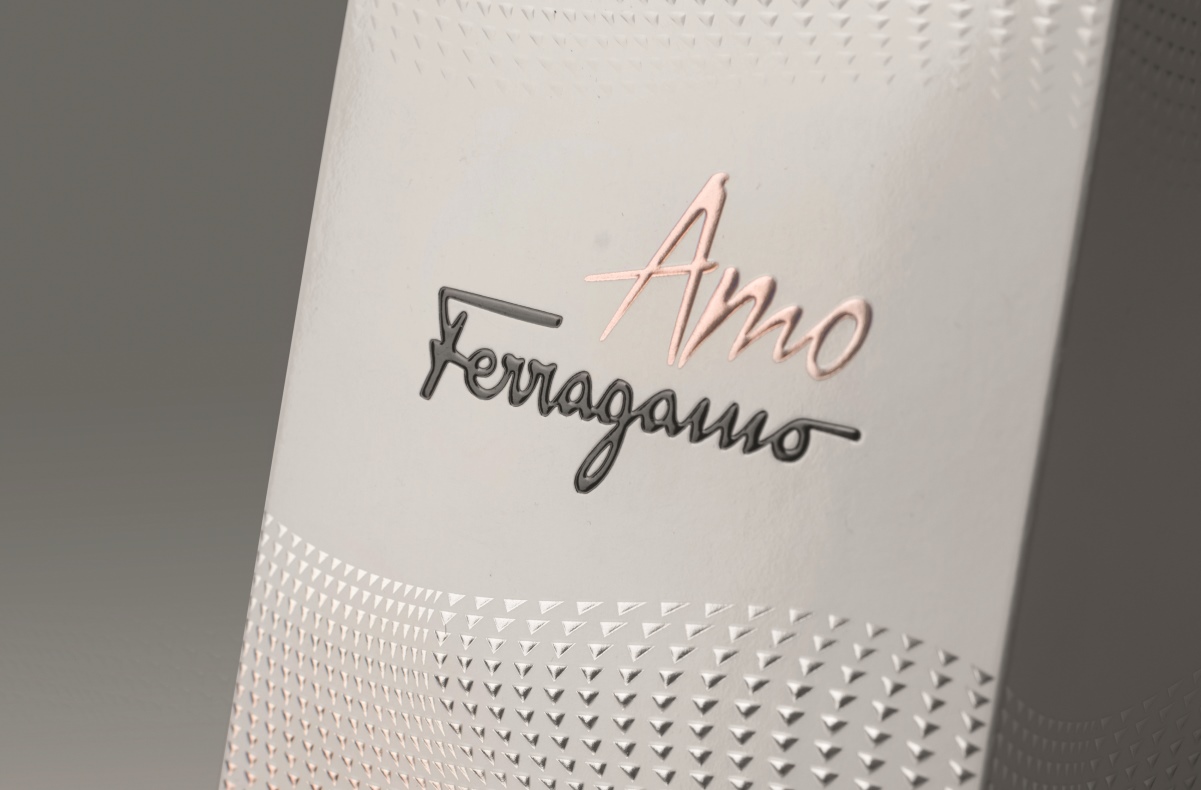
The new packaging for the Amo perfume by Salvatore Ferragamo (2019) is characterised by its elegance. It is made from the high-quality GZ fresh fibre board Algro Design. (Image: Sappi)
Thinking sustainability three-dimensionally
Sappi's entire business activity is based on a renewable raw material. As a logical consequence Sustainability with all its facets is firmly anchored in the corporate philosophy. Since 2003, the Group has regularly published a Group Sustainability Report, in which the company has also incorporated some of the UN's Sustainable Development Goals.
This sustainability report is a transparent and honest account of what has been achieved and identifies issues that still pose a challenge to all those involved. An important ecological milestone was the conversion of the Alfeld plant to a Completely chlorine-free bleaching process (total chlorine free) - the first plant in the world to do so.
[infotext]Sappi |Milestones in the company's history
1936: Foundation of the company as South African Pulp and Paper Industries Ltd 1938: Production of the first paper with straw as the base material 1948: Wood fibres replace straw as a material for paper production 1968: Patent for the bleaching process with sapoxyl 1973: The company is renamed Sappi Ltd 1986: Foundation of Sappi International for export sales 1989: Acquisition of Saiccor and thus expansion of the portfolio to include chemical pulp 1990: Foundation of Sappi Europe 2013: Presentation of the mineral oil barrier papers 2014: Conversion of PM2 in Alfeld for the production of speciality papers 2016: Market launch of the first generation of high-barrier papers[/infotext].