Before the sensitive COVID-19 vaccine arrives at the vaccination centres, it has to be produced and filled in large quantities, packaged, transported and distributed worldwide.
5 February 2021
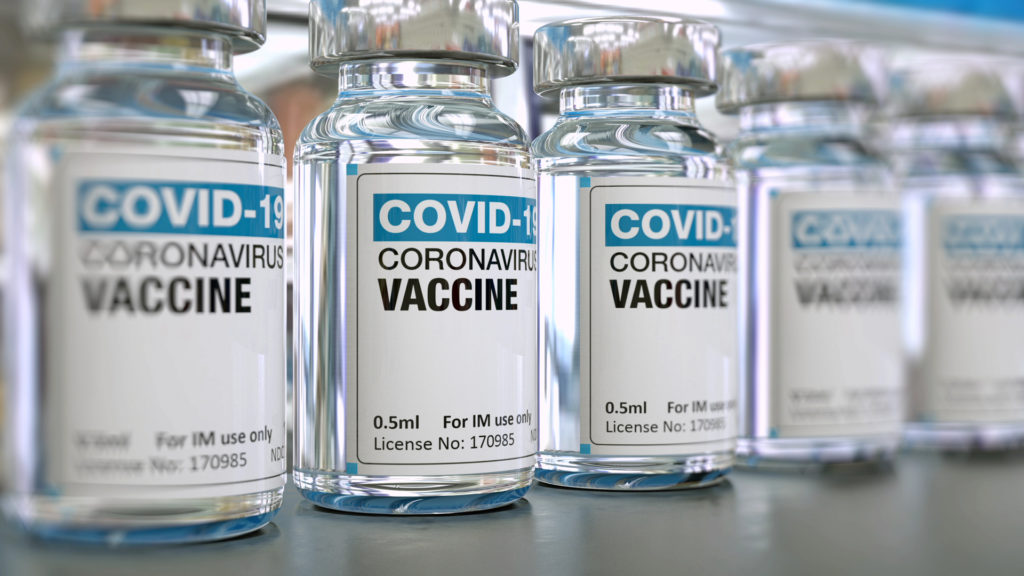
Borosilicate glass is highly inert and protects against any interaction between the drug and the container. (Image: Schott AG)
Never before has a vaccine been developed, tested and made available in such a short time. It took less than a year to get the first coronavirus vaccinations. This is not only a scientific achievement, but also a logistical one. After all, the vaccine has to be produced and bottled in large quantities, packaged, transported and distributed worldwide.
Most of the primary packaging for the vaccine is supplied by the Mainz-based speciality glass manufacturer Schott. Its pharmaceutical vials are used in three quarters of COVID-19 vaccine projects worldwide. The high-purity, so-called borosilicate glass was developed by company founder Otto Schott in Jena in 1887. The material is highly inert and protects against any interactions between the drug and the container, making it ideal for COVID-19 vaccines.
Schott will supply glass vials for around two billion vaccine doses. (Image: Schott AG)
Even before coronavirus, the demand for pharmaceutical glass and packaging was steadily increasing. The Mainz-based company therefore announced back in March 2019 the largest investment programme in the company's history - one billion US dollars in the pharmaceutical sector.
(Image: Schott AG)
„We will have implemented 50 per cent of these projects by the end of 2021 and will be able to ramp up capacity thanks to the early investment. Despite the coronavirus crisis, all projects are still on schedule.“ Fabian Stöcker, Vice President Global Strategy and Innovation at Schott Pharmaceutical Systems
Display
Expansion of glass tube production
The glass specialist has just announced that it is investing in a second furnace for pharmaceutical tubing at its main plant in Mainz. Schott does not produce vials or ampoules there, but instead the glass tubes required as a preliminary product. The new plant is scheduled to go into operation in mid-2022.
„We decided in favour of the Mainz site in order to further strengthen our production base for pharmaceutical glass tubing in Germany and Europe. Of course, we also have the local manufacturers of vaccines against the COVID-19 pandemic and the European pharmaceutical industry as a whole in mind.“ Dr Frank Heinricht, Chairman of the Executive Board of Schott AG
The pharmaceutical glass production in Mainz is part of a global production network of the Tubing division, which also includes the Mitterteich site in the Upper Palatinate and factories in Brazil, India and China. In autumn 2020, Schott has already Production capacities for pharmaceutical tubing in Asia significantly expanded. The plant in India was expanded to include two new furnaces for the production of pharmaceutical tubing, and in China built a completely new plant for pharmaceutical tubes, which was tempered in November 2020.
The plant produces borosilicate glass tubes under the brand name FIOLAX - the Base material for pharmaceutical packaging such as vials, ampoules, syringes and cartridges, which the vast majority of COVID-19 vaccine projects rely on. The plant, with an initial capacity of 20,000 tonnes of glass per year, is equipped with state-of-the-art production technology and follows the perfeXion philosophy - the 100 per cent inspection of each individual tube through the use of state-of-the-art big data methods.
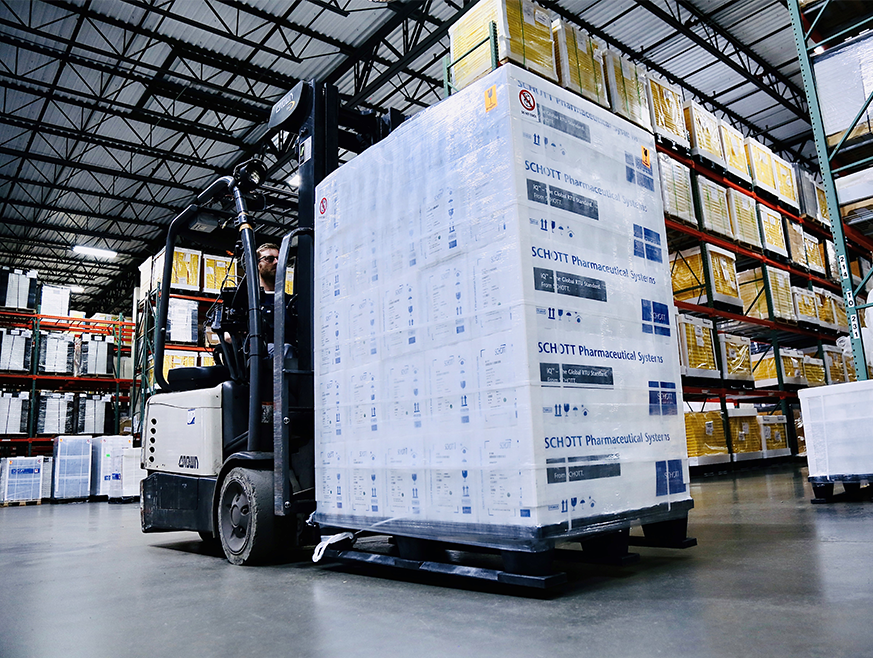
Investment in the expansion of pharmaceutical container production, including at the US site in Lebanon. (Image: Schott AG)
This is in line with the approach of other Schott pharmaceutical tube production facilities worldwide. Production at the new plant comes at a time when borosilicate tubing is in high demand. Schott sells the glass to external packaging manufacturers, but also processes the tubes itself into vials and other pharmaceutical containers. Investments were also made on the converting side worldwide in the expansion of the production of pharmaceutical containers, for example, with new lines in Müllheim in Baden-Württemberg or at the US site in Lebanon.
Glass vials for two billion vaccine doses
Billions of the small glass vials are needed to distribute the vaccine worldwide. „With regard to COVID-19, we have decided to do this, not of quantities, but of vaccine doses to talk about. The background to this is that the various projects pursue very different concepts. Some want to pack one dose in a small vial, while others want to pack five or more doses in a larger vial,“ says Fabian Stöcker.
„As of today, we have Supply agreements with over 75 per cent of all vaccine projects, that have already been authorised or are undergoing clinical trials. We are not allowed to disclose details, but we can say that these projects are well advanced and are regularly reported on in the media. If you add up the volume of these projects, we will supply vials for around two billion vaccine doses.“
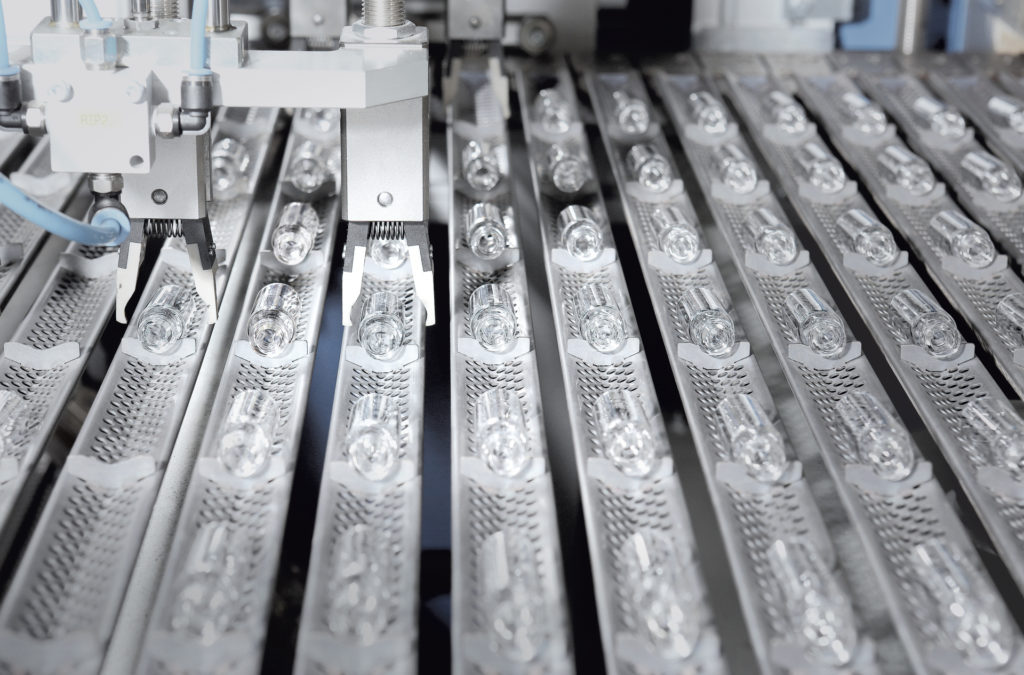
Schott produces millions of ISO-standardised standard vials every day. (Image: Schott AG)
The glass manufacturer is optimistic that global demand can be met. Even before the pandemic, all major manufacturers had already made significant investments to expand capacity, according to Schott. In addition, the processes along the supply chain have not changed despite the pandemic. They are based on standardised and established processes in which the packaging of medicines is planned from the outset.
Stöcker: „As a packaging manufacturer, we know several months in advance when we have to deliver how many vials. In addition, the vials to be supplied are ISO-standardised standard vials. We produce millions of these day in, day out.“ Overall, the The challenge during the coronavirus pandemic was more about logistics of the filled vials.
Global demand for pharmaceutical glass can be met
Already in the summer the leading pharmaceutical packaging manufacturers Schott, Gerresheimer and Stevanato Group issued a joint declaration on the provision of packaging for coronavirus vaccines. Each of the three companies produces billions of vials made of so-called borosilicate glass type 1 every year. This type of glass is the quasi-standard in the pharmaceutical industry when it comes to packaging for vaccines. Fabian Stöcker: „With the joint declaration, we wanted to send a signal to the market and create trust in the global pharmaceutical supply chain.“
[infotext icon]SCHOTT is a leading international technology group in the fields of speciality glass, glass-ceramics and related high-tech materials. The speciality glass manufacturer produces over eleven billion pharmaceutical packaging units per year and has a global production network with 20 plants and more than 600 production lines for pharmaceutical glass and packaging. In the 2019 financial year, the Group generated sales of 2.2 billion euros with over 16,200 employees. The SCHOTT AG has its headquarters in Mainz and is wholly owned by the Carl Zeiss Foundation. This is one of the oldest private and largest science-promoting foundations in Germany[/infotext].