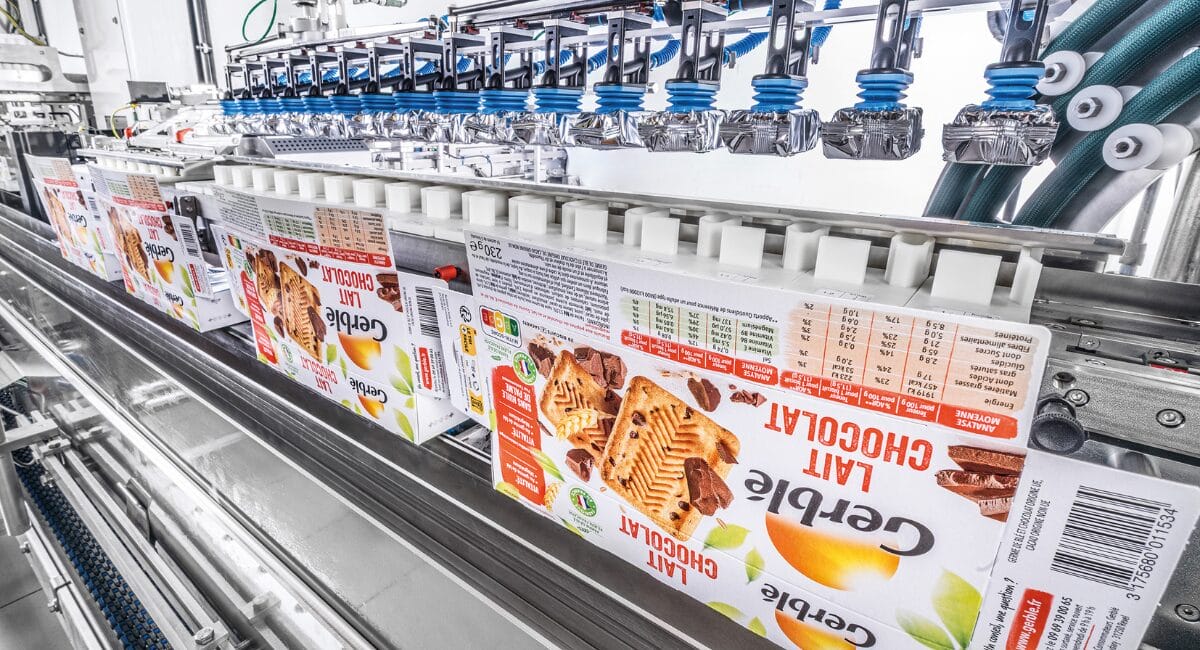
Conveyor belts as far as the eye can see; thousands of products that are placed in tubular bags and boxes in piecework: The thought of packing lines conjures up enormous constructions in the mind's eye. These also exist. Just as present are compact system layouts which, in view of high costs and a large variety of products, are evidence of an industrial rethink. Exploring a little-noticed industrial sector.
If you subtract equipment, furniture and staff, production halls are above all one thing: ordinary property. And like corresponding flats or houses, they are expensive: because in many places strong demand meets a limited supply of space, the price rises. According to industry consultant CBRE, take-up in Germany fell by eight per cent to 4.9 million square metres in 2024. The general price index for commercial property in Germany was around 129.5 points in 2024, which represents a sharp increase compared to the base year 2010 (100 points).
Energy prices are also rising steadily. In Germany, the price of electricity has risen significantly over the past decade, imposing high costs on companies, for example for core processes such as cooling, heating and processing.

Away from the big lines
Reason enough for companies to rent cost-effectively, but also to produce accordingly. But how can this be achieved if performance and flexibility are to remain high? The systems themselves offer a major lever: Instead of large, static constructions that process only a small number of products at a constant rate, companies are increasingly using on space-saving, flexible concepts. These variants are in no way inferior to their larger counterparts.
„A clear trend is emerging in today's manufacturing landscape: machines must be economical, versatile and intuitive to operate. Costly moulds and lengthy format changeovers no longer meet the requirements of today's industry. This is particularly evident in the biscuit and baked goods industry: versatile packaging solutions for small batches are very popular.“
Luc Jamet, Product Manager at Gerhard Schubert GmbH
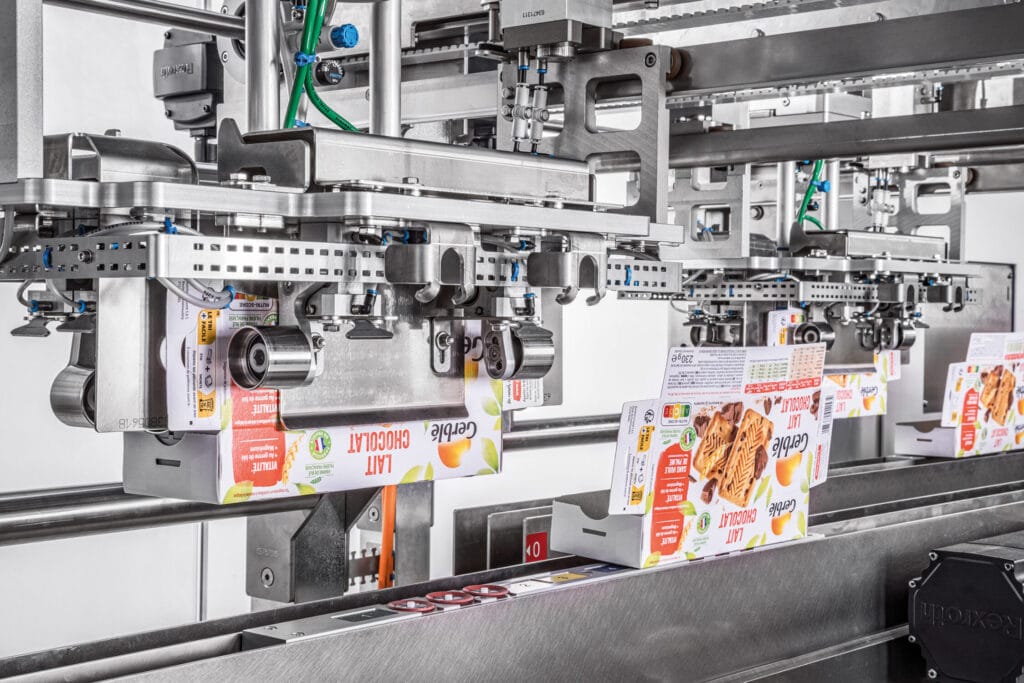
It goes without saying that this is not just about smaller systems: Rather, users and manufacturers like Schubert are spurred on by the Combination of reduced footprint, ease of use and high performance on. „A system that is small but difficult to access would be of no use to anyone, especially when it comes to maintenance and cleaning,“ emphasises Jamet. At Schubert, this is reflected in machines that erect cartons in a single lane instead of multiple lanes, for example. This means that between 60 and 80 cartons can be processed per minute.
Fewer tools
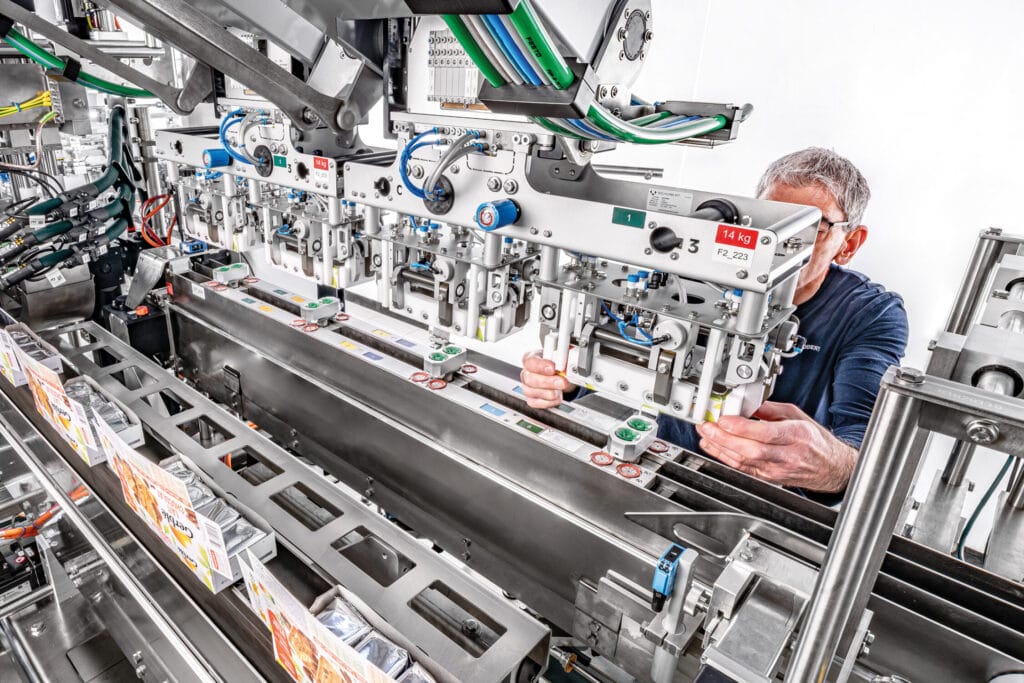
Due to the single-lane erection, such systems require fewer robot units. The result is an overall more compact, cost-effective machine design that can be realised with manageable system components. scores points. Just as essential are quick changeovers, which determine the daily production routine in view of smaller batches. „We therefore pay particular attention to more favourable, weight-reduced tools,“ explains Jamet. For example, a new capping mould from Schubert contains significantly fewer screws and components than before. As a result, it weighs 50 per cent less than before and only requires one operator for replacement.
As the footprint is also a factor for many users, systems with a compact layout are becoming increasingly important. These can already achieve a high output on 2 x 2.5 metres. The underlying technology makes it possible. At Schubert, this is ensured not least by manoeuvrable, space-saving robots, which support the pick & place process according to the delta principle, for example. Up to six of these machines can be accommodated in the smallest of spaces and work together seamlessly as a „team“.
The control and drive technology also requires less space today, as the machine manufacturer has consistently relocated and reduced it. While large control cabinets next to the machines were the norm for decades, more and more electronics are now located in the housing of the systems, for example in the upper frame area. „Modern automation means miniaturisation, to save energy and space. We started doing this with our TLM machines back in the mid-1990s and have continued to do so from generation to generation,“ emphasises Jamet.
More power for the south of France
What this looks like in practice can be seen in Revel, France. This is the headquarters of Nutrition & Santé, a pioneer in gluten- and lactose-free products and sports nutrition. International expansion began in 1988 with a popular biscuit range, which is available in Spain, Belgium and Italy as well as France.
At the Revel plant, Nutrition is pursuing two ambitious goals: to produce more without sacrificing flexibility. The portfolio, which has grown over the years, made both essential. „Our new packaging solution had to keep pace with our growth, fulfil quality standards and enable quick format changes - all at lower costs,“ says Pierre-Louis Nicolau-Guillaumet, Project Manager at Nutrition & Santé, describing the requirement.
The initial spark for the cooperation with Schubert was Interpack 2023. TLM Comfort Feeder and A6 Erector the packaging machine manufacturer presented a completely new, efficient feeding system for carton blanks. At the time, Nutrition & Santé was intrigued by innovative tools. Manufactured using the 3D printing process, they promised significantly better handling than conventional solutions due to their low weight. The French team saw this as an opportunity to achieve its own production targets and asked for a proposal.
Simpler packaging
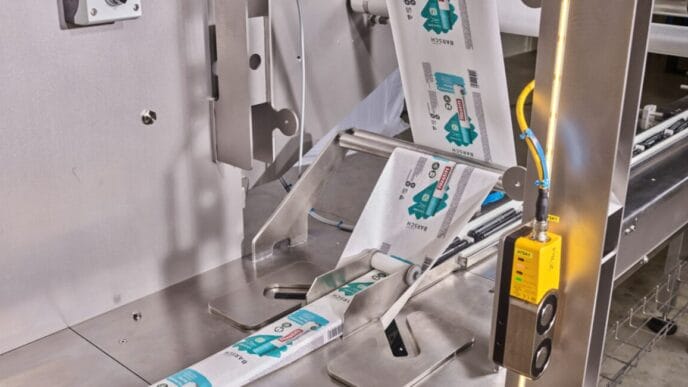
The machine concept created by Schubert was so convincing that Nutrition ordered a new system with a flowpacker, cartoner and two single-lane A3 erectors in December of the same year. For the Packaging of a total of 13 different types of biscuits (including rectangular and round biscuits, chocolate-nut varieties and filled bars) is provided by a flowpacker that reliably wraps the products in protective film. As the machine uses a simple belt instead of a conventional carrier chain, format changes can be carried out without the need for time-consuming replacement of the carriers.
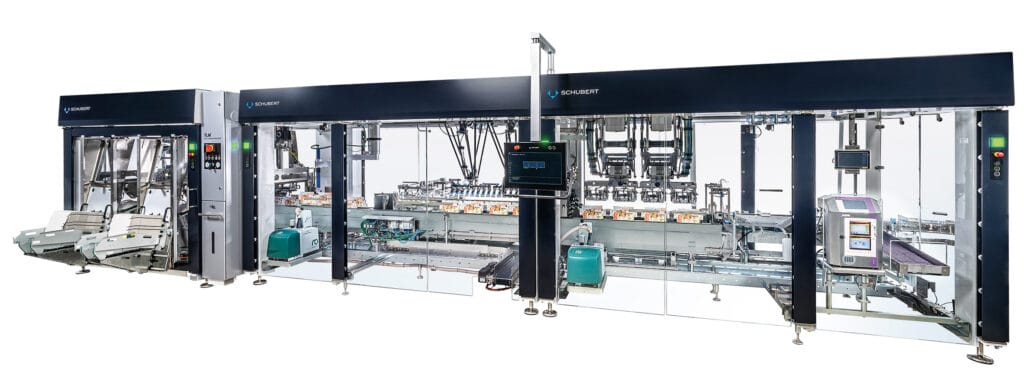
The centrepiece of the system is the versatile TLM cartoner that flexibly handles seven bag formats and box sizes. At Nutrition's request, two compact A3 erectors were integrated. These precision machines unfold blanks from the magazine and place them precisely onto vacuum conveyors. Pure performance is demonstrated in the next step: a nimble four-axis robot arm picks up two cartons at a time, transports them onto a transport carriage and brings them precisely to the filling position.
„The double A3 erecting solution gives Nutrition & Santé a significant capacity boost with a compact layout and low format costs,“ explains Christiane Buchstab, Sales Account Manager at Gerhard Schubert GmbH. Parallel operation achieves peak values of 70 to 80 cartons per minute, while single operation realises around 43 cycles.
When it comes to changeovers, the solution really comes into its own: Nutrition requires customised grouping chain cells for different primary packaging sizes. Schubert has developed a pioneering Design that enables the entire grouping chain hoist to be removed. „The new components are considerably lighter, and the magazine plates are more compact and easier to handle,“ says Buchstab, describing the increase in flexibility. „The new packaging line delivers exactly what we need: a strong production boost and material savings,“ summarises Nicolau-Guillaumet.