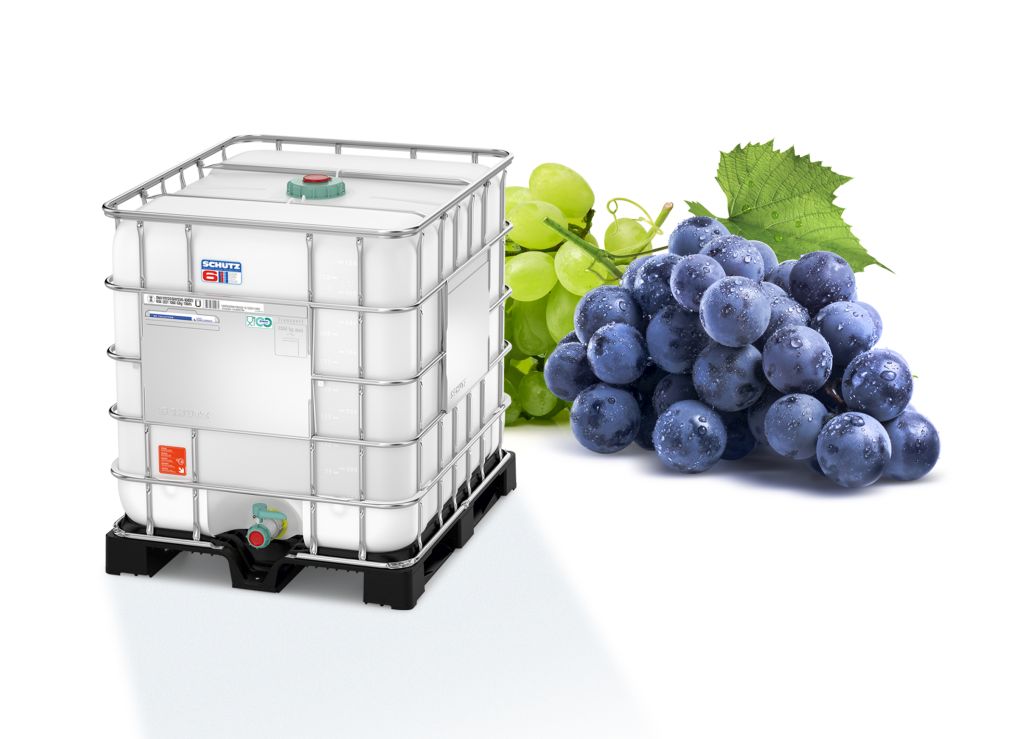
Intermediate bulk containers (IBCs) are excellent for storing, maturing and transporting wine. Schütz Packaging Systems knows this, which is why it successfully had its „Wine-Store-Age IBC“ tested in Australia three years ago. Positive test results have now also been received from Germany. Schütz is now looking for winegrowers and wineries who would like to test the wine IBC.
The Institute of Oenology at the University of Geisenheim has given the „Schütz-"Wine-Store-Age IBC“ recently certified that it is very suitable for use in wineries after conducting a series of scientific tests. The institute had vinified a dry 1996 Rheingau Riesling in the „Ecobulk Wine-Store-Age“. Equipped with EVOH barrier With its controlled oxygen supply, this type of IBC offers optimum conditions for maturing, storing and transporting wine, the scientists found.
Similar results were obtained three years ago by the Australian Wine Research Institute (AWRI) with a Shiraz red wine in the barrique version.

In order to continue the tests in daily practice, Schütz is looking for innovative winemakers who would like to test the Wine Store Age IBC from now until 1 August 2018.
With the „Wine-Store-Age IBC“, Schütz is making inroads into an area that has so far been dominated by traditional wooden barrels or plastic or stainless steel tanks. Schütz recommends its product as a cost-effective alternative, especially for small wineries, in order to be able to age, store and transport wine in a space-saving manner. As the containers are easily stackable, even tight spaces can be ideally utilised. For the Plastic IBC The fact that it can be emptied almost completely via a corresponding valve also speaks in its favour. It is also easy to clean from the inside.
Oxygen is both a benefit and a risk for wine
In practice, it is the winemaker's task in the cellar to Oxygen penetration into the stored wines within narrow limits. Too much oxygen causes the grape juice to age more quickly and damages the flavour. Nevertheless, a certain amount is needed to favourably influence phenol content, colour, tannin and other flavours.
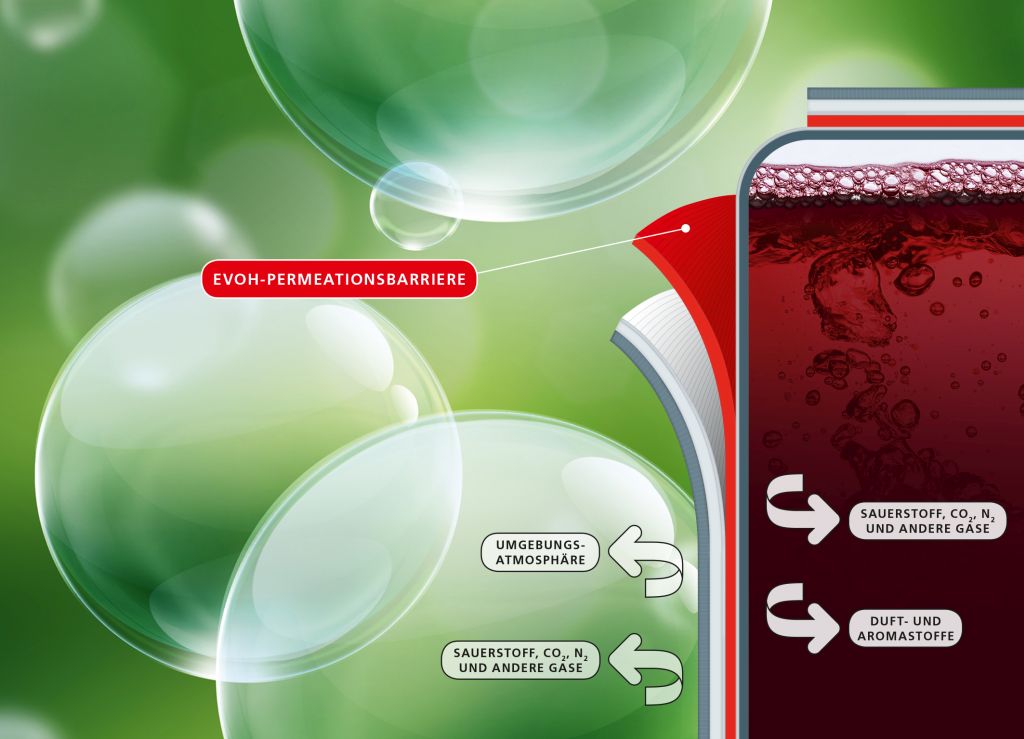
The contactor „Wine-Store-Age IBC“ offers a solution to this challenge. It has an EVOH permeation barrier against the entry and exit of oxygen, nitrogen and other gases. Its effectiveness has already been proven in the Australian study. The wine IBC is also certified to the highest current food industry standard, FSSC 22000.
German study compared wine IBCs with stainless steel storage
In 2017, Schütz also commissioned the University of Geisenheim with the investigation of the container properties. The aim of the investigation was to, Plastic container with integrated Oxygen barrier compared to containers made of inert materials such as stainless steel.
Various series of tests were carried out. Wines were matured in the different types of container and compared with each other after three and six months.
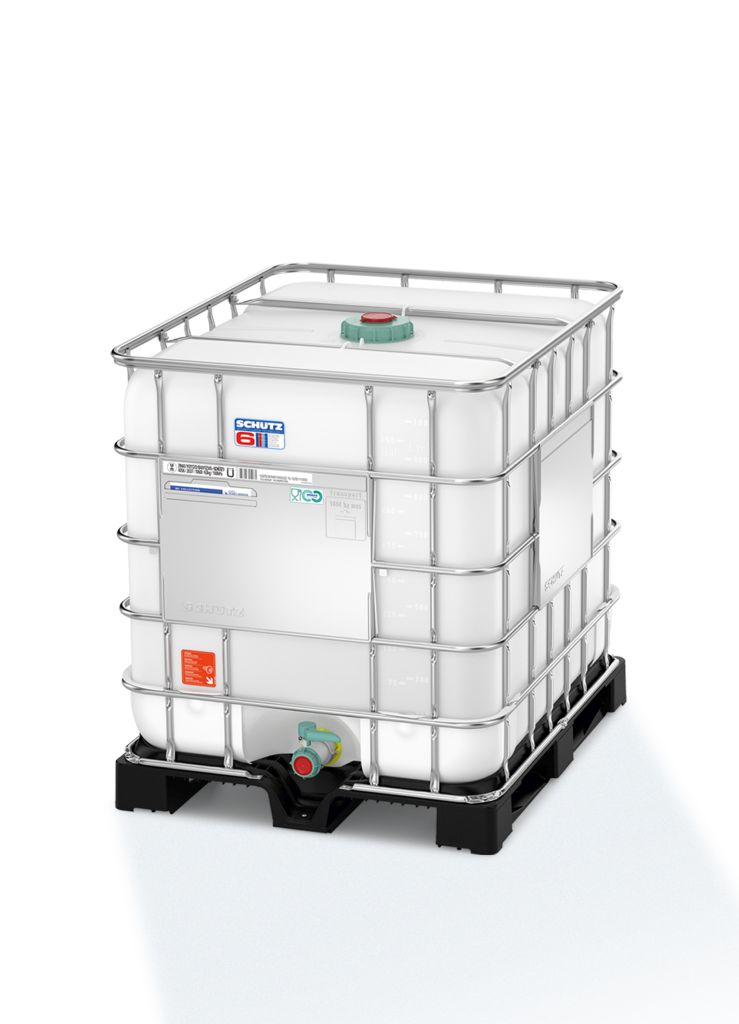
The study showed that, compared to the currently primarily used Stainless steel containers there was no measurable oxygen ingress into the IBC from the outside via the container walls. Only the design of the plastic IBC resulted in a slight increase in oxygen ingress into the wine due to the small volume of air remaining in the shoulder pockets after filling. This was noticeable in a slightly higher reduction in the levels of free and total sulphurous acid within the first two and a half months compared to the stainless steel tank values.
[infotext icon]Winegrowers who would like to take part in the test of the Schütz IBCs are invited by the company to describe their ideas for using the containers on the campaign website. The company will then select testers and provide them with five containers each. The test also includes project support as well as joint marketing and PR activities.http://www.schuetz.net/wein[/infotext]
In the course of the further expansion period, however, the EVOH barrier This prevented further permeation of oxygen, so that the measured values remained stable over the following 3.5 months of the test.
Professor Rainer Jung, Deputy Director of the Institute of Oenology at Hochschule Geisenheim University, sees several possible applications for the „Wine-Store-Age IBC“ from Schütz: „As an easy-to-transport container, it is suitable for both ageing and storage. Flexible short and medium-term storage of finished wines and as an efficient container for commercial dispensing - for example at major events.“