Robos receives Section II and III certification for seawater-resistant labels using the UV inkjet printing process
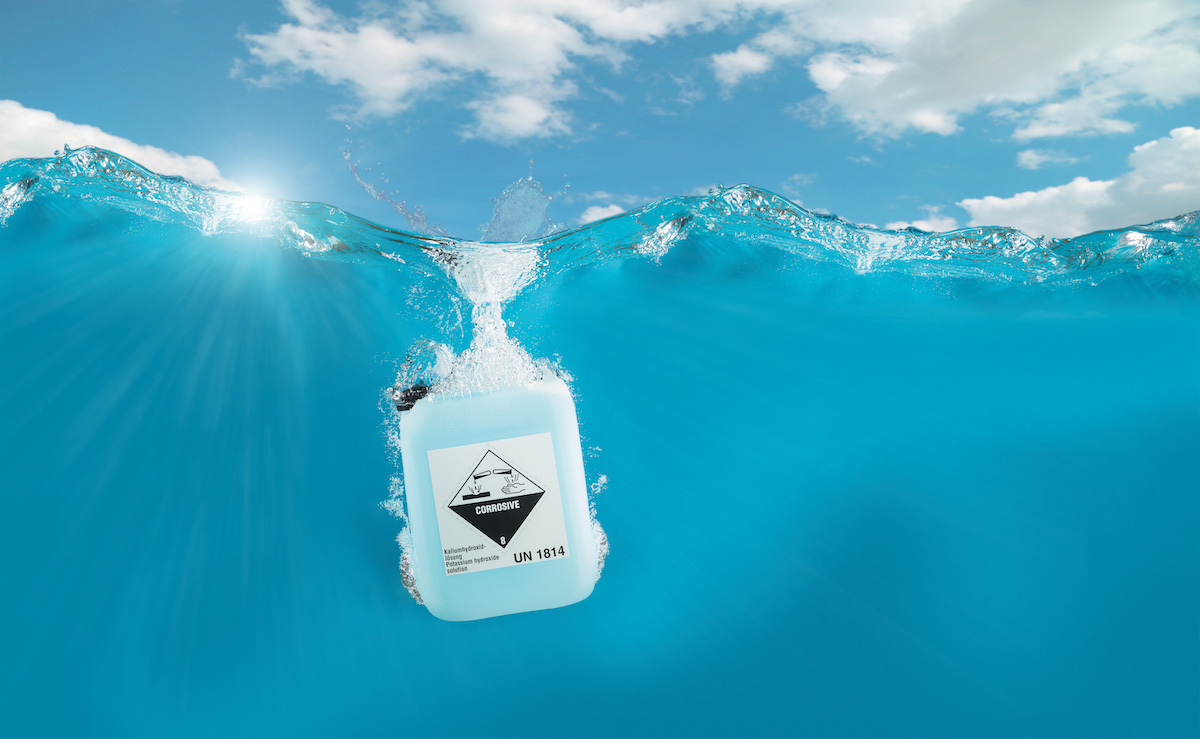
When a shipwreck occurs, there is a risk of cargo sinking into the sea or being washed ashore. It is then important for salvage experts to quickly gain clarity about the contents and recognise possible dangers. This requires Containers of hazardous substances labelled in accordance with legal requirements be. The nature of the labelling and its shelf life are also regulated.
Seawater-resistant labels must fulfil special requirements in terms of material and printing. Adhesion and legibility of the labels must be guaranteed for a period of 3 months if they come into contact with seawater. The guidelines are defined in the British Standard 5609, Sections II and III.

Printing process for the production of seawater-resistant labels
One option is to produce them using screen printing, which offers a high level of colour application. intense colours, high abrasion resistance and UV resistance. However, printing forms are required and only spot colours can be printed. These labels can later be printed on site with variable data using suitable certified colour ribbons. However, this is usually only possible in single-colour black.
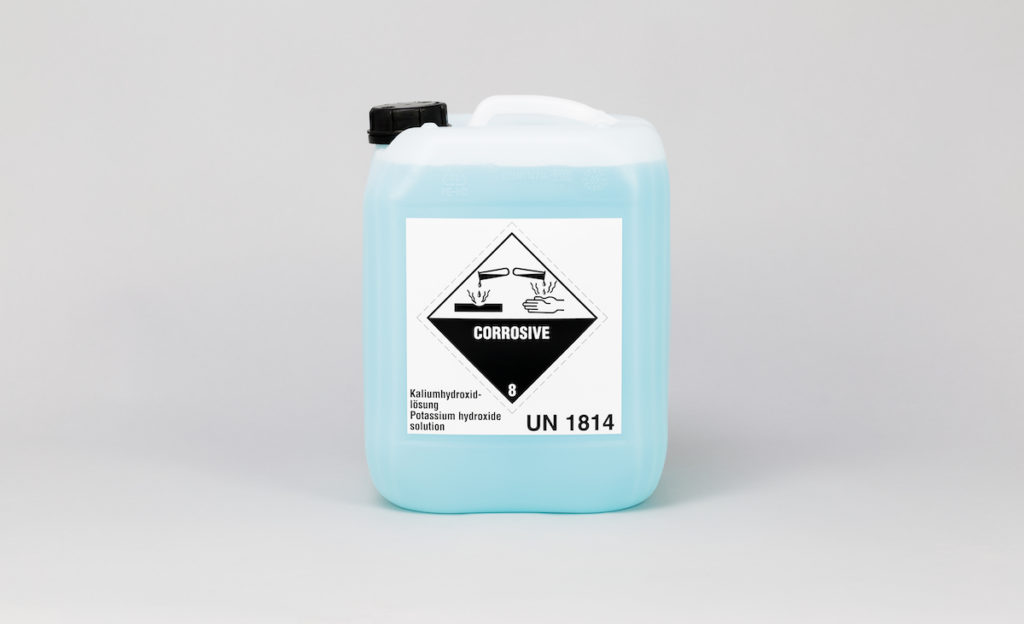
Flexible and economical - 5-colour digital printing with UV inkjet
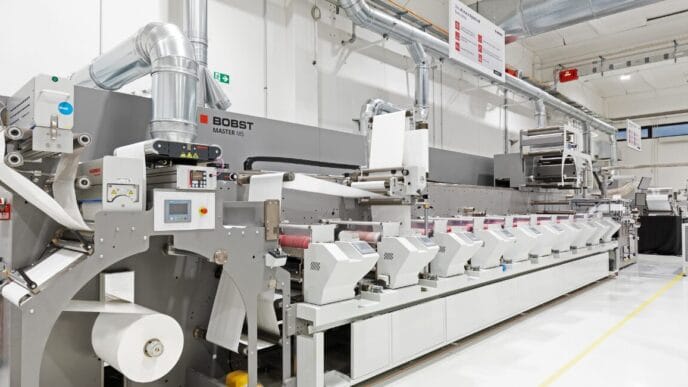
Robos has now sought certification for seawater-resistant labels for its TAU printing machine in order to be able to produce efficiently and in a customer-orientated manner. The TAU is able to print labels in screen print-comparable quality but also offers all the advantages of digital printing. No printing plates are required, as the print data is sent directly to the printing press. This means that flexible print runs with changing motifs are possible without any problems. Variable data such as numbering or codes, which make each label unique, can also be realised on the TAU. The TAU can also print labels 4-coloured plus white print. This makes any desired motif possible.
Conclusion
If variable data is known at the start of label production, it is more convenient to include the variable data directly during label printing. Digital printing of seawater-resistant labels is also more cost-effective and flexible if different types and various print runs are required. The TAU also offers the option of printing coloured image motifs in brilliant quality.