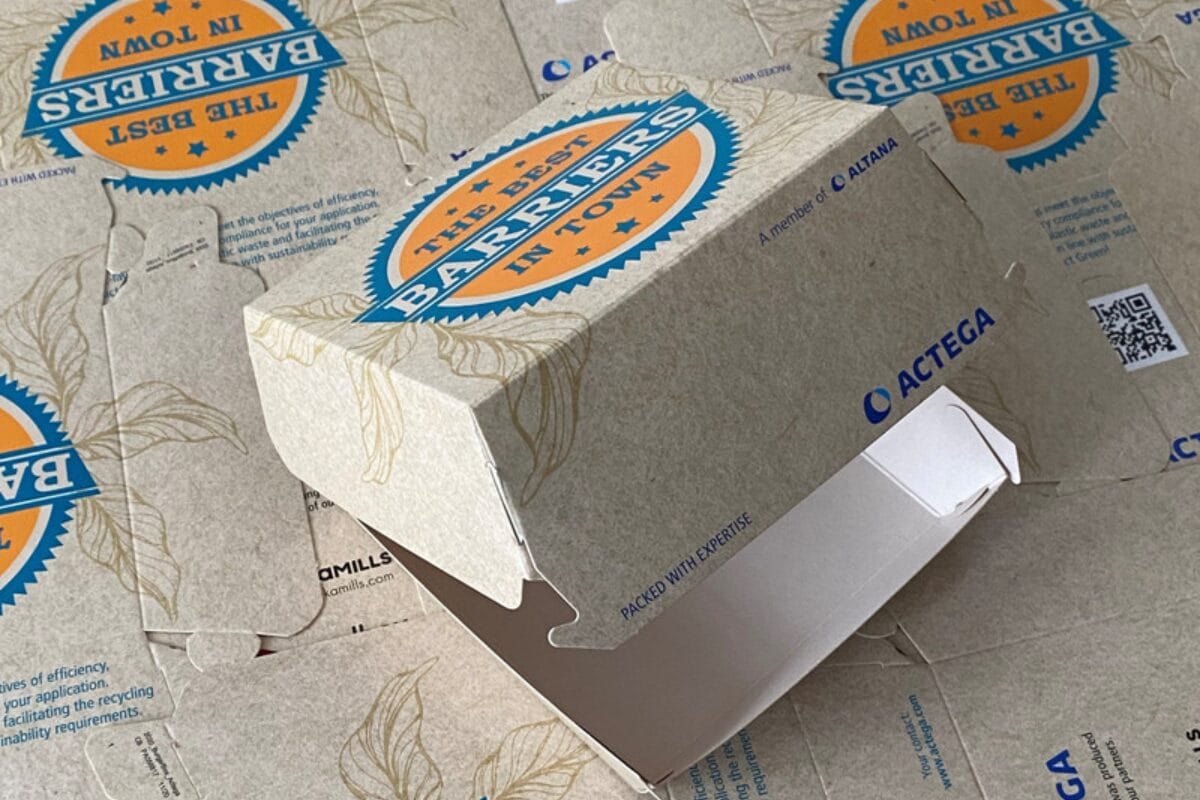
As part of a project, researchers have created the basis for bio-based coatings for paper and cardboard with self-healing properties. The coated paper is also recyclable. The IPHealing project is funded by the Federal Ministry of Food and Agriculture via the project management organisation Fachagentur Nachwachsende Rohstoffe e. V. (Agency for Renewable Resources).
The Friedrich Schiller University Jena and Actega, a manufacturer of speciality coatings, printing inks and adhesives for the printing and packaging industry, were involved in the project. The polymers developed by the University of Jena are characterised by good properties. for use in packaging, especially for food packaging. If it proves possible to further improve the long-term stability of the so-called polyitakonates, the project participants assume that corresponding solutions will be possible in the future. ready for the market in four to five years could be. Thanks to the optimised production process, polyitaconates are now also interesting for other fields of application in which petrochemical raw materials such as styrene acrylates and acrylates are currently used.
The researchers first optimised a process for producing an aqueous polymer dispersion from two commercially available monomers of itaconic acid (itaconic acid esters) as the basis for the coatings. The monomers used are also already REACH-registered. The polymerisation was characterised by high conversions and an almost complete monomer conversion of 99 percent. The upscaling was successful both at the University of Jena and in an industrial environment up to the kilogramme scale. Itaconic acid is a commercially available organic acid that can be produced by fermentation from carbohydrates, e.g. from maize starch or sugar beet molasses, produces.

Ability to self-heal
By adding a rheological additive, the researchers achieved better film-forming properties of the formulation, so that Very homogeneous coatings could be produced. Even thin coatings showed the ability to self-heal: Superficial scratches healed completely by briefly tempering at 100 °C, The effect was detectable down to the µm scale. Gloss measurements showed that such also completely restore the optical qualities of the coatings let. The ability to self-heal is superior to most commercial systems. a unique selling point. There is still a need for optimisation with regard to long-term stability, as the dispersion formed agglomerates after a few days.
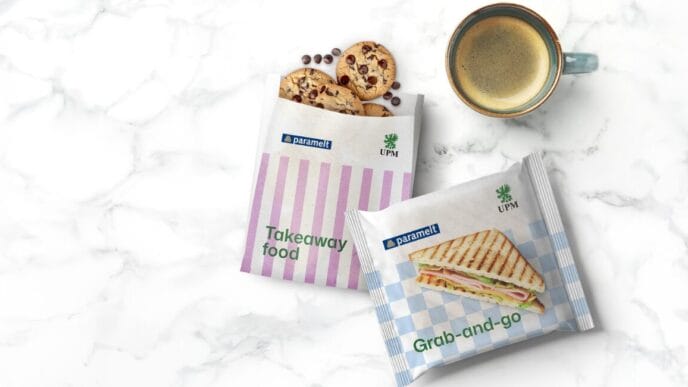
In application trials, the researchers achieved the best results in the field of coated papers for cardboard packaging. These showed very good printability using an LED UV inkjet printing system and a good barrier effect against grease. In contrast, the polyitakonates proved to be only moderately suitable for blister coatings.
The newly developed and completely bio-based coatings could be used for packaging and Improve sustainability, especially for short-life food packaging. So far, petrochemical coatings, e.g. styrene-acrylate copolymers, acrylate resins and polyurethanes, have dominated here. The new coated paper is also recyclable.
Source: FNR