In future, the shopping baskets in Lidl and Kaufland shops will be made from post-consumer recyclate processed by the PreZero environmental division. The companies in the Schwarz Group aim to save more than 390 tonnes of virgin plastic and 698 tonnes of CO2 equivalents as a result of the changeover.
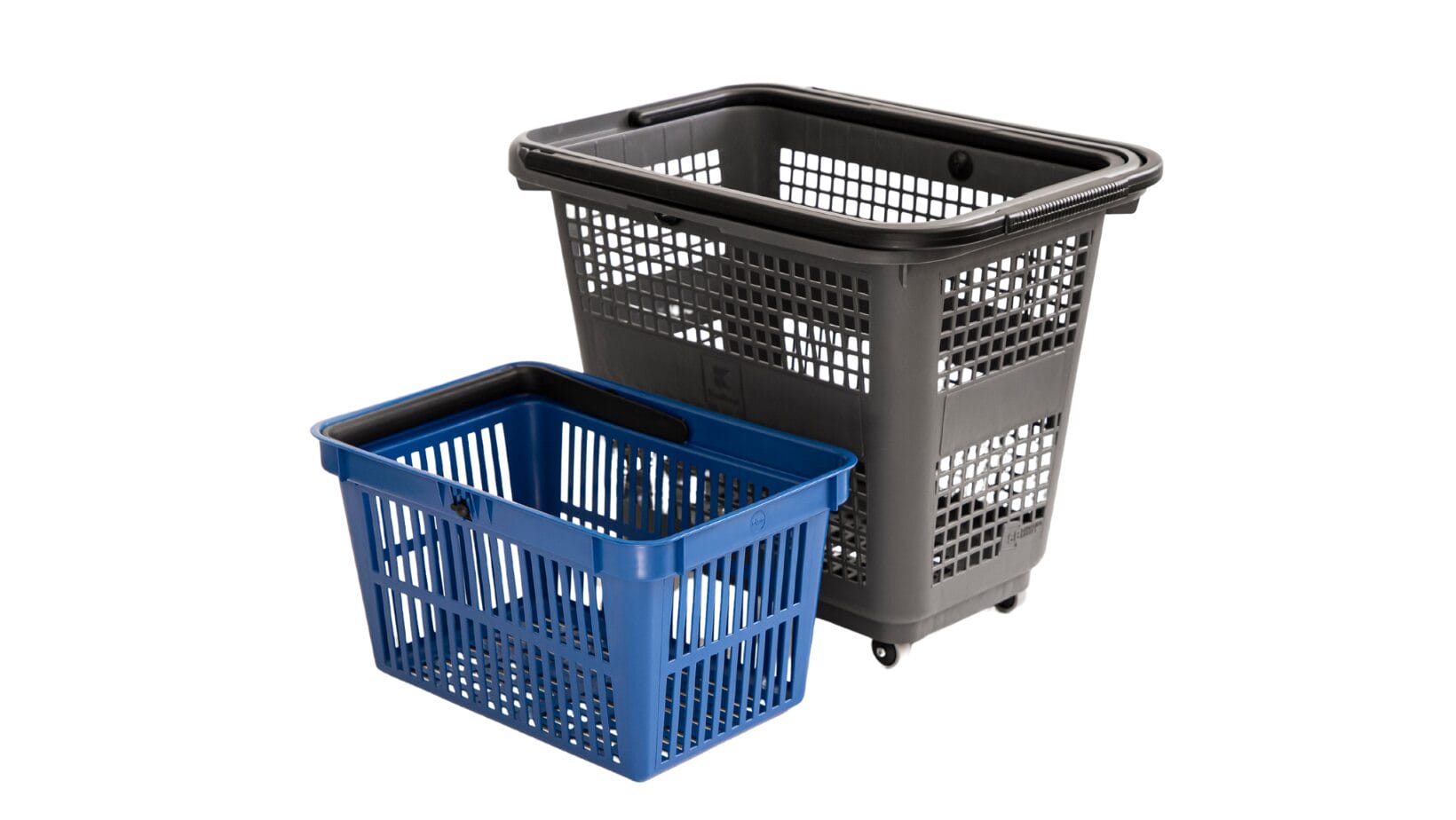
The companies of the Schwarz Group are now also reducing the use of new plastic in their store equipment. In future, the shopping baskets, the so-called roll and hand baskets, of the two retail divisions Lidl and Kaufland will be made of plastic. no longer made of virgin plastic, but to a large extent from reprocessed post-consumer recyclate from the PreZero environmental division. This makes the following scenario possibleA product is bought at Lidl or Kaufland, used at home, the plastic packaging is disposed of in the yellow bag or the yellow bin - and the customer encounters the plastic it contains cleaned and pressed in the form of a hand or wheelie bin the next time they visit the shops.
The two retail divisions Lidl and Kaufland are rethinking their roll and hand baskets. Hand baskets are made from 75 per cent recycled material, rolling baskets from 80 per cent and the XXL rolling baskets from 87 per cent recycled material. The existing shopping baskets will be replaced successively in order to use remaining stocks of intact baskets for as long as possible and thus minimise the consumption of resources. The new models will then be delivered to all countries in which Lidl and Kaufland are represented. Lidl and Kaufland have already converted their hand baskets. The roll cages are currently being converted. Across all countries, the two retail divisions are expected to save 390.62 tonnes of new plastic per year thanks to the hand and roll baskets made from recycled material. This will result in an estimated saving of 697.53 tonnes of CO2 equivalents per year. This corresponds to the greenhouse gas emissions of around 1,400 flights between Frankfurt and Mallorca (return flight).

Post-consumer recyclate comes from environmental division PreZero
The recyclate used is post-consumer recyclate. This is from used packaging from the yellow bag or the yellow bin is produced by private, predominantly German households. The plastic waste is collected, cleaned and processed into regranulate by the PreZero environmental division. This results in new, high-quality and at the same time more environmentally friendly products. The entire recycling and manufacturing process is realised in Europe and is particularly sustainable thanks to the short transport routes. Schwarz Procurement is responsible for the coordination between PreZero and the trading divisions. It is the central service provider for the procurement of Schwarz Group companies worldwide.
Source: Schwarz Group