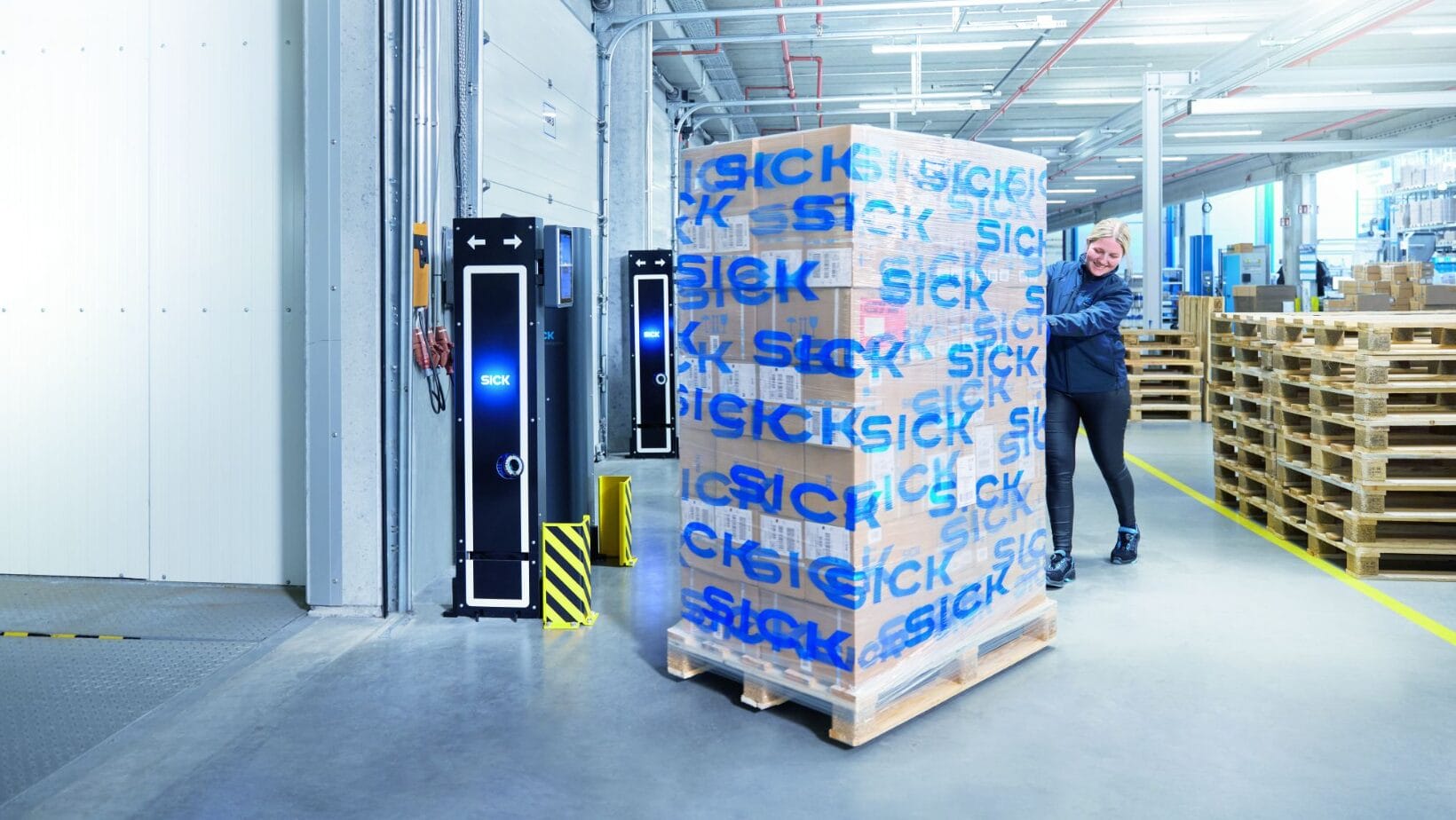
The Supply Chain Duty of Care Act covers the entire supply chain and therefore presents companies with fundamental challenges when it comes to documentation. Sick offers a solution with its Ident Gate System (IGS). The new system contributes to greater transparency in incoming and outgoing goods with the help of a wide range of sensors for object detection, goods identification and direction recognition.
The Ident Gate System (IGS) creates transparent logistics and supply chains and thus the opportunity to further optimise them. In addition, the Smart Gate can help companies to optimise the Optimise incoming goods through automatic delivery notification control, to avoid errors such as incorrect loading in outgoing goods and dispatch or to implement safety requirements.
The IGS is used for object and goods identification at loading gates, internal hall entrances and other locations relevant for recording material movements. The size of the portal can be flexibly dimensioned, so that forklift trucks and loads of different heights and widths can drive underneath. The modular approach also makes it possible to combine technologies with one another. Cameras are used to identify barcodes or 2D codes. If required, the portal can be supplemented or replaced by a pulse-reading RFID read/write device in UHF technology with an integrated antenna. Reliable direction detection and reader triggering is also possible with the aid of 2D LiDAR sensors. 3D snapshot cameras can be added if additional volume detection or determination of the load protrusion (load carrier classification and counting) is required. A simple traffic light display clearly shows the operating status.

Contactless and interference-free object and goods identification in real time
The Supply Chain Duty of Care Act affects a large number of locally and globally operating companies in Germany. Currently, the market segment „trade and discount“ as well as automotive companies and TIER suppliers are particularly affected by legally compliant transparency in the material flow. This is where the IGS is primarily used. During operation, the IGS portal is started either manually via a delivery order, by software or by the sensor system. The basic data on incoming goods or goods to be dispatched is provided by the customer's IT system in the IGS software. This includes labelled objects, goods, pallets, small and special load carriers or other transport aids. They are all identified by barcode, 2D code or RFID, recorded in their direction of movement if required, compared with the shipping notification or the loading list, synchronised and displayed via GUI.
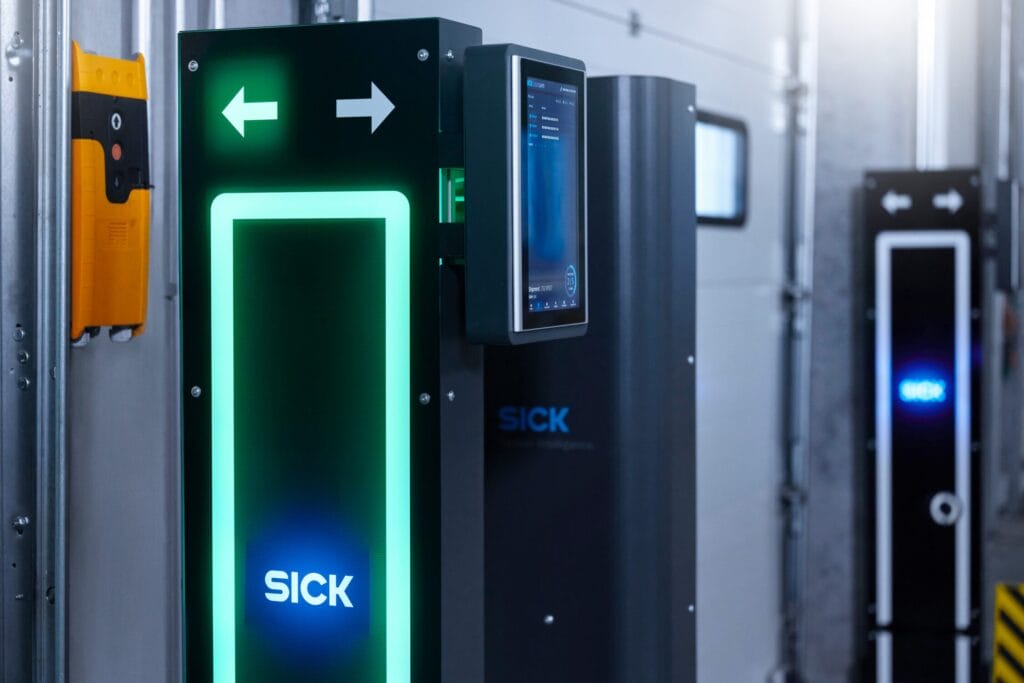
This ensures that only objects that are transported by the IGS are recorded. This does not apply to goods or loads that are parked nearby or are being transported in cross-traffic, or to people passing through the portal. The receipt or loading status is displayed to the operating personnel on site. The same applies to error messages (e.g. incorrect loading or quantity deviations), which can indicate possible theft. Once the goods have been collected, accepted or loaded, this is confirmed and the order is finalised.
Within a building complex any number of IGS can be operated, This is also the case along loading ramps with multiple gates. The systems do not influence each other and can be easily integrated and networked in IT structures. So that they also support the increasing digitalisation in internal and logistical transport processes.
Source: Sick