SIG: Use of renewable resources for new composite materials
With the SIGNATURE PACK, SIG has launched an innovation on the market that promotes the replacement of conventional fossil-based plastics with certified polymers, the production of which uses corresponding quantities of plant-based raw materials to replace fossil-based raw materials.
21 July 2021
Cardboard packaging is so environmentally friendly because its main component, the raw cardboard, is obtained from the renewable raw material wood. (Photo: SIG)
With the SIGNATURE PACK SIG has launched an innovation on the market that promotes the replacement of conventional fossil-based plastics with certified polymers, the production of which uses corresponding quantities of plant-based raw materials to replace fossil-based raw materials.
There are currently many global influences affecting the food and beverage industry. Two of the most important aspects that consumers are currently demanding are Environmentally friendly products and Sustainable packaging solutions. „An important goal for our customers is to demonstrably reduce the environmental impact that their products cause during their product life cycle. Packaging is part of this. We are therefore also doing everything we can to further reduce the environmental impact of our packaging and to help minimise the environmental impact of our filling machines. Life cycle assessment in the production plants of our customers to continuously optimise“, explains Michael Hecker, Head of Corporate Responsibility at SIG Combibloc.
Life cycle assessments show that cartonboard packaging has a better life cycle assessment than alternative packaging. The CO2-Balance of a carton pack over the entire life cycle is 28 to 70 per cent lower than that of the packaging alternatives. In addition, even conventional cartonboard packaging requires fewer fossil resources - between 41 and 68 per cent less to be precise. Cardboard packaging is so environmentally friendly because its main component, the raw cardboard, is obtained from the renewable raw material wood. Empty carton packs are compatible with all recycling and waste disposal options, regardless of whether the materials are recycled or thermally utilised. In Europe, for example, recycling rates have been rising for years. Currently, around 44 per cent of cardboard packaging recycled and 30 per cent is used to generate energy used.
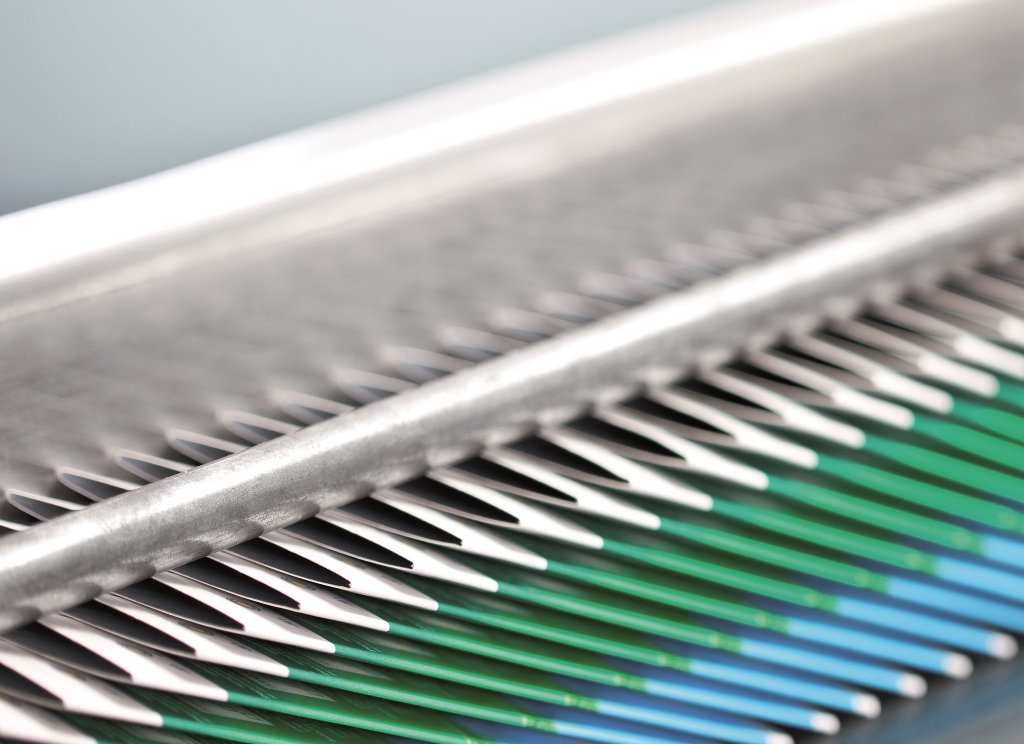
SIG customers receive carton packs as flat carton sleeves, which are first formed and filled in the filling machine. (Photo: SIG)
Saving resources
„We want customers and consumers to get the maximum benefit from our products: Optimum quality, maximum comfort and minimum environmental impact. Over the past 20 years, for example, we have been able to reduce the weight of our carton packs by more than 23 per cent. This has also contributed to the fact that carton packs are continuously improving in terms of environmental friendliness. With product innovations such as combibloc EcoPlus, we have set the course for the future,“ says Michael Hecker.
Display
combibloc EcoPlus does not require aluminium and undercuts the CO2balance of a conventional single-litre carton pack in combiblocSlimline format by 28 per cent. The decisive factor for the good CO2-The composite structure is a key factor in the company's success: up to 82 per cent of the packs are made of a special raw cardboard made from FSC®-certified, renewable sources (FSC®-Licence number: FSC® C020428). It is coated with ultra-thin layers of plastic. This protects food from light, air and foreign flavours.
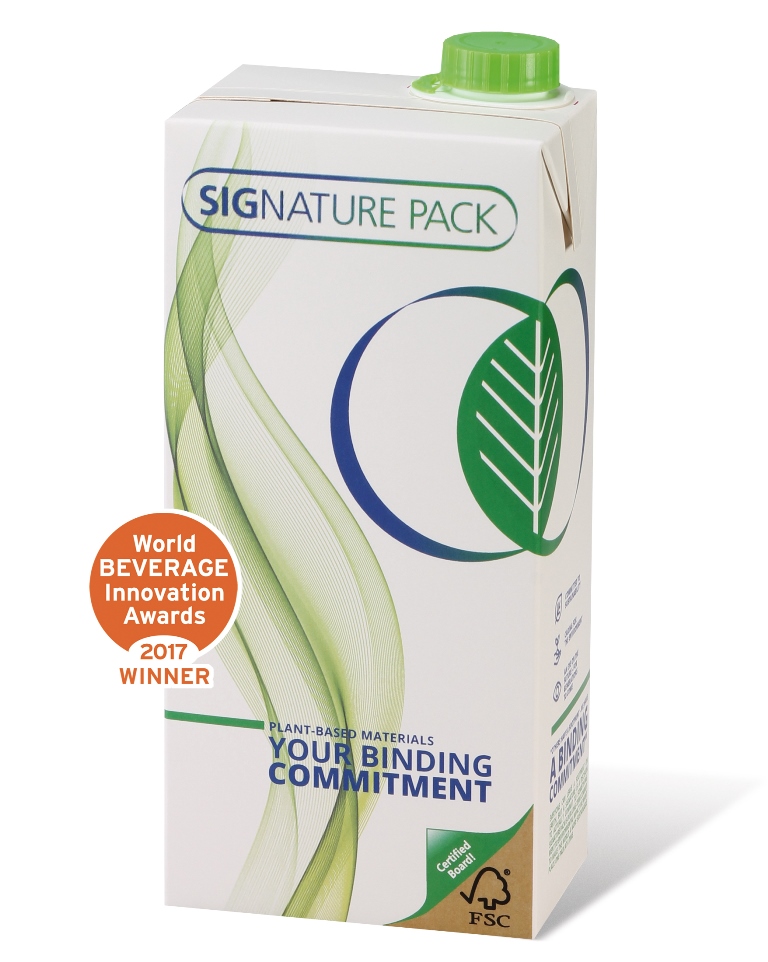
The SIGNATURE PACK is 100 per cent connected to plant-based, renewable raw materials. (Photo: SIG)
Milestone SIGNATURE PACK
Against this background, it is a logical next step that SIG has set itself the goal of further increasing the proportion of renewable raw materials in its carton packs by driving forward the replacement of conventional fossil-based plastics with certified renewable, plant-based materials and ultimately achieving a level of 100 per cent. With the SIGNATURE PACK uses existing certification systems and mass balancing to ensure that bio-based raw materials are used as a substitute for fossil raw materials in the production of plastics, thus creating a 100%iger link to plant-based resources. The SIGNATURE PACK is an important milestone on the „Way Beyond Good“ from SIG. This is how the company describes the path, „net-positive“ In other words, to demonstrably do more for society and the environment than the company claims.
And this is recognised: the SIGNATURE PACK has the Beverage Innovation Award 2017 in the category ‚Best carton or pouch‘ won. Since 2002, the Beverage Innovation Award has honoured outstanding innovations in areas such as beverages, packaging, marketing and sustainability. In its judgement, the international jury of experts stated: „The SIGNATURE PACK is an exemplary ecological step forward.“
Bio-based raw materials
The SIGNATURE PACK consists of 82 per cent raw cardboard, which is certified by the FSC®-system and ensures the stability and light protection of the packaging. The polymers used to coat the raw cardboard and manufacture the closures are certified by ISCC Plus (International Sustainability & Carbon Certification) and CMS 71 (TÜV SÜD certification standard) and are based on renewable wood sources from Europe in terms of mass balance. This means that the polymers used in the SIGNATURE PACK, an exactly corresponding amount of bio-based raw materials was used in the production of the polymers. This significantly drives the replacement of conventional fossil-based plastics with certified, renewable plant-based polymers.
Like FSC®, ISCC Plus and TÜV SÜD CMS 71 are internationally recognised certification standards. The Sustainability certification refers to the renewable raw material used to produce the polymers used in the SIGNATURE PACK. Furthermore, a Mass balance system, which is subject to annual audits, ensures precise traceability of materials along the entire value chain.
Michael Hecker, Head of Corporate Responsibility at SIG Combibloc
„Our new SIGNATURE PACK is a world first and fulfils the requirements of our customers. The packaging offers a Added value, that consumers can hold in their hands. It increases the value of the pack and demonstrates the brand's or retailer's commitment to responsibility and sustainability,“ explains Michael Hecker, Head of Corporate Responsibility at SIG Combibloc, sums it up.
Mass balance system via mass balance systems
Using an ISCC Plus volume balance account, plastics manufacturers that supply SIG can, for example, replace some of the fossil naphtha used in the production of plastics with bionaphtha (biofuel) made from renewable raw materials. The speciality: In the polymers that SIG purchases, the bionaphtha comes from plant residues, that are produced during paper manufacturing. This means that no basic foodstuffs are used. Both materials are processed together in the splitting process to produce plastic of proven quality. This can then be sold in the part labelled as renewable raw material, which corresponds to the amount of bionaphtha used.
This mass balance system is comparable to FSC® and is similar to that for fair trade coffee, cocoa beans or green electricity. Certified suppliers for plant-based polymers ensure that the initial quantity of plant-based polymers never exceeds the quantity of certified renewable raw materials used in the production of the polymers.
SIG attaches great importance to the fact that the Raw materials from certified sources originate and Fully traceable can be realised. The company's ambition is to make the transition from a polymer production based on fossil raw materials to a polymer production based on renewable raw materials. polymer production based entirely on plant raw materials to promote. „For us, it is not desirable to support a niche market that ends up with one or two types of polymer. Conventional polymer manufacturers produce a wide range of different polymer types on their established and efficient plants, which we are in favour of. For us, it is therefore the right approach to gradually replace fossil raw materials with renewable, regenerative ones in conventional polymer production and to document this using mass balance systems,“ emphasises Michael Hecker.
The future
The world is confronted with an increasing consumption of fossil fuels and thus with limited, finite raw materials. From the report „World Population Prospects: The 2017 Revision“ shows that the world's population was 7.6 billion in mid-2017. This means that the world has added around one billion inhabitants in the past twelve years alone. Industrialisation is progressing, more people are joining the middle class and driving up demand for products. Reducing the consumption of fossil fuels and switching to the use of sustainable, renewable raw materials is therefore an important step for companies that act responsibly.