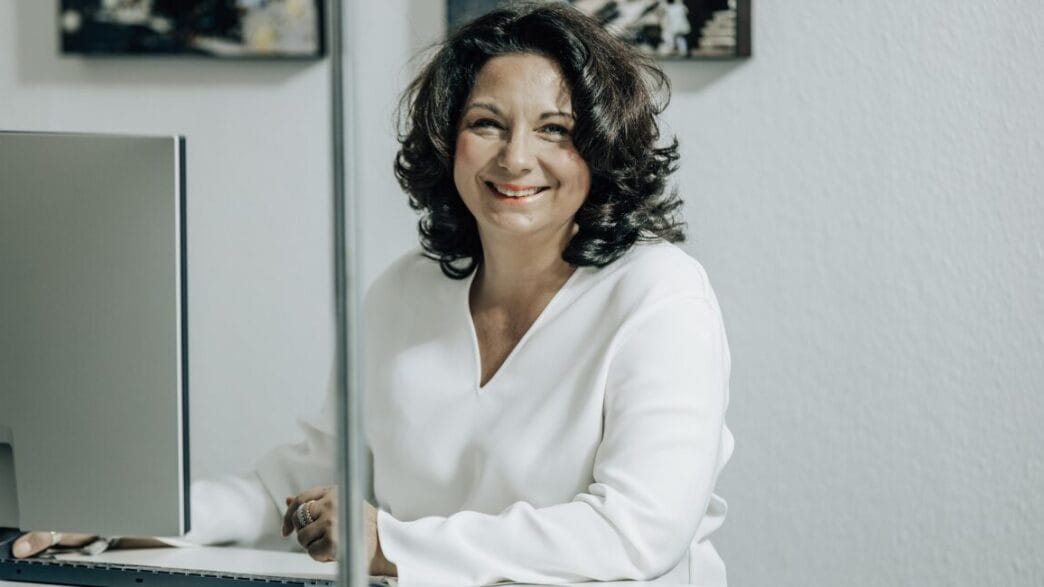
Mosca is one of the leading international providers of solutions for transport security and end-of-line packaging. Simone Mosca plays a central role in the challenge of combining ecological responsibility, regulatory requirements and industrial reality. Together with her husband Timo Mosca and Alfred Kugler, she manages the business and has played a key role in shaping the company's sustainability strategy for many years.
The path to her husband's family business, founded by her father-in-law in 1966, was not originally planned. The industrial clerk and business economist had worked in various companies, including founding a start-up for electronic control systems and components together with a developer, where she was responsible for the commercial side. „That was exactly my thing, building something new,“ says Simone Mosca looking back. But once the structures are established, the desire for the next challenge grows.
360-degree view
With the birth of her second son, she actually wanted to take a longer break. However, during the global economic crisis of 2007/2008, Timo Mosca is heavily involved abroad, while at the same time the company invests heavily in the production of strapping. A modern production facility is built in Muckental, just a few kilometres from the headquarters in Waldbrunn - but initially with start-up problems. „I'm a process-driven person, I always have a 360-degree view,“ she says. So after just a few months of parental leave, she took over responsibility for belt production at the Muckental site.

She has always sought support from experts: Together with the plastics engineers, she analyses workflows, optimises processes and increases profitability step by step. She also took on other areas of responsibility - from global purchasing processes to the introduction of SAP during the coronavirus pandemic. Temporary support becomes a permanent entry.
Simone Mosca worked for a long time without her own office, commuting between locations and sitting in meeting rooms. It was only when her father-in-law offered her his office that her place in the company became physically recognisable. „It was never the plan for me to join the company,“ she says, „but Alfred Kugler was already there at the time and the three of us make a good team. I have never regretted it.“
Sustainability right from the start
Early on, Simone Mosca asked questions that hardly anyone asked at the time: What materials do we use, are there alternatives? How can plastics be recycled? What responsibility does a manufacturer bear beyond its own value creation? „I was already working on the topic of the circular economy when the term sustainability wasn't even popular yet.“ At Mosca, this is not a side issue. The plastics sector causes the largest share of the carbon footprint - significantly more than mechanical engineering. When she spoke to recycling companies, she was initially met with scepticism. „I was ridiculed for my concern,“ she recalls. „But that spurred me on even more.“ Through Mannheim Business School, she recruited Ann Mertens as an employee for sustainability management, who is now the company's sustainability officer.
Industry-wide closed-loop project
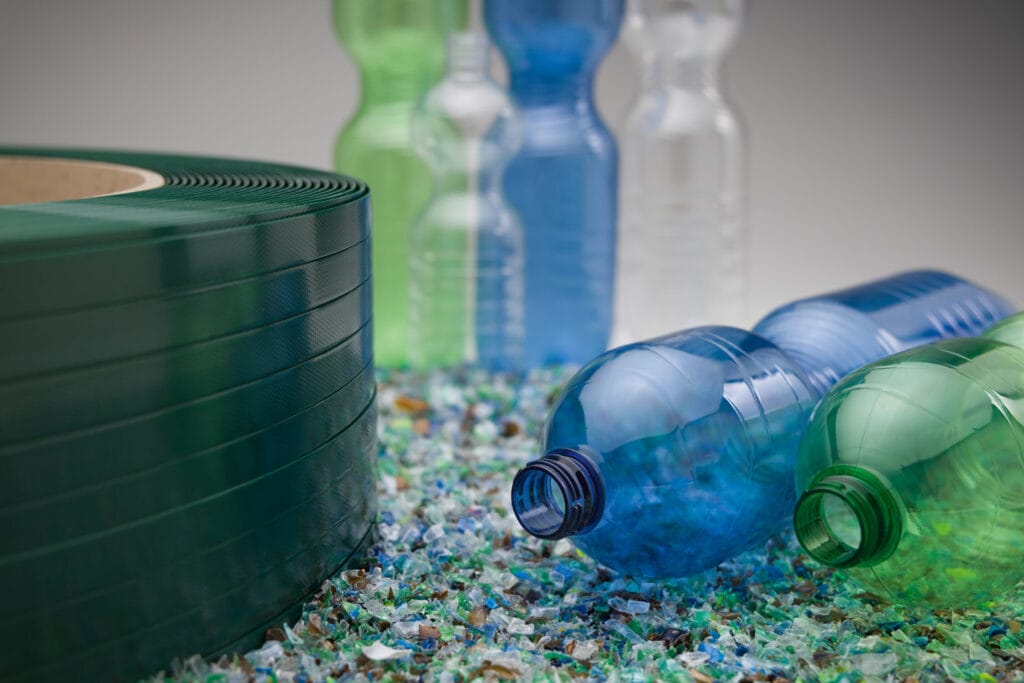
In 2025, Mosca is launching the „Loop That!“ project in partnership with Interzero. The starting point is a simple realisation: strapping is made almost entirely of PP or PET and is ideal for high-quality recycling. „We want to establish a closed material loop as an industry-wide solution,“ says Simone Mosca. „Loop That!“ is therefore intended as an invitation - to competitors, recyclers and partners along the entire value chain. However, as the joint closed-loop solution is not taking off as planned, Simone Mosca has now passed the project on to the Project Alliance for Strapping (PAU), which Mosca co-founded. „Nobody gets anywhere on their own,“ she says, „I'm all about the cause. It's always important that someone initiates it - but then everyone has to be honest and put everything on the table.“ Mosca now makes all the data available to members in a transparent manner.
The PAU was launched at the beginning of 2025 by 13 companies from the European strapping industry with the aim of convincing political decision-makers in Brussels of the need for an exemption under the new EU packaging regulation and to exclude strapping from the 100 per cent reusable quota provided for therein. This was successful, although a 40 per cent quota remains in place for the time being. But: „Reuse simply doesn't work with strapping. This is also a safety issue.“
A challenge for SMEs
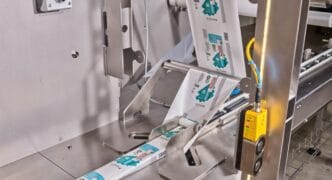
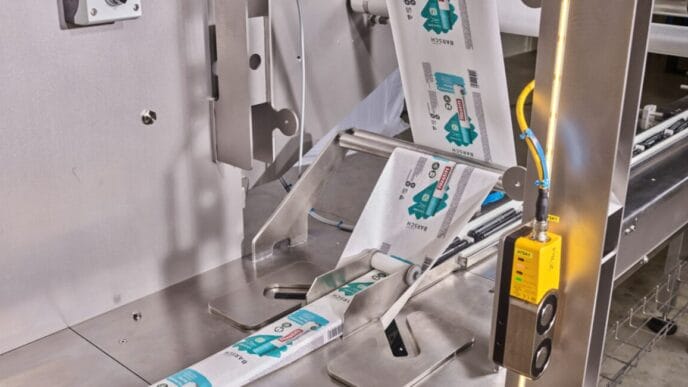
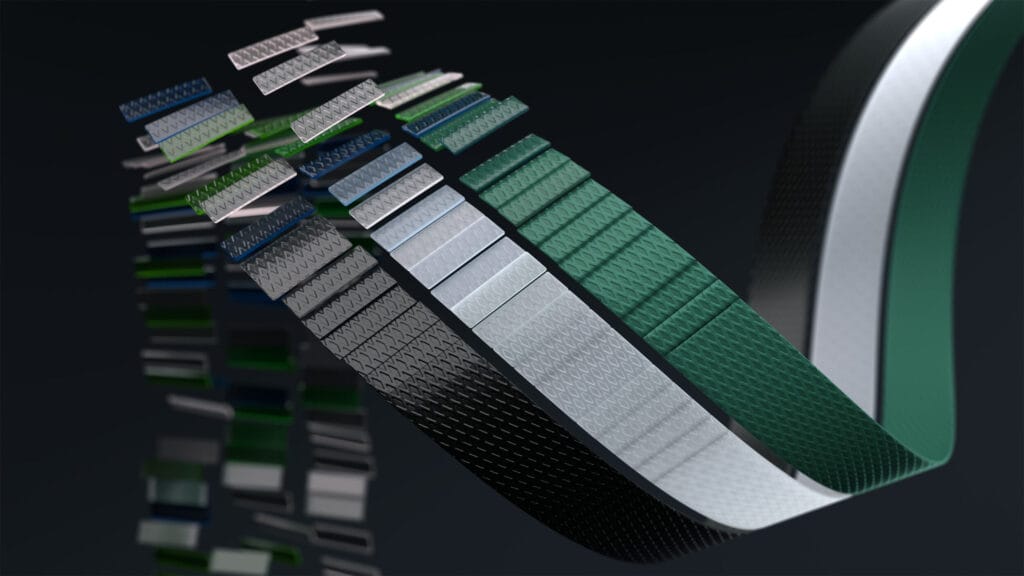
Mosca sees itself as a system provider: Mechanical engineering, strapping, film solutions and - through the acquisition of Movitec - also stretch wrappers. „Our aim is always to find the optimum packaging for the customer,“ says Simone Mosca. This often means using less material. „Nine millimetres is often enough for the tapes, and sometimes two thin layers for the film.“ Switching to post-consumer recyclate (PCR) is not easy. „The material has different processing properties. We therefore have to convert machines, obtain certificates and build up personnel.“ An enormous challenge, especially for SMEs. „And that in a difficult economic phase. Small competitors will hardly be able to cope.“
Simone Mosca also has a clear stance on the issue of women in management positions. „I don't believe in quotas at all,“ she says. „For us, it's all about qualifications and mixed teams work best.“ At the same time, she is aware that she is a role model for women who want to take the step into the industry.
Her commitment extends beyond the company: in the Association of German Women Entrepreneurs, on the university council of the DHBW, as a member of the supervisory board of the Klinge Youth Village. For Simone Mosca, responsibility does not end at the factory gate. This is one of the reasons why the Handelsblatt honoured her as „Germany's most sustainable female mechanical engineer“ and one of the „50 most inspiring female entrepreneurs in Germany“. She is concerned about the current political and economic situation. „The mood in companies has never been so bad,“ she says, „but if the SME sector collapses, it will have a massive impact on society.“ Developing joint solutions is therefore currently more important than ever before.