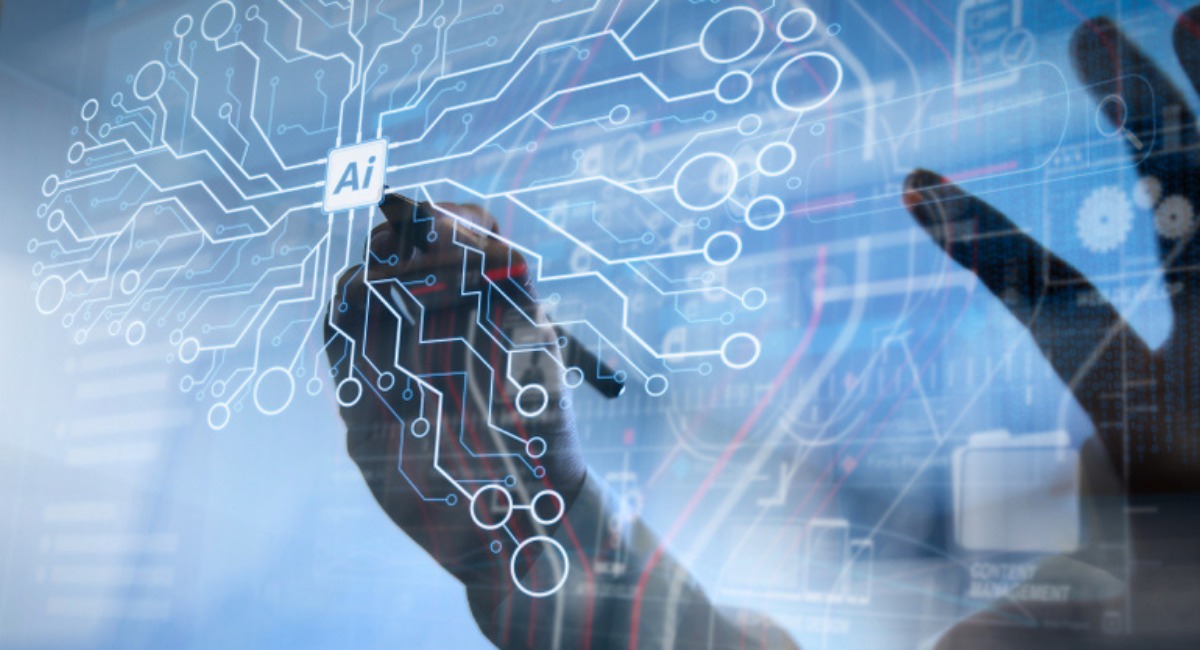
Together with project partners, the SKZ Plastics Centre is developing a digital twin of secondary raw materials using artificial intelligence (AI) to facilitate the recycling of plastics.
Together with its project partners GreenDelta, Cirplus and the Wuppertal Institute, the SKZ has received funding from the Federal Ministry of Education and Research (BMBF) for the Research project „Circularity Optimisation for Plastics“, or Cyclops for short. Since 1 June, the project partners have been using AI to develop a so-called digital twin of secondary raw materials in order to facilitate and strengthen the recycling of plastics in the future.
SKZ research project provides information
The aim of the project is to design a digital system that enables plastics processors, plastics recyclers and waste producers to user-oriented about properties and processing options of secondary raw materials. This is intended to support the economically sensible utilisation of plastic waste and recyclates.

The four consortium partners contribute their special expertise one: Expertise in plastics processing and recycling (SKZ - KFE gGmbH), the use of digital twins (Green Delta GmbH), sustainability assessment (Wuppertal Institute for Climate, Environment and Energy gGmbH) and the development and operation of digital trading platforms (Cirplus GmbH).
Contributing to sustainability with the help of AI
AI-based data processing and analysis methods enable the Evaluation of materials, forecasting availability and requirements and thus increase transparency and the exchange of information in the recycling cycle for plastics. In addition, the ecological performance and contribution to sustainability and environmental protection of the various raw material qualities are taken into account. Existing online platforms can in future access the information of the digital twin, so that material flows in the circular economy as well as their quantity and quality are presented in a comprehensible manner.
Recyclate use increased by 10 per cent
Material recycling of plastics can save up to 90 per cent of CO2 emissions compared to the production of new plastic. In addition to the reutilisation of raw materials, this is one of the reasons why recycled plastics (recyclates) are being used more and more. Thus In 2019, their total volume in Germany was more than 1.9 million tonnes and has increased by around ten per cent compared to 2017. Nevertheless, differences in the recycling process, limited and fluctuating waste quantities and qualities lead to an uncertain availability of recyclates, which means that many plastics processors are still reluctant to use recyclates. The result: the Application potential of recyclates is not fully utilised.
[infotext icon]The „Cyclops“ project (funding reference 033DO18A) is being funded by the Federal Ministry of Education and Research (BMBF) as part of the „Digital GreenTech“ funding guideline. The project will run for two years and ends on 31 May 2023.The SKZ is a member of the Zuse community. This is an association of independent, industry-related research institutions that pursue the goal of improving the performance and competitiveness of industry, especially small and medium-sized enterprises, through innovation and networking.
SourceSKZ : SKZ