Certain processes in the manufacture and processing of pharmaceuticals require very low humidity levels. Systems for process air drying based on sorption technology are now also part of the range of services offered by ULT AG, Löbau.
26. June 2018
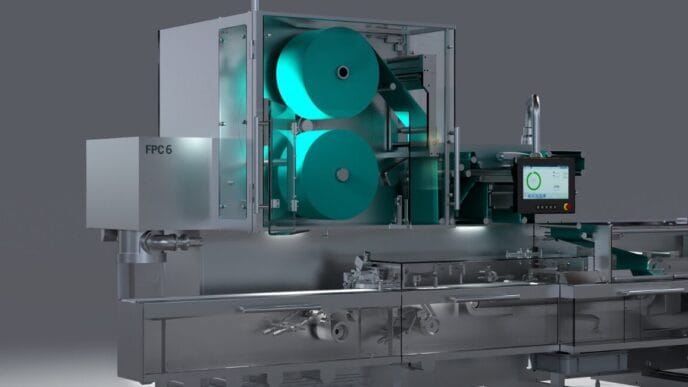
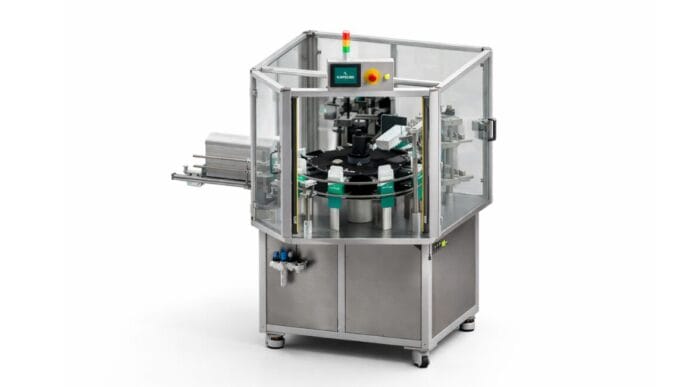
System for filling pharmaceutical and biopharmaceutical products. (Image: UTL)
Certain processes in the manufacture and processing of pharmaceuticals require very low humidity levels. In order to reduce the residual moisture content of the air to a minimum, so-called sorptive processes are necessary, for example. Systems for process air drying based on sorption technology are now also part of the range of services offered by ULT AG, Löbau.
Within the filling or packaging systems and during the filling process, the following Process parameters of great importance for high productivity: a particle-free zone within the machine, constant ambient temperatures, „conditioned air“, a defined humidity level within the machine and a Constant, laminar process air during the filling process. When filling solid or liquid active ingredients or both in combination until the ampoules or injection bottles are sealed, special attention is paid to a sterile environment in addition to low humidity.
[infotext icon]The ULT AG iis a globally active provider of Extraction systems and filter technology for the removal of airborne pollutants. The company's range of services has recently included systems for process air drying based on sorption technology. Solutions for the ionisation and cleaning of surfaces round off the portfolio[/infotext].
Air drying and conditioning
The desired dryness of the required process air, which is usually produced for energy and hygiene reasons in a kind of „Recirculation mode“ depends very much on the overall process method and the actual pharmaceutical products and active ingredients to be filled. In the case of highly hygroscopic active ingredients, the ambient air in the closed machine during the filling process (process ambient air) should, if possible, contain almost no hydrogen molecules so that the pharmaceutical or biopharmaceutical product cannot bind any moisture from the immediate environment during the filling process inside the filling machine.
Display
Particularly critical are active ingredients in powder form, especially if they are easily or even very easily soluble in water. After the filling and sealing process, these active ingredients initially remain „dry“ in the container and are stored for a certain period of time until they are used up. The injection or infusion bottles filled with the powdery active ingredient are only filled with an aqueous solution shortly before the injection or infusion. Until then, they must not absorb any moisture in order to guarantee their effectiveness.
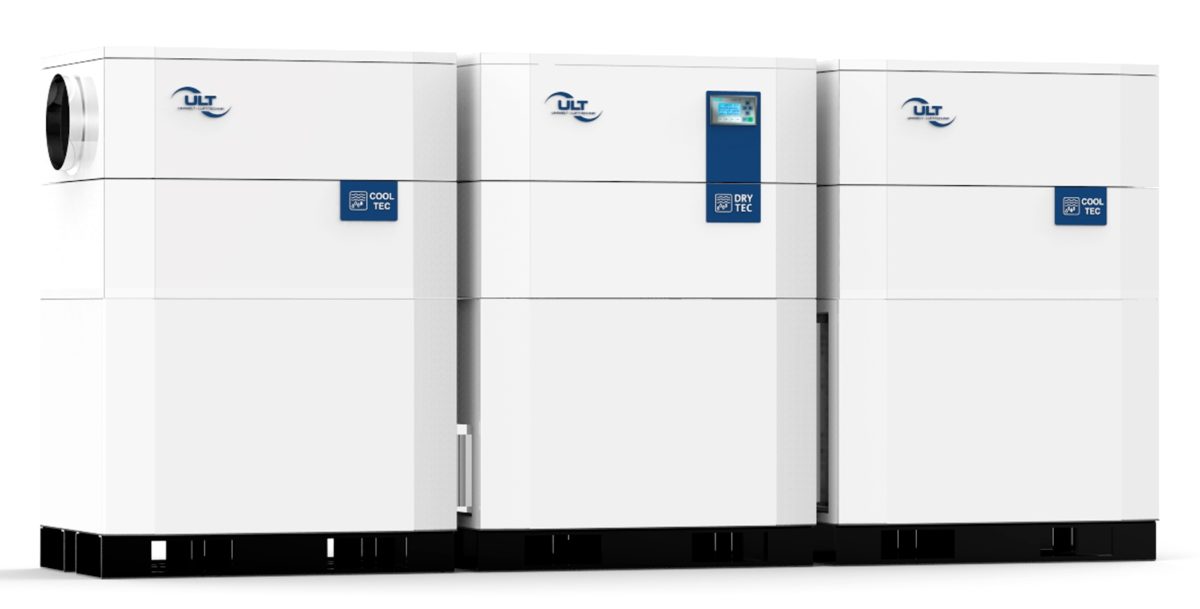
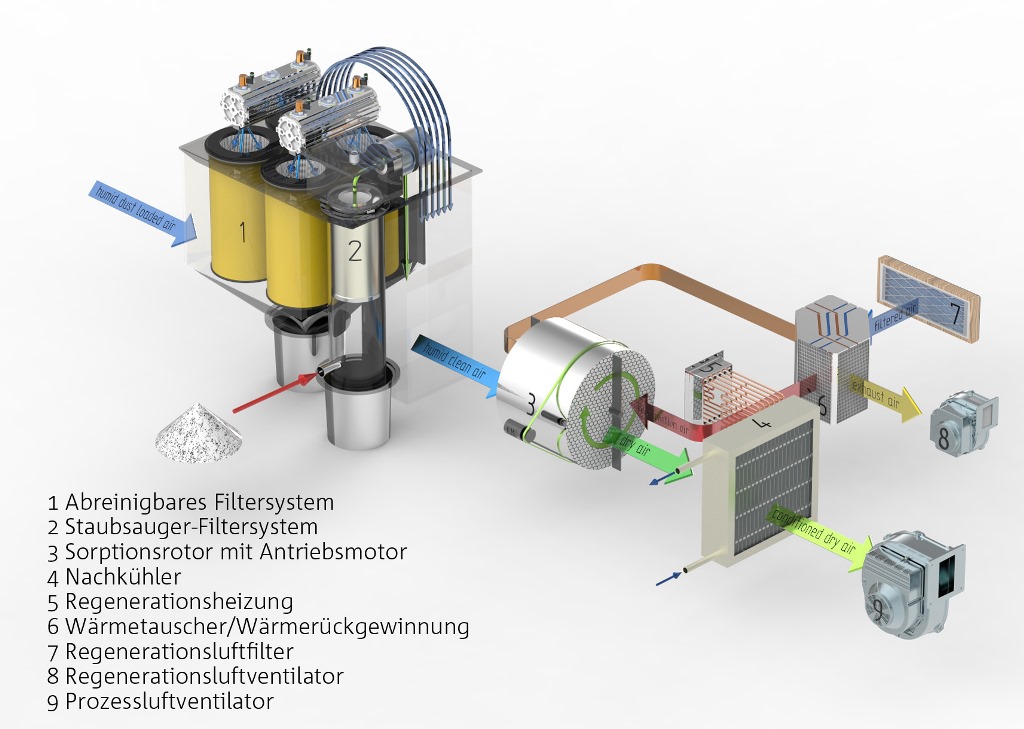
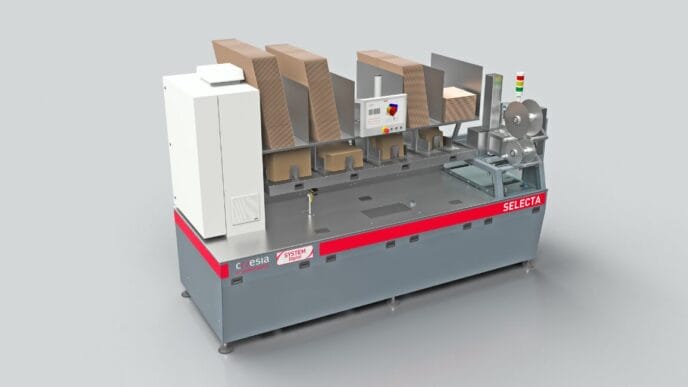
Modular system concept from ULT with cleanable cartridge filter system and separate extraction system. (Image: ULT)
Sorptive and exothermic processes
In order to produce process air that is as dry as possible, conventional methods of drying the air, such as simple condensation of the water vapour on cooling coils or heat exchangers, are no longer sufficient in most cases. In order to reduce the residual moisture content of the air to a minimum, so-called sorptive processes (adsorption processes and desorption processes) are necessary.
When relative humidity (RH) of less than 40 per cent at ambient temperature is required in production, packaging and storage processes for pharmaceutical products, things get interesting and exciting in terms of process engineering and thermodynamics. In these areas of Process air drying there is currently a relatively clear selection of system process technology that can generate and continuously guarantee very low residual moisture contents in the process air during recirculation operation.
The use of Rotary adsorption dehumidifiers proven. The humid air flow is channelled through a section of a slowly rotating, honeycomb-shaped sorption wheel coated with adsorbent and dried in it. By extending the system module technology, for example with pre- and after-cooler modules, dew points (Tp) as low as -65 °C and thus a relative process air humidity of up to 0.05 per cent (RH) can be achieved at ambient temperatures in recirculation mode. These low dew point requirements are usually needed for sensitive products for drying hygroscopic active pharmaceutical ingredients or other powdered products in industry in order to ensure consistent, high-quality and safe drying. Product quality during the filling process ensure.
Modular system concept from ULT with cleanable cartridge filter system and separate extraction system. (Image: ULT)
Adsorption of water vapour
The technical adsorbents used are highly active hygroscopic, i.e. physically water-binding substances such as silica gel (silica gel, SiO2), zeolites and molecular sieves. Due to their molecular structure, these adsorbents have an extremely large surface area to which water molecules can attach. One gram of silica gel, for example, can achieve an inner and outer active surface structure of up to around 800 m².
However, there are also other less common drying agents such as calcium sulphate, potassium carbonate and aluminium oxide, which are used in other areas depending on the circumstances and the properties of the gas to be dried. However, these are relatively difficult to regenerate and are therefore less suitable.
Since Silica gel has good physical and chemically reversible properties with regard to the removal of water molecules from the process air and its ability to be regenerated with heat (desorption), this variant is considered to be effective and effective and is already being used successfully in various industrial segments.
Frank Schimmelmann (Image: ULT )
„Since 2015, we have generally offered Solutions for process air drying and thus belong to the market of Sorption drying technology to the newcomers. We are deliberately growing very slowly in this segment. However, our aim is to establish ourselves as a global provider of air drying technologies in the coming years. We have already successfully realised a number of projects with well-known customers,“ explains Frank Schimmelmann, Division Manager Process Air Drying at ULT AG in Löbau.
Drying and filtering the process air
A recently available solution for extremely dry process air is the ULT Dry-Tec® of ULT AG. The Modular system concept enables dew point temperatures of up to -65 °C to be achieved in recirculation mode. To the ULT-Dry-Tec®-product module series include the sorption module ULT Dry-Tec®, which is used for adsorption and desorption within the system, and the pre-cooler module ULT Cool-Tec® V and the ULT Cool-Tec aftercooler module® N. The pre- and after-cooler modules can optionally be equipped with different filter elements of the corresponding filter classes (G, M, F or H in accordance with DIN EN 779:2012 and DIN EN 1822:2011). This means that the entire drying process achieves the required low relative humidity and also the process air flow at the inlet or outlet of the modular system thus remains particle-free.
By means of a optimised air flow concept The interior of the drying modules enables efficient operation with extremely low internal pressure losses. Other components of the modular dehumidification concept include controllable EC fans for the process air volume flow and the regeneration air volume flow. An integrated, energy-efficient heat recovery system is also available for an energy-optimised desorption process sequence. The internal system can effectively utilise up to 40 percent of its heat to preheat the desorption circuit.
The sorption rotors used by ULT do not lose any desiccant. This means that No abrasion on the adsorbent. The integrated rotors are also non-flammable, resistant to corrosion and washable. The rotors used are tested and certified in accordance with ASTME E-84. ULT AG has also developed the ULT Fil-Tec™ cleanable filtration module with integrated ULT Vac-Tec™ suction system, which is similar to the ULT Dry-Tec™ sorption module.® can be connected upstream if required.
The filter cartridges in the suction and filter module are cleaned using Injector compressed air valves automatically time-controlled or differential pressure-controlled. Class M or F filter cartridges (in accordance with DIN EN 779:2012) are integrated into the system as active cartridge filters. Post-filter stages as HEPA filters and safety filter stages (police filters) up to filter class EN1822 U16 or ISO 29463 ISO 65 U (HEPA/ULPA) can also be integrated into the modular air filter conditioning system on request.