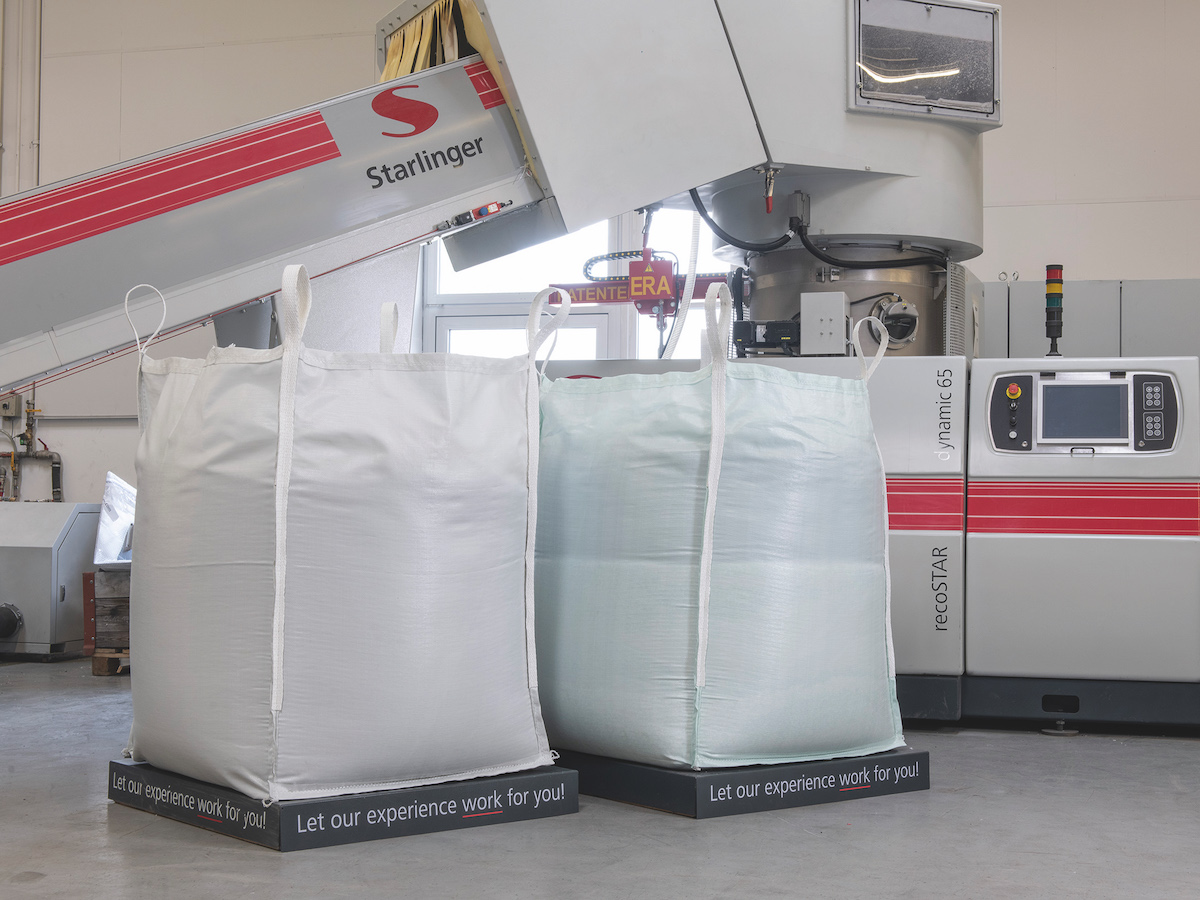
Starlinger has been nominated for the prestigious Plastics Recycling Awards Europe for the third time in a row. This year, the company is entering the race with a holistic concept called „Circular Packaging“, which aims to put an end to the unnecessary waste of resources in the product life cycle of big bags made of polypropylene fabric.
Big bags, also known as FIBCs, have become indispensable in logistics as a lightweight, economical type of packaging for free-flowing bulk goods. They are Mainly made from polypropylene (PP) and due to their low weight they have a Significantly better CO2 balance per 1000 litres of transported goods than rigid containers such as drums or octabins.
Although they are ideal for recycling due to their size and weight, 75 % of all big bags used worldwide are for single use, and the associated disposal in landfill or incineration is a cause for concern. Severe environmental damage with high CO2 pollution. Of those FIBCs that are recycled, a large proportion is exported to non-EU countries and processed into products of lower value (this is also known as downcycling).

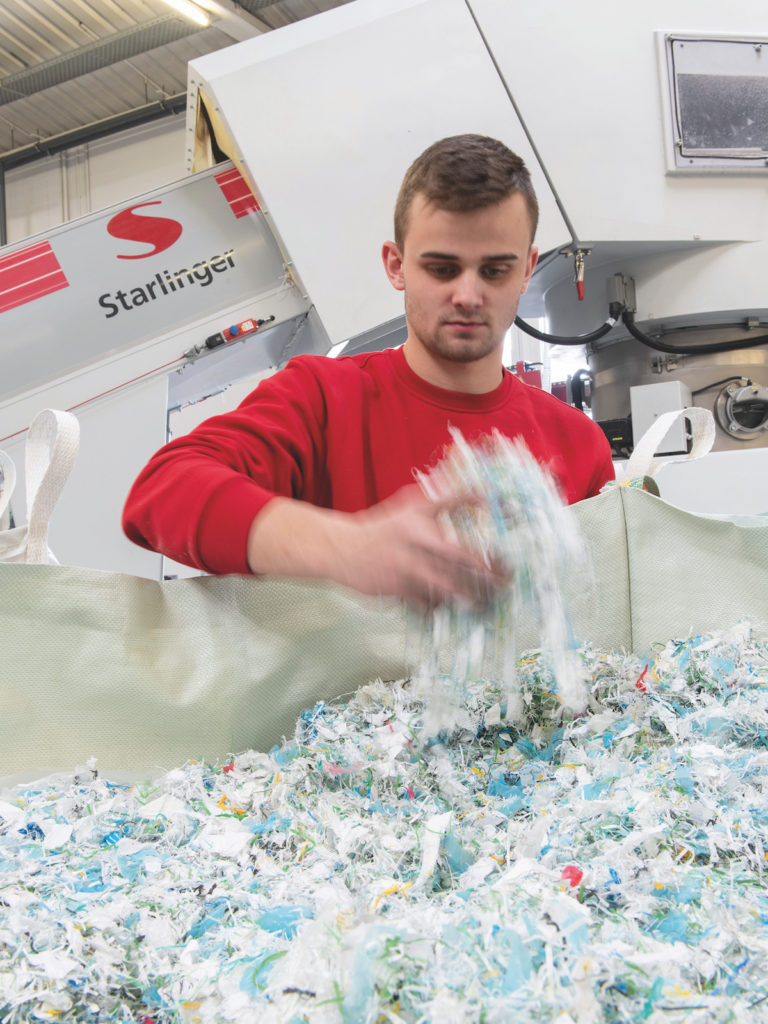
With the revolutionary concept „Circular Packaging” Starlinger wants to put an end to this waste of raw materials and create a circular economy in which big bags become big bags again. This concept is so unique because it represents a holistic approach that Different phases of the big bag life cycle such as production, use, return, washing process and recycling.
Successful recycling through two basic steps
The challenge in recycling big bags is that they come in different forms: with or without polythene liners, coated or uncoated and with loops and seams made from different types of plastic.
The first step towards creating a circular economy for big bags is therefore „Design for Recycling“; This means that the big bags are designed in such a way that they can be easily recycled and processed into high-quality granulate at a later date.
The second important step is the creation of a „Material Passports”, which maps the entire life cycle of the big bags, from the first filling and the filled product through to the materials used. This traceability simplifies collection and reprocessing and thus increases the quality of the material to be recycled.
rPP Big Bags
In collaboration with the renowned big bag manufacturers Louis Blockx and LC Packaging Starlinger has simulated this closed cycle and produced new big bags with a high proportion of recycled PP. Tests show that these „rPP“ big bags are more efficient in terms of Strength, weight and safety factor have the same quality as big bags made from virgin material.
These promising results make Starlinger a contender for this year's Plastics Recycling Awards Europe. The winners will be announced on 26 March, the second day of the Plastics Recycling Show Europe, which takes place at the Amsterdam RAI exhibition and congress centre.
Source: Starlinger