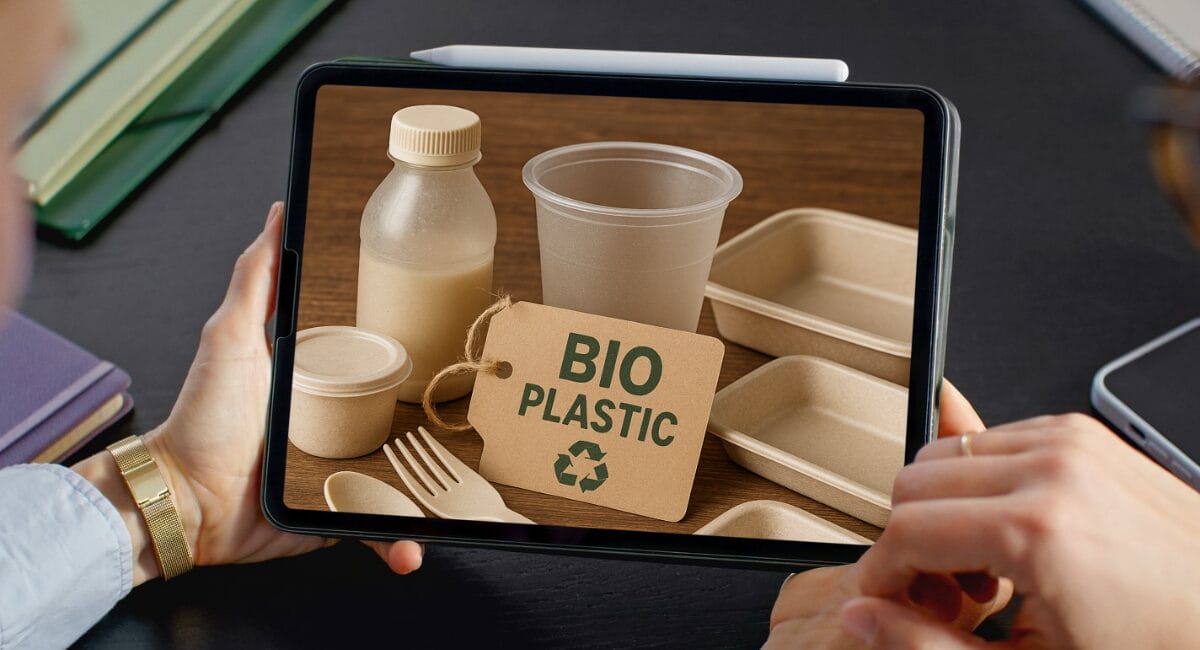
Ceresana has published a new edition of its market study on bioplastics packaging and forecasts significant growth for the segment worldwide: revenues are expected to rise to USD 32.1 billion by 2034. The report analyses bio-based and biodegradable plastics in rigid and flexible packaging as well as their applications and regional markets.
According to the study, polylactic acid (PLA) remains the most important bioplastic in the packaging market with a current share of around 30 %. PLA and PHA packaging are developing particularly dynamically: Ceresana expects average growth of 10.3 % and 7.2 % per year for their consumption until 2034. Bio-based, non-biodegradable plastics such as polyethylene or PET made from sugar cane will also remain relevant. Advances in quality - such as heat-resistant grades and customised barrier properties - are expanding the possible applications.
Regional focus
Demand for bioplastic packaging is not just a European issue: according to the study, the Asia-Pacific region accounts for the largest demand with a share of 42 %. Europe and North America are also analysed with detailed forecasts on demand and revenues as well as a breakdown by applications and product types.

Applications and outlook
At 56 %, short-life packaging for food and beverages is the most important area of application. Ceresana expects that larger production capacities for PLA, TPS and other biopolymers will improve supply capability and reduce costs - a factor that makes sustainable alternatives more economically attractive. Overall, the study sees opportunities through new factories, innovations and a clearer regulatory framework, but also emphasises the need for reliable planning in the supply chain.
Source: Ceresana