
Which milk packaging is the most sustainable?

Just in time for World Milk Day, there are new results on the packaging of fresh milk. To gain an overview of the most sustainable packaging solution for fresh milk, Upländer Bauernmolkerei commissioned Fraunhofer UMSICHT to conduct a life cycle assessment study.

Just in time for World Milk Day, there are new results on the packaging of fresh milk. To gain an overview of the most sustainable packaging solution for fresh milk, Upländer Bauernmolkerei commissioned Fraunhofer UMSICHT to conduct a life cycle assessment study. 

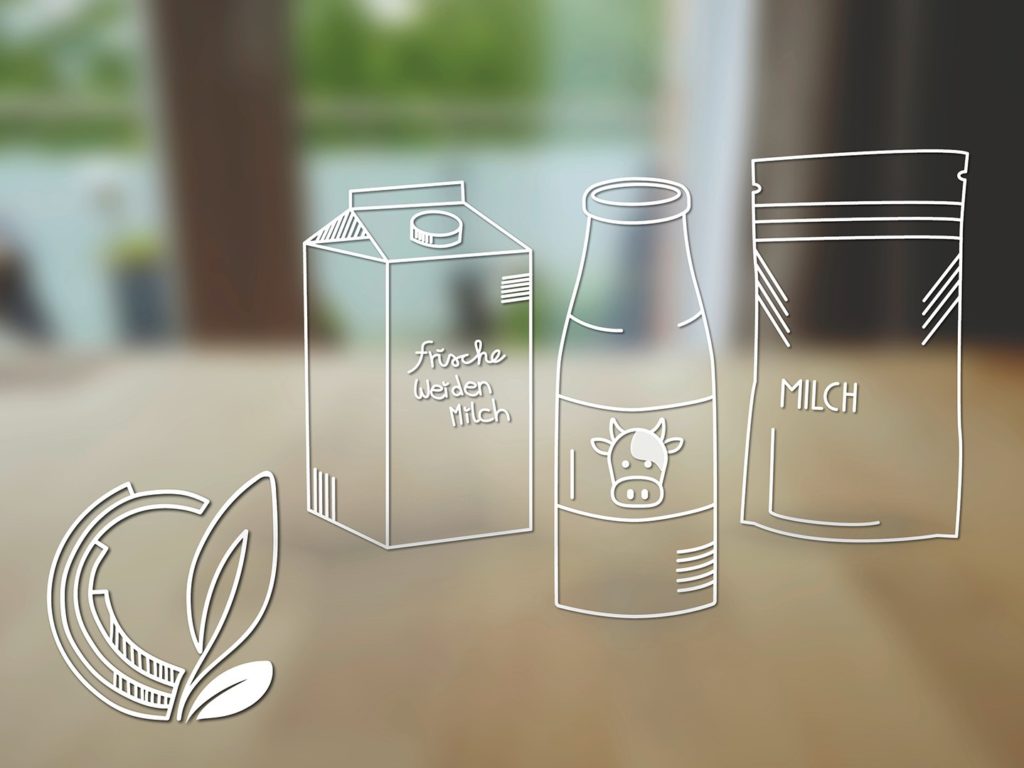
The question was: what is more sustainable: composite cartons, plastic stand-up pouches or reusable glass bottles? The dairy used the result directly for its new building and added reusable glass bottles to its packaging range. These are the most sustainable solution, especially for short transport routes.

Cardboard, plastic or glass - different packaging solutions for fresh milk were put to the test. (Image: Fraunhofer UMSICHT)

Production, transport and disposal taken into account

In Germany, composite cartons, plastic packaging and reusable glass bottles are currently used to protect and transport dairy products. Fraunhofer UMSICHT analysed the life cycle assessment. The researchers took into account the production, transport and disposal of the different packaging options.

Production includes, for example, the use of raw materials for packaging, closure and labelling. When transporting the milk packaging, the route from the manufacturer to the bottler and the transport to the point of sale, including empty runs to the next pick-up point and return journeys, are taken into account. The processes for cleaning the glass bottles are also included in the filling process.

Display

When it comes to disposal, the recycling of paper and plastics or thermal utilisation and credits for energy and materials for the recyclates are important.

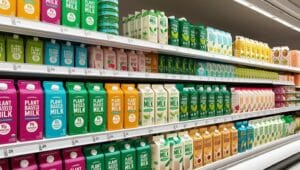
White and blue: Milk still sticks to the classic colour codes today.
White and blue: milk still adheres to the classic colour codes. (Image: (from left) Weihenstephan, Rewe, Alnatura)

Glass wins with short transport routes

The result: reusable glass bottles are the most sustainable packaging for Upländer Molkerei. However, one of the following two conditions must be met: The transport routes must be short, or the circulation must be greater than 20. This is because the reusable glass bottle initially has a greater impact on the climate per circulation compared to the composite beverage carton - due to a higher weight during transport and returns as well as additional cleaning for refilling.

However, the disadvantages of the glass bottle are reversed if it is used frequently or transported within the identified ecological radius. ‘The higher the returns and the shorter the distances, the more sustainable glass is,» explains Kartin Artzt-Steinbrink, Managing Director of Upländer Molkerei. The dairy has therefore directly implemented the results of the study in its new building and built a new filling line for returnable glass bottles. These are now used regionally, while composite cartons are still used for longer transport routes.

Comparison of different packaging

Overall, the results of the study showed that plastic packaging has the lowest CO2-The carbon footprint will have a negative impact on the environment, as this is mainly due to the high credits for energy utilisation, i.e. the avoidance of fuels as energy sources. In the long term, however, these credits are expected to decrease as the energy sector also becomes more sustainable.

The plastic stand-up pouches examined have a low chalk content, which means that they are sorted out in a sorting plant before recycling and utilised for energy recovery. The reusable glass variant is recyclable and has the advantage that less waste is produced and regional economic cycles are promoted in the sense of the circular economy through reuse.

Recycling closes material cycles. Another alternative to minimise CO2-The plastic closure of composite cartons could be replaced by a buckle closure, which would also simplify recycling.

The use of both glass bottles and composite beverage cartons can therefore make sense. 

Source: Fraunhofer UMSICHT

Dairy products - More news