Together with other partners, Metsä Board wants to promote the circular economy and, in particular, make further use of side streams from its production of fibre-based packaging. This works, for example, in agriculture or in the production of washbasins and bathroom fittings.
By-products and raw materials that are generated „incidentally“ during the manufacture of the main product are referred to as by-products. The entire Metsä Group for example, has set itself the goal of reusing all by-products and waste from production by 2030. And Metsä Board is already well on its way: over 99 per cent of the cartonboard manufacturer's by-products are already used as material or energy. utilised. Anyone looking for innovation potential for the utilisation of by-products would do well to seek out partners who can use the by-products created.
„Circular economy means that we extend our cooperation and our sense of responsibility beyond our own plants to the entire value chain. The circular economy optimises material, energy, information and value flows in order to create positive effects for nature and society. And an important factor is the intelligent utilisation of side streams. But we do not have the expertise or the means to utilise all our side streams ourselves. With the help of our partners, we can still find new uses for them.“
Maija Pohjakallio, Vice President Climate and Circular Economy at Metsä Group
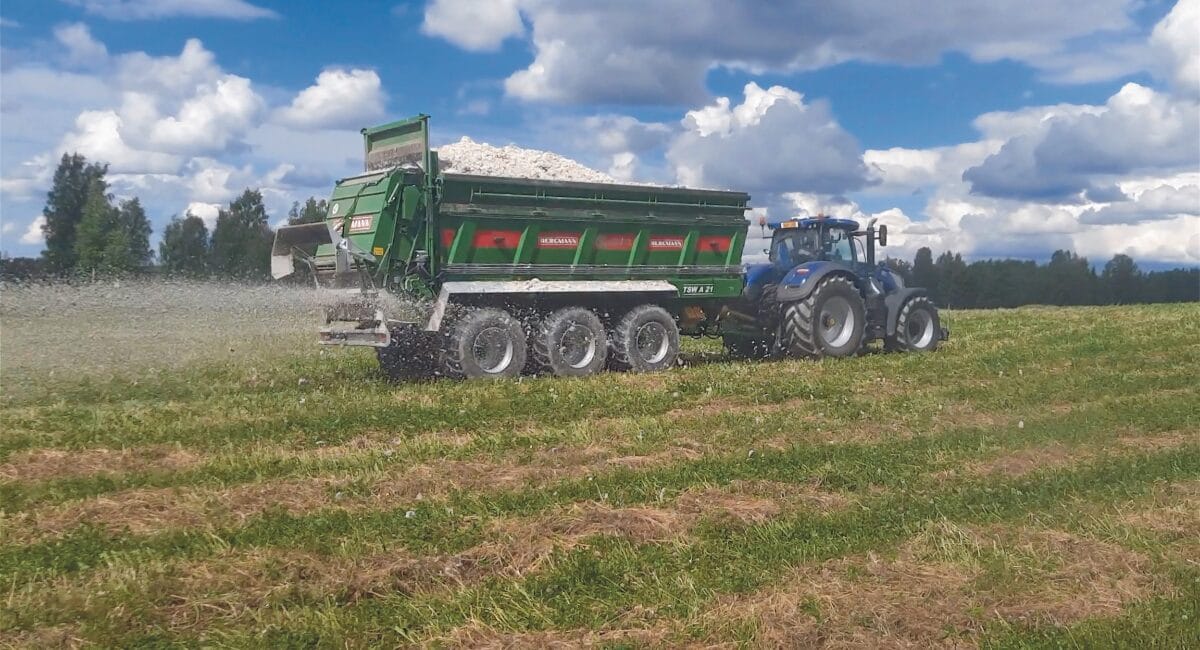
One such partner is Soilfood. The Finnish circular economy company uses fibre sludge from the Metsä Board plants in Kemi, Äänekoski and, more recently, Tako to produce Fibre-based soil conditioners to produce. These are then supplied to local farms, where they stabilise the structure of the field soils, which has several positive effects. Firstly, the soil conditioner reduces soil erosion and can therefore also counteract the leaching of nutrients from fields into bodies of water. On the other hand the fibres increase the carbon stock in the soil and thus reduce the environmental impact of agriculture. The two companies are also working together to develop further new solutions for the sensible utilisation of existing side streams from production.

A fairly new partner in the ecosystem of the bioproduct plant in Äänekoski is Veolia. The company is currently planning to build a plant for refining raw biomethanol, a by-product of the pulping process. „Until now, raw biomethanol has been burnt to generate energy,“ says Pohjakallio, describing the initial situation. „Thanks to Veolia's investment, however, it can now be used as Biofuel for vehicles or as a raw material for the chemical industry use.“ So there are many possibilities for using bypass flows - you just have to be able to utilise them.
„I think that Metsä Group is way ahead in terms of technical expertise and building partnerships. Both elements are necessary for industrial design to develop in line with the circular economy.“
In addition, the Metsä Group is currently working with the Finnish dairy company Valio, among others. This utilises Waste heat from the neighbouring Metsä Group bioproduct plant in Äänekoski for the Production of his cheeses. In Pohjakallio's opinion, such cooperation models aimed at systemic change are a relatively new development that only began in the 2010s. However, Metsä Group has of course been monitoring the resource efficiency of its products for much longer - long before partnership and cooperation became key models for the utilisation of by-products. Today, Metsä Group's innovation company, Metsä Spring, is responsible for promoting cooperation and partnerships. This is where incoming requests for co-operation are processed and examined - but also where investments are made in start-ups with exciting ideas.
One of these start-ups is the Finnish bathroom manufacturer Woodio, which By-products from Metsä Board for its designer washbasins and other bathroom fittings uses. „Natural Birch“ is the name of the product that gives the end product a special visual flavour. It is obtained by sieving the birch wood chips and produces a uniform raw material that impresses with its earthy colour and organic structure. The product also scores highly in the sustainability check: The CO2-The carbon footprint is 80 per cent lower than that of ceramic washbasins and the low material weight also means that fewer emissions are generated in logistics.
In addition to the utilisation of side streams, many other factors play a role in the circular economy - for example, the careful use of resources. Here too, Metsä Board offers a good solution with its lightweight paperboard qualities. On the one hand, they save resources such as material, energy and water during production and, thanks to the lower transport weight also reduces CO2-emissions on the way to the POS or directly to your home. Disposal is also simple: recycling in the paper and cardboard stream is of course preferable. However, if this is not possible due to contamination with food residues, for example, all white kraftliner and folding boxboard grades (with the exception of PE-coated grades) are currently certified by DIN CERTCO for home compostability.
Source: Metsä Board