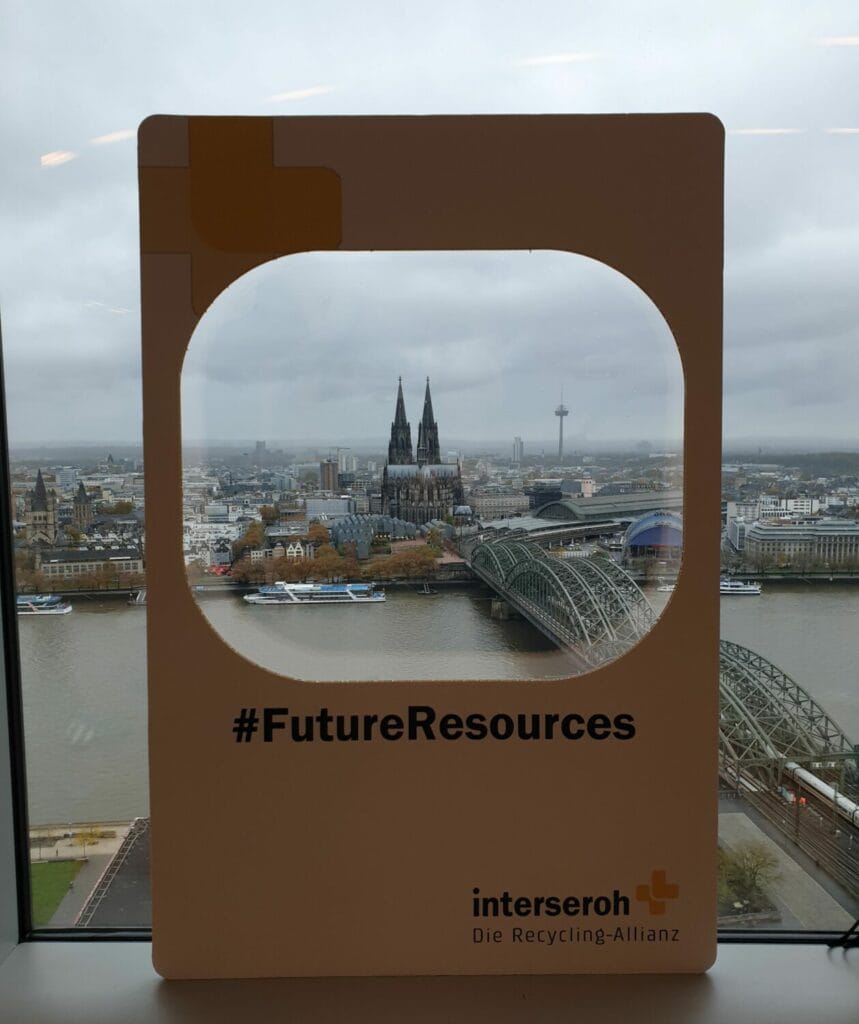
Interseroh+, the recycling alliance of the recycling service provider Interzero, and the German Packaging Institute (dvi) jointly organised the „Future Resources“ symposium for the seventh time. This year, a wide range of topics were discussed in Cologne, from the circular economy to Europe-wide legislation, innovative packaging concepts and the future of paper packaging, all of which are intended to lead the packaging industry towards a more sustainable future.
This year's motto „Future Resources - Future Perspectives“ was impressively taken up right at the beginning with the keynote speech by biologist, author and entrepreneur Dr Frauke Fischer. „We talk a lot about climate change, but we need to talk a lot more about biodiversity. Because all sectors, people and regions of the world are absolutely dependent on biodiversity and ecosystem services, while at the same time there is dramatic overexploitation.“ The Loss of ecosystem services could reduce annual global GDP by up to 2.7 trillion dollars by 2030. „Biodiversity, ecosystem services and climate change are closely linked“, says the scientist. „All measures to protect biodiversity contribute to climate protection, but some climate protection measures are harmful to biodiversity.“
After the keynote speech, the Legal aspects of packaging recycling in focus. In his presentation, lawyer Dr Markus W. Pauly addressed the new EU Packaging Regulation, and Gunda Rachut, CEO of the Central Agency Packaging Register (ZSVR), provided information on the minimum standard as a driver of recyclability. In agreement with the Federal Environment Agency, the ZSVR has been publishing a minimum standard for assessing recyclability every year since 2019. It has now been adapted to new developments in the packaging sector.

Then it was time for the practical part. Pia Schnück, Head of Sustainability at the REWE Group, presented the Group's packaging strategy before.
„We see great potential in avoiding packaging through unpackaged and reusable systems. However, the hurdles for customers must be low, as it will always be more complicated to use reusable packaging than to simply dispose of it in the rubbish. That's why we need low deposit amounts, easy container lending and uncomplicated returns. Everything must be scalable. There are still too many isolated solutions.“
Pia Schnück, Head of Sustainability at REWE Group
In a pilot project, Rewe is now going one step further and tests new unpackaging stations. The dry products offered in the Rewe organic range can not only be filled into reusable containers, but the large containers in the stations are also used again and again and refilled by the suppliers. „The issue of recyclability plays a rather subordinate role with reusable containers, accounting for only around seven per cent of the overall balance. The number of cycles is of key importance here,“ says Pia Schnück.
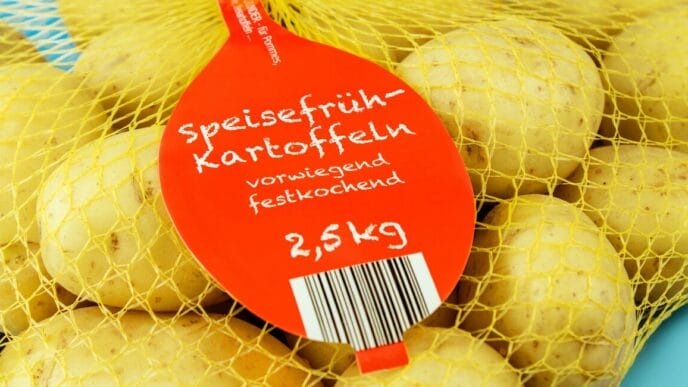
From the perspective of the packaging trade, Claudia Schuh from Lorentzen & Sievers reported on the Difficulties in meeting all legal requirements. The company sells fruit and vegetable packaging made of PET and PP from the Italian manufacturer Infia. Every mono-A-PET tray supplied by L&S, for example, has a minimum PCR content of 80 per cent.
„PET recycling could become more economically interesting through the further development of technology and processes, and the future potential should be promoted through political adjustments.“
Claudia Schuh, Lorentzen & Sievers
Food retailers could also promote recycling by offsetting temporary additional costs with added marketing value. And via More communication with end consumers recyclable plastics could be in demand and the volume flow stabilised. Less ecological alternatives would then be curbed.
The subsequent panel discussion centred on the future of paper packaging. Packaging manufacturers, sorters, recyclers and the spokesperson for the „Waste separation works“ initiative shed light on the current topic from different angles. Finally, the best practice examples focussed on the Aldi Group's new detergent packaging, among other things. The own brand Tandil has recently been offered in grey packaging made from recycled material, which was developed in a joint project by Aldi Nord and Aldi Süd.
Recyclate is also used in a new tube from Linhardt, which was awarded the German Packaging Award in the Sustainability category was honoured. It consists of 70 per cent PCR and has been equipped with a specially designed closure that uses the tube shoulder as the lower part, thus significantly reducing the weight once again - the 200-millilitre tube achieves a material reduction of 70 per cent. At the same time the residual emptying capacity is improved. „Everything that remains in the tube at the end ends up in the recycling plant and causes problems there,“ says August Wanninger, at Linhardt responsible for „Sustainability & Innovation“.
From the magazine - More news


Battpack: No more battery chaos

Regulatory changes and steel - a look into the future

Predictive obsolescence management

Packaging solutions for delicate baked goods