Filling processes for vials are changing faster than ever. New regulations demand a higher degree of automation and less manual intervention, while new products require significantly more flexible filling systems and processes. Pharmaceutical manufacturers and CDMOs that want to remain competitive in the long term need future-proof solutions today.
Vials are one of the most commonly used packaging materials for innovative pharmaceuticals and represent a significant commercial opportunity for pharmaceutical manufacturers and CDMOs. A CDMO (Contract Development and Manufacturing Organisation) is a company that combines drug development expertise with manufacturing capabilities and offers these capabilities and comprehensive services to pharmaceutical and biotechnology companies. Both are under increasing pressure to deliver a wider range of products with different properties, dosage forms and batch sizes in ever shorter timeframes. This requires highly flexible plants that minimise overproduction, enable fast time-to-market and rapid adjustments. But what exactly does flexibility mean in vial filling, what are the key drivers, and what should the ideal vial line look like?
Pharmaceutical industry in transition
The vial market is driven by two trends: Bulk-produced preparations such as diabetes drugs and vaccines require fast filling lines with high production output, while many new biopharmaceuticals and antibody drug conjugates (ADCs) are produced in small batches or even customised for individual patients. Applications range from large formats for multiple doses to small single doses. New, complex products in particular differ in their properties such as viscosity and sensitivity. At the same time, regulations are placing ever stricter requirements on sterile filling processes.

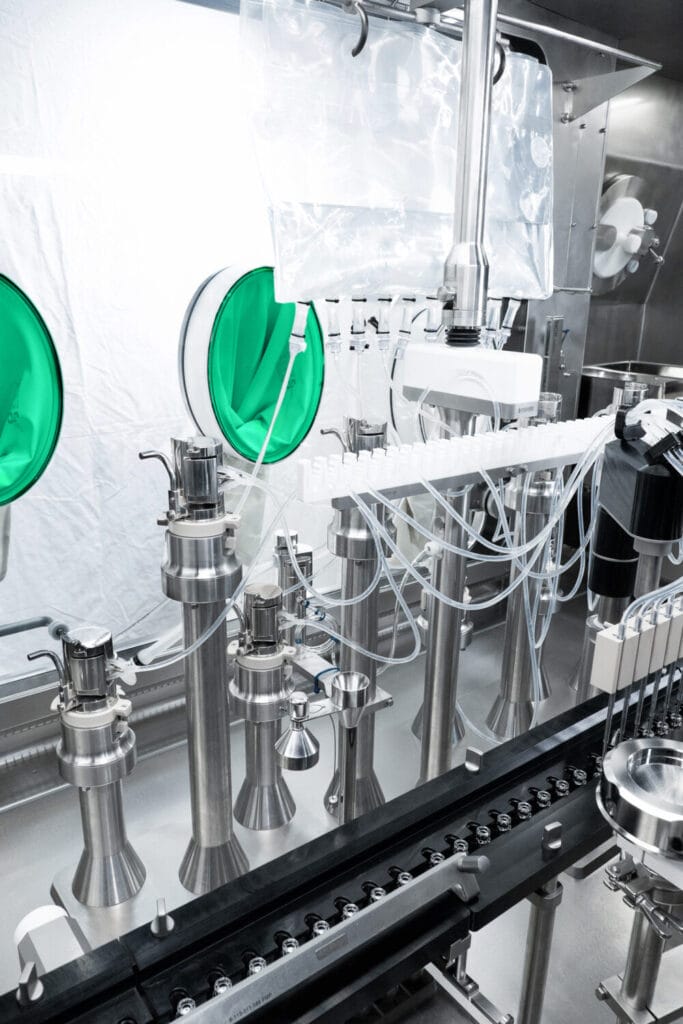
As a result, manufacturers and especially CDMOs, whose role in the bottling sector will continue to grow, are increasingly looking for systems that combine high production output with versatility and regulatory compliance. Switching between different volumes and complex products requires a high degree of flexibility. „Modern filling lines should be able to process multiple vial sizes on a single platform. It is also crucial to reduce downtime through automatic, tool-free changeovers and optimised cleaning,“ sums up Sarah Springer, Global Product Manager - Vial, Ampoule, and Filling Systems at Syntegon. A modular design ensures scalability. Components such as freeze dryers or isolators can be integrated without extensive system changes: a decisive factor for long-term production efficiency.
What restricts flexibility?
Despite the increasing demand for flexibility, many filling lines still limit this. Manual format changes prolong downtime and increase the risk of human error, which can lead to delays or batch losses. Cleaning is another bottleneck: in aseptic processing, it must be thorough, validated and well documented. Non-standardised interfaces further limit flexibility as they hinder the rapid integration of new or required technologies such as barrier systems or freeze dryers.
Barrier systems are explicitly recommended in EU GMP Annex 1 to improve product safety by minimising manual intervention. Therefore, manufacturers require Restricted Access Barrier Systems (RABS) as a minimum for the approval of new products, while new plants should be equipped with isolators as standard. „With the growing demand for freeze-dried products and higher containment, standardised interfaces are becoming increasingly important: without them, retrofits are slower and more costly, and manufacturers cannot adapt quickly enough to changing market requirements,“ says Sarah Springer.
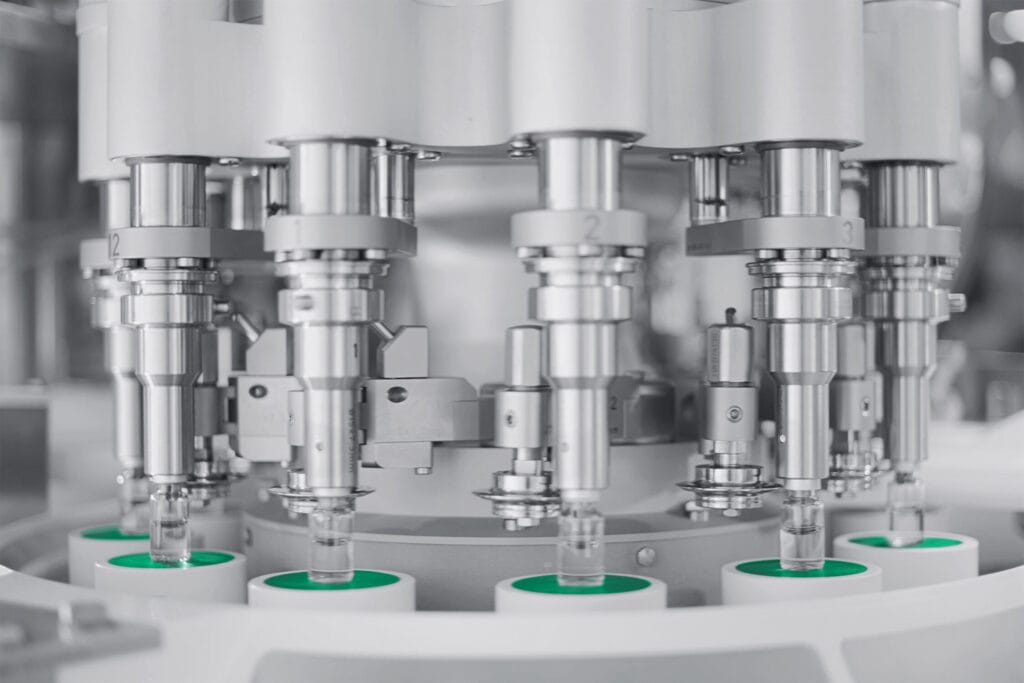
Various filling systems support
To overcome these obstacles, the focus should be on four key design principles. Diverse products (from sensitive biopharmaceuticals to high-volume drugs) require flexible filling technologies. Firstly, multiple filling systems should run on a single machine and parts should be interchangeable with minimal downtime. Both stainless steel returnable systems and single-use solutions are used here, while truly flexible systems support a variety of filling systems: from peristaltic, rolling diaphragm and rotary vane piston pumps to mass flow and time-pressure filling systems. Combi filling stations, for their part, integrate several systems simultaneously, which also saves space and time.
Secondly, regardless of the number of filling technologies, format changeovers in particular must run reliably. The most effective means are automatic, tool-free format changes. Thirdly, fully automated systems are not only less prone to errors than manual or semi-automated processes, but are also significantly faster. One example of this is the gentle, sometimes even contactless transport of the vials. Fourthly, to achieve true flexibility, automation must go beyond filling. Every process step, from cleaning and sterilisation through to freeze-drying and capping, should enable fast, automatic adjustments.
Modular design and integration options
Most format changes require cleaning and sterilisation, with a few exceptions for disposable or non-contact parts. Optimising these processes is an important lever to reduce downtime and increase line flexibility. Many modern vial lines have integrated CIP/SIP systems that save time and ensure compliance across all products. „As Annex 1 particularly emphasises filter testing via PUPSIT (Pre-use post-sterilisation integrity testing), manufacturers should rely on integrated or easily integrated solutions for maximum flexibility,“ emphasises Sarah Springer.
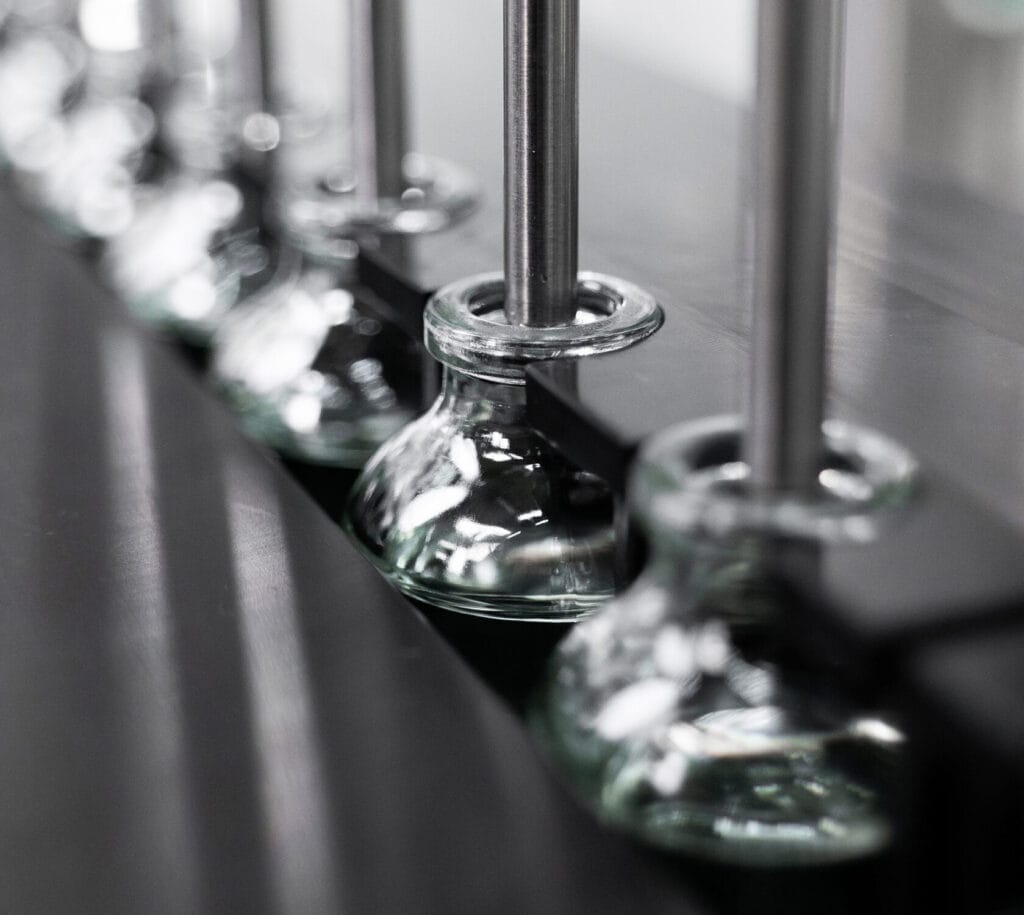
After all, future-proof flexibility is best achieved with a modular filling line design and seamless integration options. In view of increasing regulatory requirements, modularity is far more than just a design decision: it is a long-term safeguard. For example, modular systems that were originally designed without barrier technology can be easily upgraded thanks to standardised interfaces. New process steps such as freeze-drying can also be easily added. This gives pharmaceutical manufacturers and CDMOs the freedom to further customise their product portfolio.
Optimum system selection
Flexible vial lines are a strategic investment with long-term value, significantly increasing plant availability and overall efficiency. Production resources are better utilised, while pharmaceutical manufacturers and CDMOs can respond more dynamically to changing market demands and regulatory changes. However, true flexibility goes beyond selecting the right equipment. It requires a partner who understands the bigger picture of pharmaceutical production and can support customers at all stages of the process and throughout the entire equipment lifecycle.
Choosing a suitable strategic partner such as Syntegon, who understands flexibility as the basis for seamless processes, can be a decisive success factor. Seamlessly integrated vial lines are available from formulation through filling and capping processes to sterilisation, freeze-drying and inspection at every level of containment. In addition, spare parts, maintenance kits and advice on product-specific upgrades ensure real added value in day-to-day operations. Pharmaceutical manufacturers and CDMOs are therefore ideally positioned for the requirements of today and the opportunities of tomorrow.