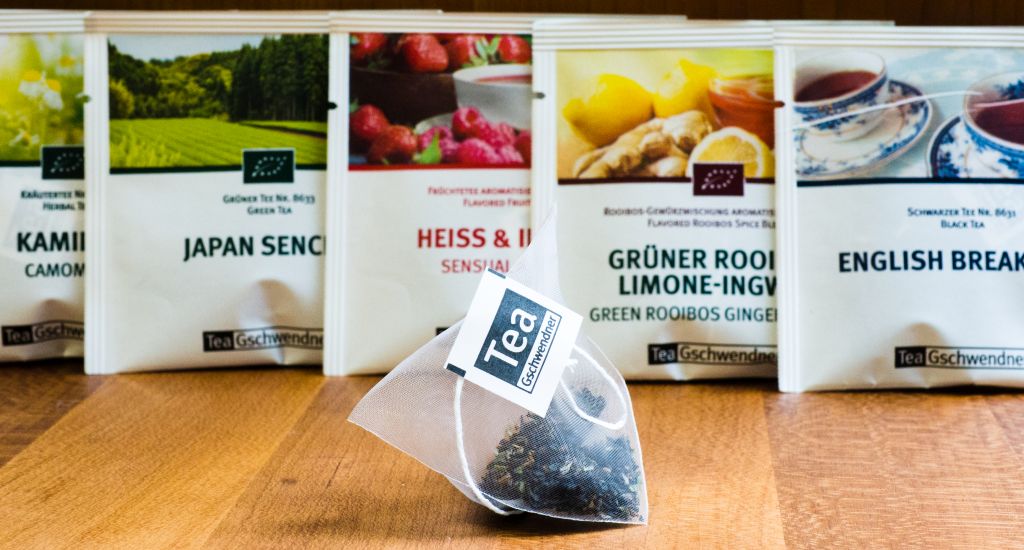

The tea trading company „TeeGschwendner“ has recently started packaging its newly developed pyramid bags in paper sachets. The Meckenheim-based company is thus using an environmentally friendly alternative to film and plastic made from renewable raw materials.
The supplier for the new outer packaging is Sappi Europe. Used for TeeGschwendner the Barrier paper „Sappi Guard 4-OHG Gloss“. The approximately 8.5 x 8.5 centimetre packaging is protected from flavour loss, mineral oils and other environmental influences by the bright white special paper with integrated barrier functionality. The new „MasterBag Pyramid“ tea packs with classic and flavoured green and black teas as well as fruit, herbal and rooibos teas have been available in TeeGschwendner's specialist shops and online shop since the beginning of February 2018.
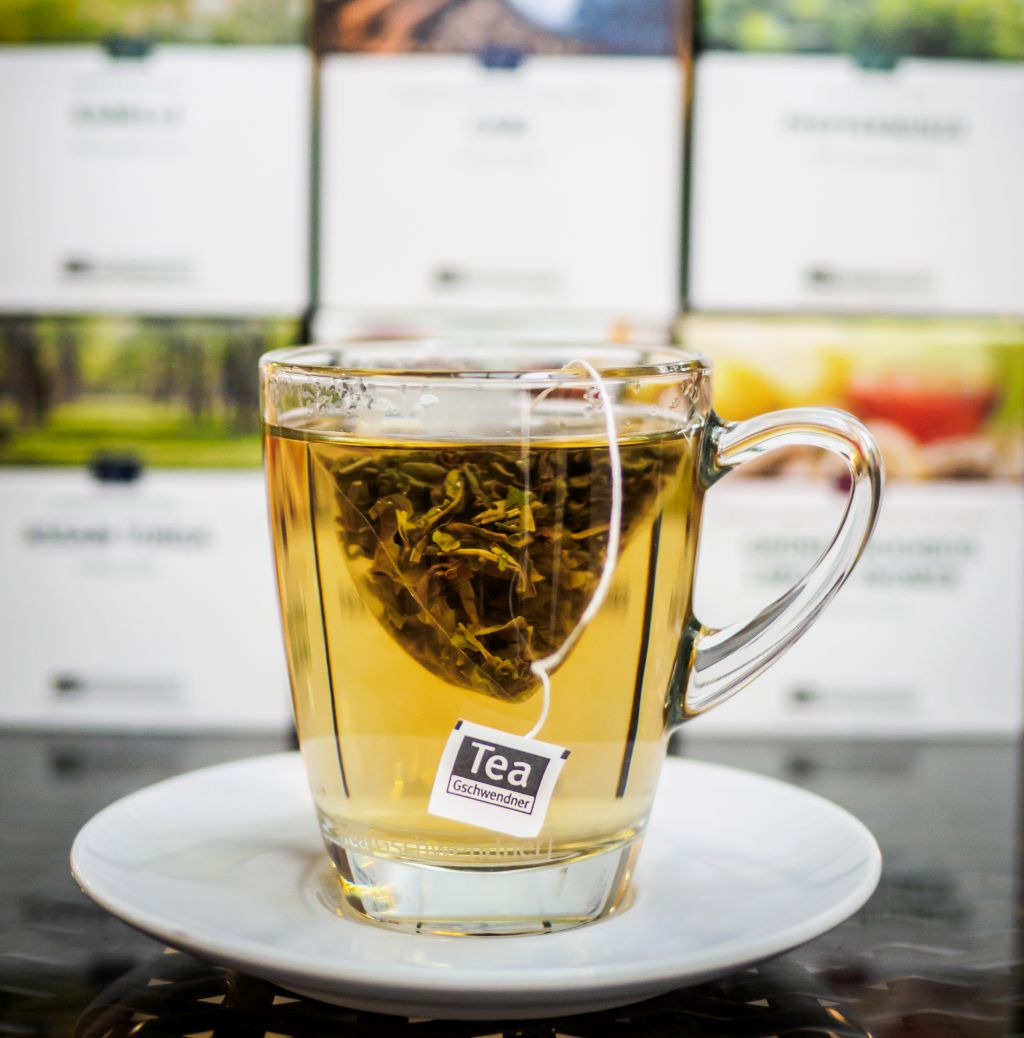
Bright white barrier paper offers ideal protection and is easy to print on

The „Sappi Guard Gloss 4-OHG“ paper contains a mineral oil barrier, has Heat-sealing properties and also prevents the penetration of oxygen and water vapour to protect the tea flavour. Manufacturer Sappi emphasises the good machine processing and good printability of the material. Printing service provider Arwed Löseke Papierverarbeitung und Druckerei GmbH from Hildesheim had the opportunity to test these product properties in trial runs. The tea sachets are printed using the flexographic printing process.
Production of barrier paper consumes only half as much carbon dioxide
Last but not least, the decision in favour of the paper product was also made due to its ecological advantages. Previously, a composite of plastic films or aluminium was used to achieve the desired Barrier properties to achieve. The fact that the same effect can now be achieved with a pure paper solution offers many advantages, writes Sappi. These include carbon dioxide emissions during the production of the outer packaging. According to Sappi, independent measurements have shown that, at 157 grams per square metre of carbon dioxide, „Sappi Guard“ only emits half as much C02 during production as an aluminium-coated, fossil-based composite solution. The Sappi Guard paper also consists of 88 per cent FSC-certified paper.