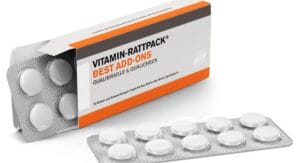
For pharmaceuticals, the primary packaging continues to present an opportunity for counterfeiting if it is separated from the secondary packaging. SEA Vision and the Marchesini Group are now introducing a new technology for the serialisation and aggregation of blisters.
SEA Vision and the Marchesini Group bring a range of technologies to the Printing, checking and packaging of serialised blisters and for aggregation with cartons at Achema, all of which are integrated into a 4.0 environment. The two companies decided to invest in this ambitious project to further improve product labelling, which is a prerequisite in the healthcare industry. While this requirement is met for cartons and pallets, this does not apply to primary packaging such as blister packs. This means that The risk of counterfeiting still exists in the primary packaging of medicinal products, Despite all the investments made by pharmaceutical companies in the traceability of secondary packaging, there is still a hidden gap that can cause great damage.
The new solution is strategic - when the blister is distributed (e.g. in hospitals, pharmacies or in the hands of the consumer) or used separately from the original packaging - and meets all the challenges of a project of this type. One advantage of the serialisation of single doses is the new possibility, Read drug information via electronic package leaflets, which can be retrieved by simply scanning them with the patient's smartphone. Thanks to the digitalisation of the package leaflets, the information is easily accessible to patients, even when the medicine is taken out of the box. was.

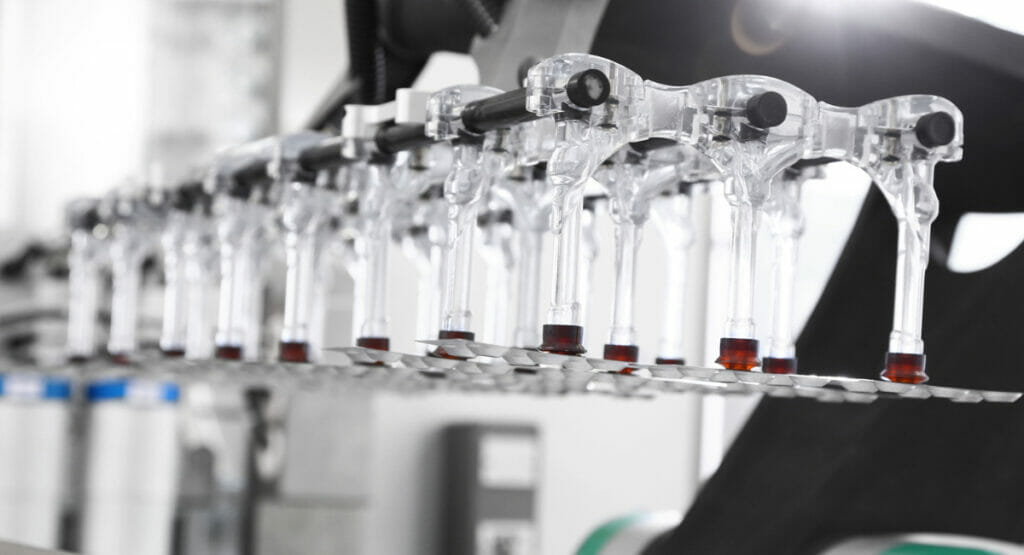
For the project, SEA Vision focussed its research and development work on two areas: selecting the best hardware and developing the latest generation of software. In terms of hardware, the company identified the Contact Image Sensor with CoaXPress interface as the most suitable tool for this technological challenge. Integrated into the SEA Vision Tracker, this sensor enables a homogeneous inspection of webs up to 367 mm with high resolution (600 dpi) and the inspection of films made from a wide range of materials. You also achieve a high image transfer speed, which enables line speeds of up to 75 m/min and a Minimisation of the physical space required in the machine thanks to an integrated lighting system and CIS customisation for the most demanding reflective surfaces.
The Integra 720V from Marchesini is a compact, multi-lane blister line (up to three blister feed lanes) with a completely balcony-like structure consisting of two sections: one blister packaging machine, which forms the blisters and places the products to be packaged in their cavities, and a cartoning machine, which packs the blisters into their cartons. The two sections are connected by a Robocombi, a three-axis robot that is fully integrated into the line and was developed entirely by the Marchesini Group's research and development departments.
This high-tech arm is operated by a software that enables automatic synchronisation of the transfer, tracking and stacking system. is possible. The two sections can be separated by a partition wall so that they can be integrated into environments of different classes and operated independently of each other depending on customer requirements. The Integra 720V has a Push-off and counter-push-off unit, a rotating drum carton opening system, which can handle high speeds, as well as an efficient system for picking up and inserting leaflets. The result is a system that can handle up to 720 blisters (made of aluminium+PVC/PVDC/PET/aluminium and other materials) and up to 500 cartons/minute (with tuck-in or adhesive closure and many other combinations).
Source: SEA Vision
Further news from the pharma sector


Sustainable tubes for cosmetics and pharmaceuticals

Tjoapack plans extensive expansion of its US capacities - packaging journal

Needle protection system for large-volume syringes

Market for flexible packaging in the Middle East and Africa is growing significantly