Around 400,000 parcels from China reach German households every day - often without the required packaging licence being paid for. Environment Minister Carsten Schneider wants to change this.
Products from platforms such as Temu or Shein now end up in German shopping baskets en masse - with one click, cheaply and directly from China. However, while retailers in Germany are legally obliged to contribute to the disposal costs for packaging, many foreign senders circumvent this regulation. The new Federal Environment Minister Carsten Schneider (SPD) has put the problem on the agenda. He has announced that he will take stronger action against suppliers who evade the financing of collection and recycling systems.
400,000 parcels a day - but hardly anyone pays for the rubbish
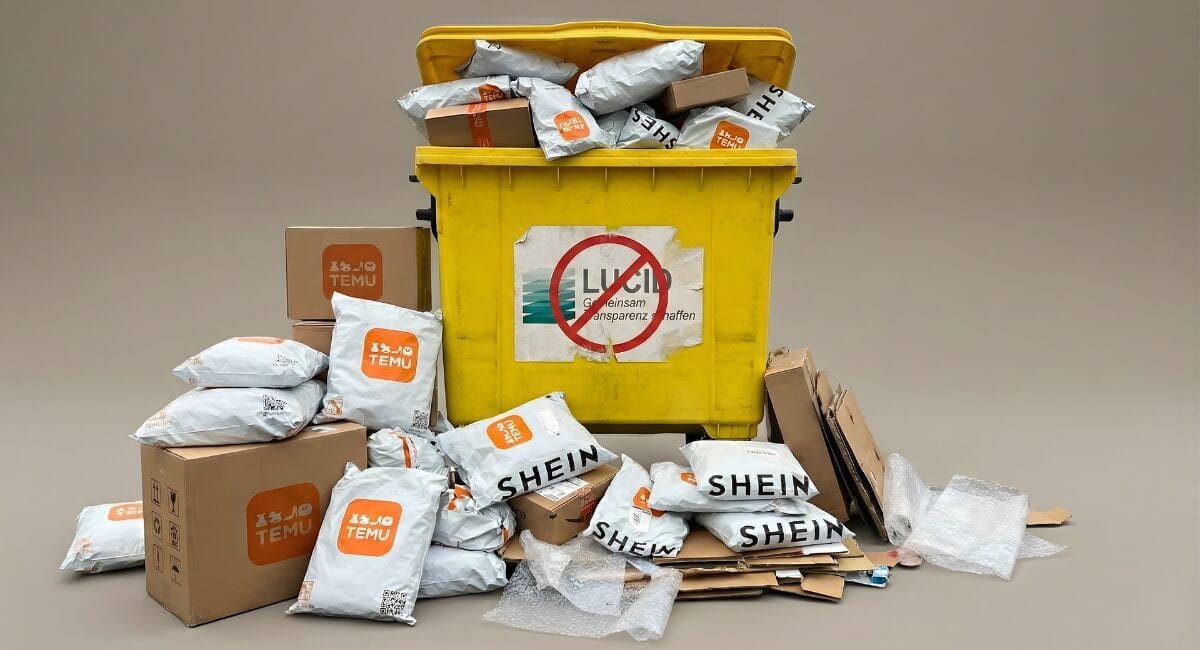
After Research by the BILD newspaper around 400,000 parcels from the Far East land in German letterboxes every day. However, only a fraction of the senders are listed in the LUCID packaging register - although this is mandatory for all those who market packaging to end consumers in Germany. The Packaging Act stipulates that foreign retailers must also participate in a dual system and pay the corresponding licence fees.

In reality, however, many providers from China, but also from other third countries, evade this responsibility. This is because it is difficult for German authorities to get hold of anyone operating within the EU without a branch - especially if the goods are shipped directly and without the involvement of platforms or fulfilment service providers.

Federal Environment Minister wants to make platforms more accountable
Federal Environment Minister Carsten Schneider has now called for concrete measures to counteract this practice. The aim is to hold senders such as Temu or Shein accountable if they cause packaging waste in Germany without contributing to its financing. According to IMAGE Schneider intends to work with customs, the Federal Network Agency and the federal states to develop solutions to improve the enforcement of existing obligations.
Platforms are already obliged to ensure that only registered retailers are authorised to sell through them. However, many providers use direct sales, their own apps or non-transparent logistics structures to circumvent these requirements.
Imbalance in the system
For the packaging industry in Germany, the current situation means a structural distortion of competition. While local companies pay licence fees, provide proof of recyclability and submit quantity reports, many imports from the Far East remain uncontrolled. The packaging waste still ends up in the yellow bins - paid for by those who behave correctly.
The Central Agency Packaging Register (ZSVR) has also repeatedly pointed out the problem. Without cross-border cooperation, more digital control and consistent market surveillance, the system cannot be organised fairly and equitably, according to the industry.
A look at Europe: hope for new regulation
The planned EU packaging regulation (PPWR) could be a glimmer of hope. It is intended to create standardised rules and more transparency - also for third countries. But until then, national solutions are still required. The clear message from Berlin is that the proliferation of packaging registers should come to an end.