Founded by Dr Ruben Rausing in Sweden in 1951, Tetra Pak has grown from a progressive idea into a global leader in the packaging industry.
30 July 2025
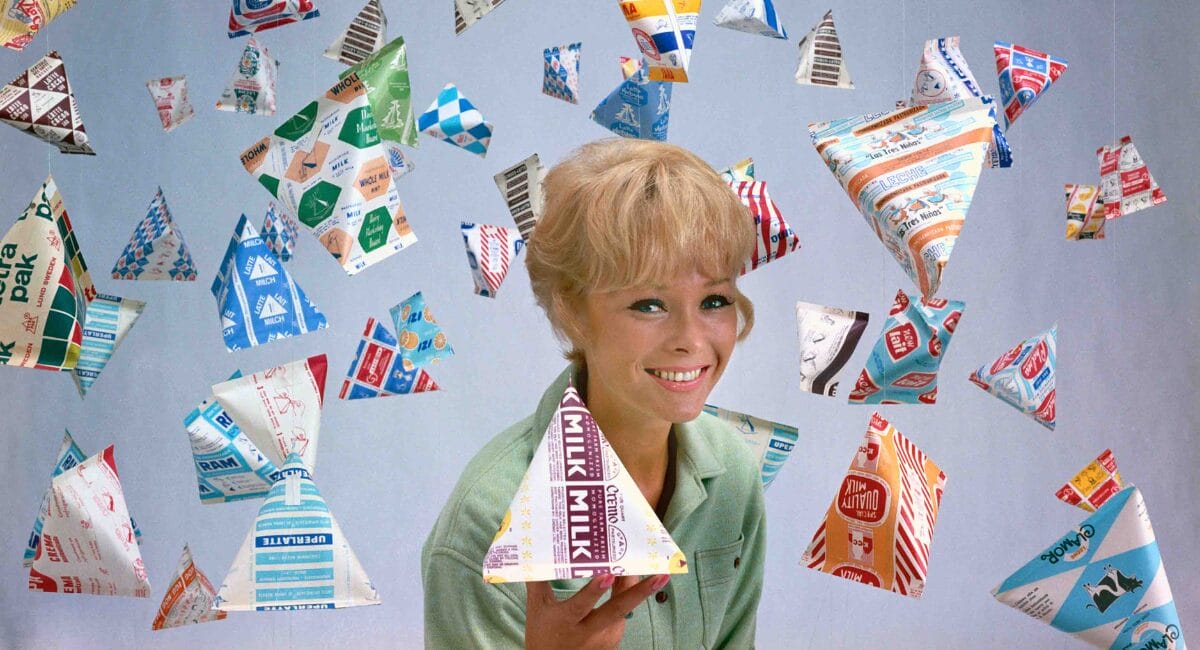
Tetra Pak is a combination of the two word elements „Tetra“ for tetrahedron (the shape of the first carton for liquid food) and „Pak“ as a short form for package or packaging. (Image: Tetra Pak)
Founded by Dr Ruben Rausing in Sweden in 1951, Tetra Pak has grown from a progressive idea into a global leader in the packaging industry. The company's history is characterised by strong personalities, exciting innovations and continuous adaptation to the needs of the market.
Dr Ruben Rausing was born in Råå, Sweden, in 1895. After graduating from the Stockholm School of Economics in 1918 and completing a master's degree at Columbia University in New York, he returned to his native Sweden in 1920. In the early years of his career, he was fascinated by the idea of how the food industry Transformed by efficient packaging solutions could become.
Together with Erik Åkerlund, he founded the company Åkerlund & Rausing in 1929, which specialised in packaging. Rausing recognised the potential of pre-packaged food at an early stage and looked for ways to make the food industry more efficient and safer. The ground-breaking idea that would later form the basis for Tetra Pak came in 1943. Under the leadership of chemist Erik Wallenberg, engineer Harry Järund and sales manager Erik Torudd, the team succeeded in developing a new type of packaging in the shape of a tetrahedron.
This innovation laid the foundation for the future company Tetra Pak, which was founded in 1951 as a subsidiary of Åkerlund & Rausing under the name „AB Tetra Pak“ in Lund, Sweden. The first filling machine was delivered to Lundaortens Mejeriförening in 1952.
Display
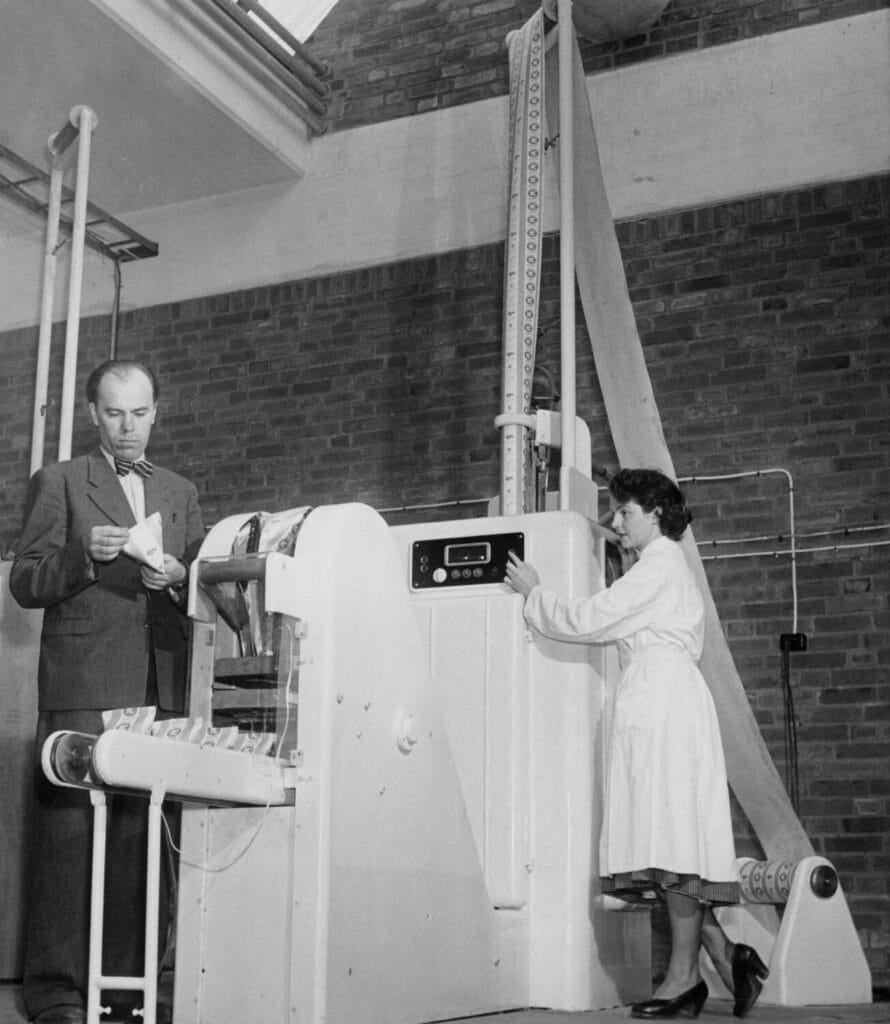
One of the first machines in action in the 1950s. (Image: Tetra Pak)
Milestones of innovation and growth
The introduction of the Tetra Brik packaging in 1963 was a decisive moment in the company's history. The rectangular shape enabled significantly greater efficiency in the storage and transport of liquid foodstuffs, which led to considerable cost reductions in logistics. Thanks to this improvement, the Tetra Brik packaging quickly became the standard in the food industry, especially in the dairy and juice industries.
But this was just the beginning. In 1969, Tetra Pak launched the aseptic packaging technology that made it possible, to preserve drinks for longer without refrigeration. This revolutionised the way in which food could be transported and stored worldwide.
The development of the machines and systems not only demonstrates the company's technological innovation, but also its continuous adaptation to market requirements. (Image: Tetra Pak)
These developments contributed significantly to the company's global success. In the decades that followed, Tetra Pak continued its innovation strategy, building on the foundation of these pioneering technologies. It became continuously develops new packaging solutions, which were even more efficient and environmentally friendly. This made Tetra Pak one of the leading companies in the global packaging market.
Tetra Pak in Germany
Tetra Pak quickly found a suitable location for its expansion in Germany: Hochheim am Main. The German site became a central point in the company's European strategy. It not only manages the German company, but also operates the plant in Limburg, which specialises in the production of high-quality carton packaging material for liquid foods. Over the decades, the production facility in Limburg has established itself as a centrepiece of Tetra Pak and plays a central role in the development of new packaging technologies.
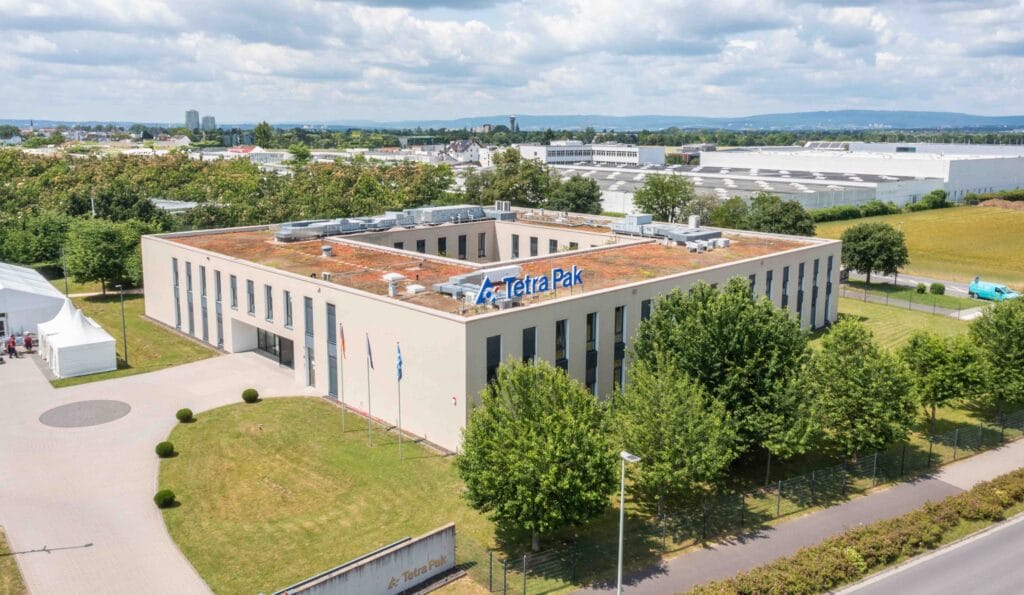
The Hochheim am Main site is a central point in the company's European strategy. (Image: Tetra Pak)
In addition to Hochheim and Limburg Stuttgart is an important research centre for the company. Founded back in the 1970s, the research centre there plays a central role in the areas of food and packaging safety. Around 50 experts from the fields of chemistry and microbiology work on the development of new test methods, material analyses and regulatory solutions to ensure the highest quality and safety standards. For the 50th anniversary in 2024 the site was modernised and strengthened in order to continue driving innovation in the packaging industry in the future.
In addition, Tetra Pak in Germany has repeatedly set standards in terms of sustainability. The production site in Limburg relies on advanced recycling technologies and continuously reduces CO₂ emissions in its manufacturing processes. The company has made a commitment not only in the packaging industry, but also a pioneering role in production with sustainable machines and materials to take over.
A look at production
What originally began with manual processes has developed today have developed into highly automated production processes, that work with state-of-the-art technology. A look at the development of the production lines clearly shows the stages of development:
1952: The first filling machine for tetrahedron packaging was developed and used.
1963: The introduction of Tetra Brik packaging technology marked a revolutionary improvement in packaging logistics and storage.
1969: The market launch of aseptic packaging technology made it possible to extend the shelf life of liquids without refrigeration and opened up new markets.
2000: The introduction of the TBA/22 high-speed packaging line, which increased production capacity to 20,000 packs per hour, set new standards in packaging production.
2004: The launch of the flexible Tetra Pak C3/Flex machine, which enabled customers to switch between different packaging volumes, revolutionised flexibility in production.
The development of the machines and systems not only demonstrates Tetra Pak's technological innovation, but also continuous adaptation to the requirements of the market. With each new generation of machines and packaging solutions, the company has set the standard for efficiency and quality in the packaging industry.
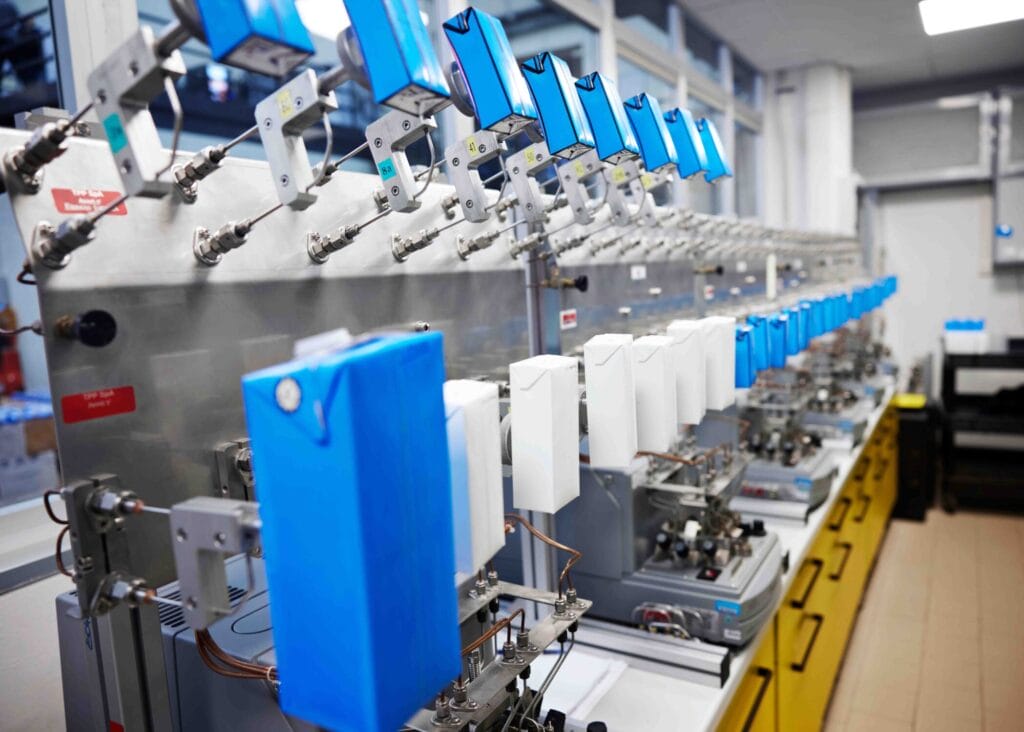
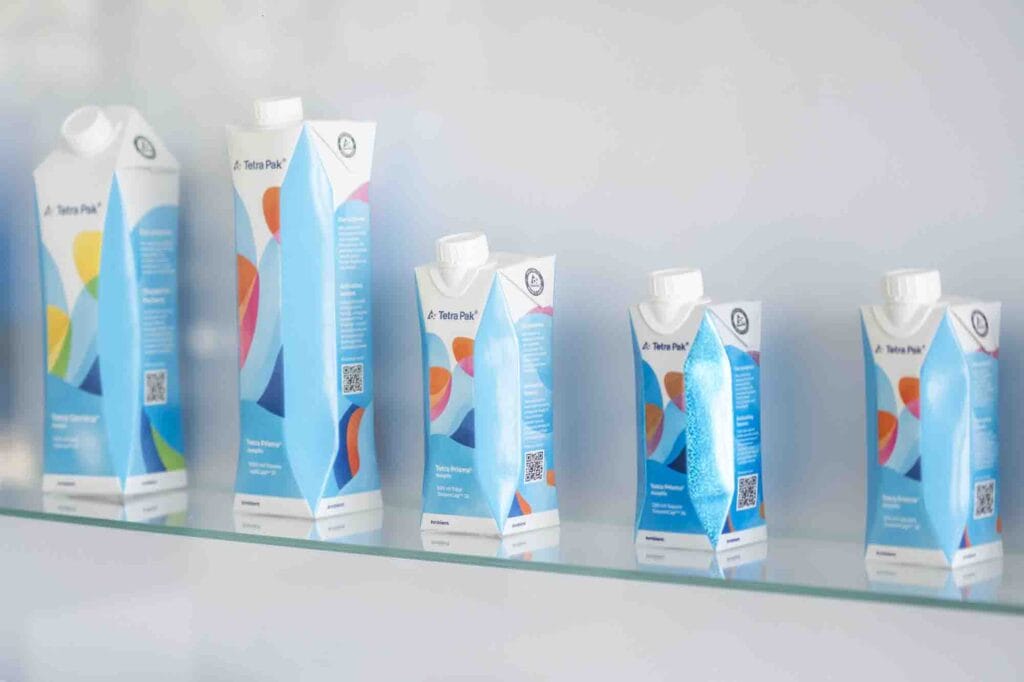
Part of the current product range. (Image: Tetra Pak)
Focus on responsible behaviour and environmental awareness
Tetra Pak is aware of its responsibility towards the environment and has placed sustainability at the centre of its corporate strategy. The company continuously invests in new technologies that minimise reduce the environmental impact of its production processes. The company focuses on innovative recycling solutions and packaging that improve the carbon footprint and reduce waste.
The company is committed to minimising the use of finite resources in production and is increasingly focusing on renewable energy. In recent years, Tetra Pak has invested in the development of plant-based packaging, to reduce the proportion of fossil raw materials. The company is also on the way to establishing a circular economy for packaging in which materials can be further recycled and reused.
The company discloses what it understands by sustainability and what it is doing for it in terms of ecological, economic and social aspects, including along the entire value chain: it controls the origin of its raw materials, has committed its suppliers to sustainability for decades, is certified according to the FSC label for wood and Bonsucro for sugar cane, has itself helped to launch the Aluminium Stewardship Initiative (ASI), meets the strict requirements of the CO2-Carbon Trust carbon footprint label and can analyse the carbon footprint of a beverage carton over its entire life cycle. Tetra Pak is developing new methods and operates plants for the recycling of paper fibres, polyethylene and aluminium foil as well as rigid plastic closures and invests around 40 million euros annually in these initiatives worldwide.
The impact of a forward-looking idea
Tetra Pak is currently led by Adolfo Orive, who has been President and CEO of the company since 2019. Orive repeatedly emphasises how important it is to keep the company model focus not only on innovation, but also on sustainability„Our aim is to continuously improve food processing and packaging in order to meet the changing needs of society while minimising the environmental impact.“
Under his leadership, Tetra Pak is not only focussing on technological excellence, but also an ethical responsibility, which is reflected in a more sustainable packaging world. Stephan Karl, Managing Director of Tetra Pak GmbH and responsible for the DACH region, is also driving this vision forward.
(Image: Tetra Pak)
„Our mission is to offer long-term packaging solutions that are not only safe and efficient, but also have a positive impact on the environment. In the DACH region, we are increasingly focussing on sustainable materials, innovative technologies and close partnerships with our customers in order to jointly shape the food processing and packaging of the future.“