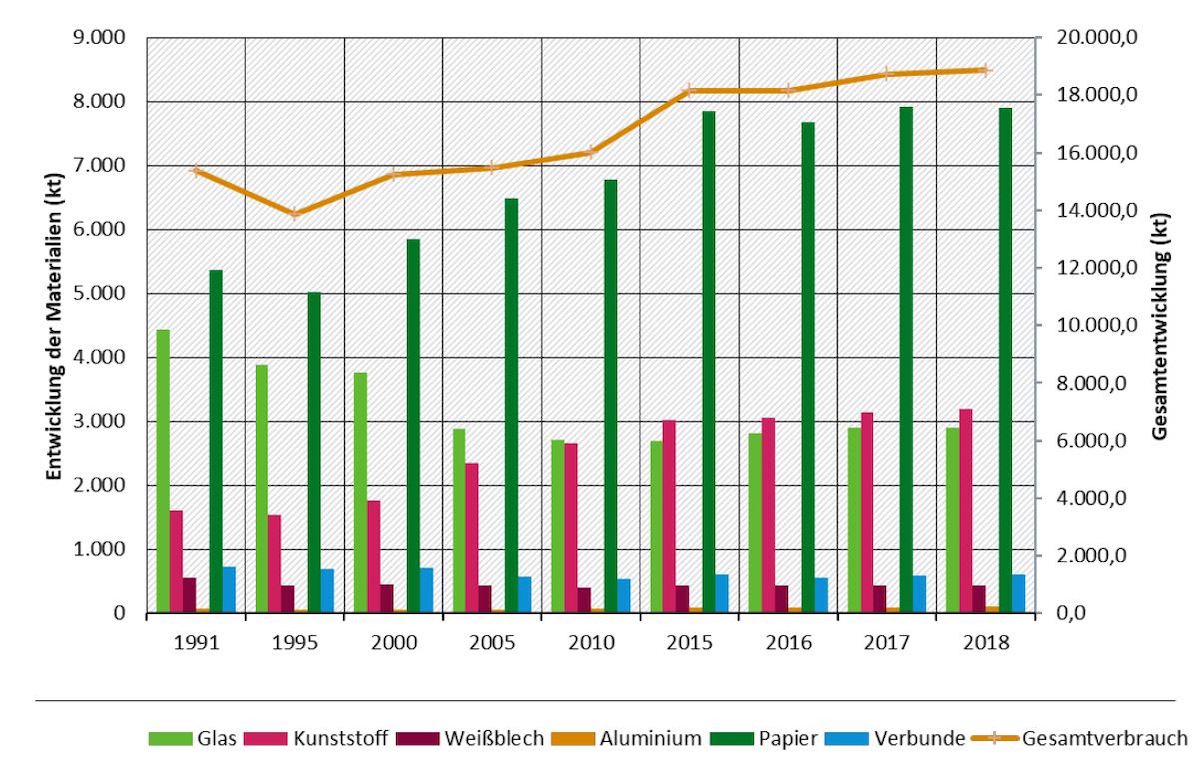
Between 2010 and 2018, packaging consumption increased by 17.9 per cent. This is shown by the latest figures from the Federal Environment Agency. According to these figures, almost 19 million tonnes of packaging waste was generated in 2018. That is 0.7 per cent more than in the previous year.
A total of 18.9 million tonnes of packaging waste was generated in Germany in 2018. This corresponds to an average of 227.5 kg of packaging waste per capita. This means that packaging consumption has increased by 17.9 per cent since 2010. This is shown in the latest report from the Federal Environment Agency (UBA) on the generation and recycling of packaging in Germany.
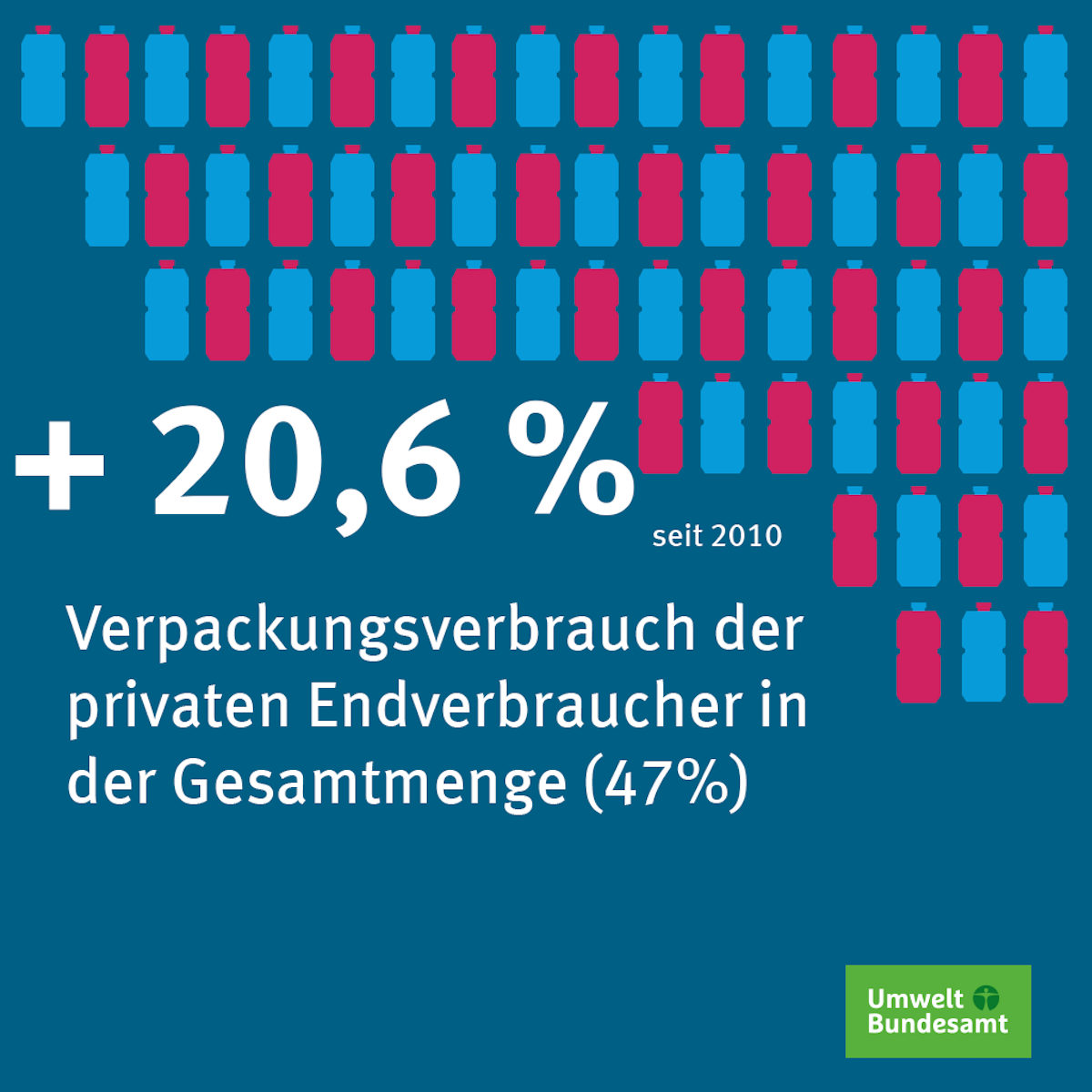
Private end consumers account for 47 percent of the total volume, i.e. over 8.9 million tonnes or 107.7 kg per capita. This is 1.0 per cent more than in the previous year and 20.6 per cent more than in 2010. The head of the Federal Environment Agency takes the current figures as an opportunity to call for the continued avoidance of packaging.

Recycling rates still offer potential
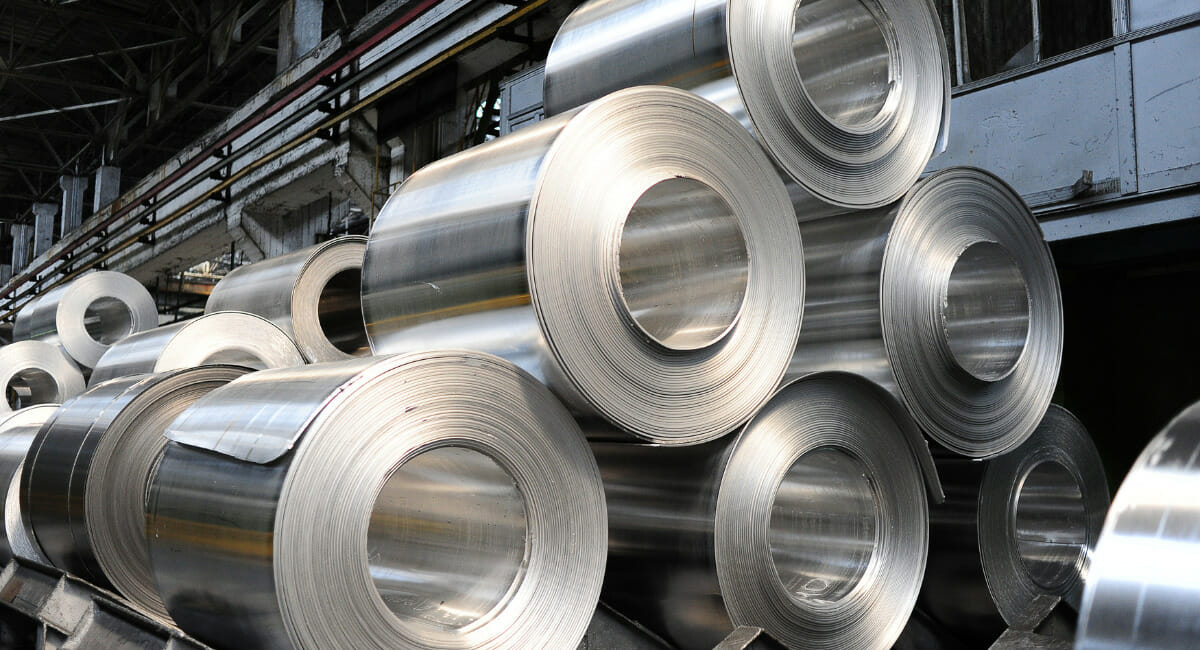
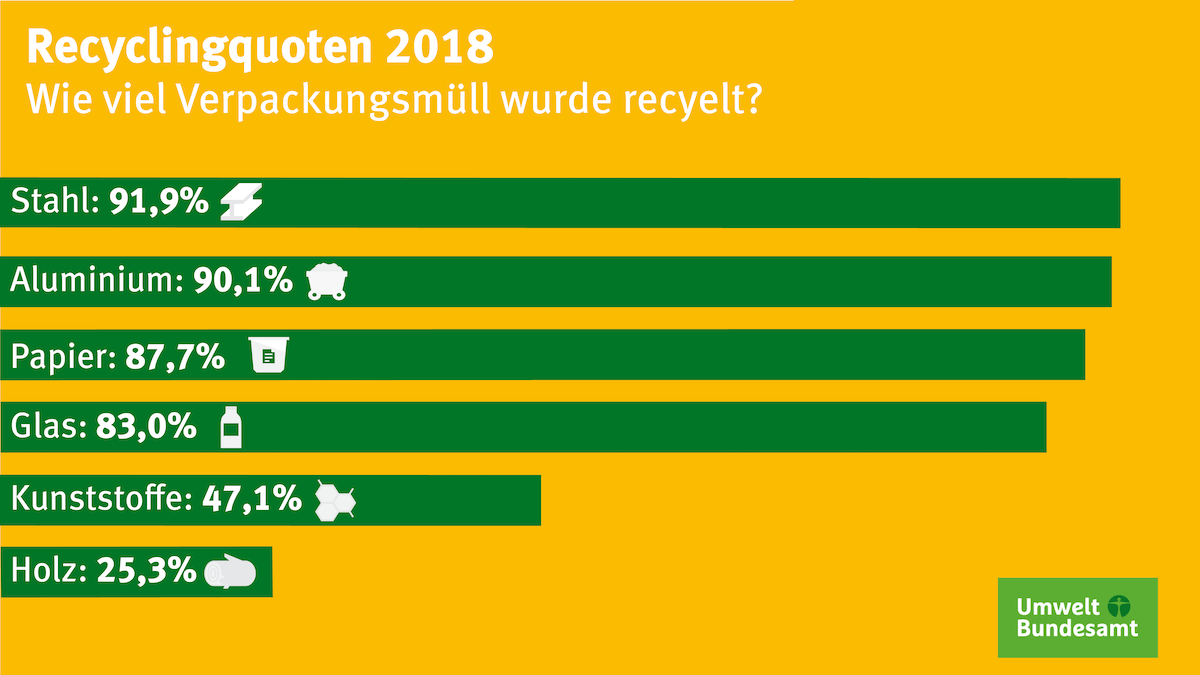
Even though Germany continues to be a pioneer in the recycling of packaging, there is still room for improvement: 69 per cent of the total packaging waste generated was recycled, with the remainder being largely recovered as energy. The recycling rate achieved varies for the different materials. It is comparatively high for glass (83.0 %), paper/cardboard (87.7 %), steel (91.9 %) and aluminium (90.1 %). However, there is still a lot of recycling potential for plastics (47.1 %) and wood (25.3 %).
„Recycling is generally the best way to utilise packaging waste. That's why the recyclability of packaging and the use of recyclates are crucial aspects of a circular economy. We need to get back to increasing recycling rates.“
Dirk Messner, President of the Federal Environment Agency
From 2019, the new Packaging Act will come into force, which, among other things, requires the dual systems to achieve higher recycling rates. Since 2019, the recycling rate for plastic packaging has been 58.5 per cent, rising to 63 per cent in 2022. In addition, the dual systems must now take into account the recyclability of packaging and the use of recyclates in their participation fees.
Corona effects not yet investigated
There are many reasons for the high level of packaging consumption. One key driver is economic growth, as more products also lead to more packaging. It is not yet clear how packaging consumption has developed during the coronavirus pandemic. However, due to the closure of shops and restaurants, it can be assumed that more service packaging for food and drinks in particular has been consumed.
Consumer habits are also responsible for more packaging waste. One example is the Trend In the case of disposable packaging, the trend is towards resealable packaging, dosing aids and generally more complex closures. These functions can help to conserve resources through targeted dosing or to avoid food waste. However, the Federal Environment Agency points out that additional functions are often associated with increased material consumption
Call for more reusable packaging
UBA packaging expert Gerhard Kotschik sees only one way to reverse the trend towards more packaging waste: We need to focus more on reusable packaging. The proportion of reusable beverages is still falling. More use should be made of reusable cup systems for coffee-to-go and reusable solutions should be used for food-to-go and online retail.
Source: Federal Environment Agency