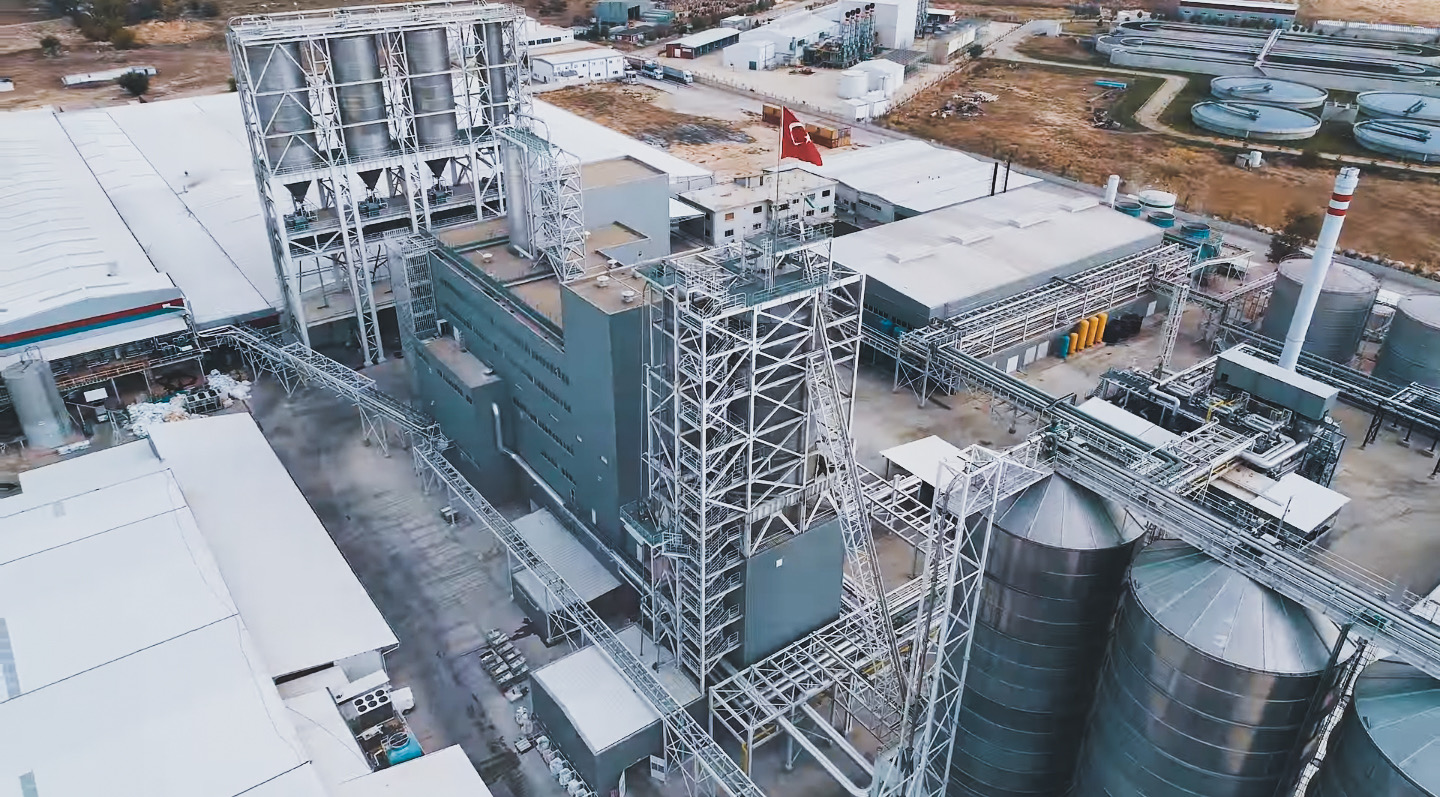
thyssenkrupp is building a second plant for the production of PET for the Turkish packaging manufacturer Köksan. The plant will be built in Gaziantep (Turkey) next to an existing production line that thyssenkrupp installed in 2013.
This ensures the Production capacity of the site increased to 432,000 tonnes of PET per year. Completion and commissioning are planned for 2022.
In the new plant, the water used by the thyssenkrupp subsidiary Uhde Inventa Fischer patented, particularly energy-saving melt-to-resin (MTR) process for use. Köksan intends to further strengthen its market position with the investment in the new plant. The PET produced will be supplied to the local market as well as exported to countries in the Middle East, the CIS, America, Europe and Africa.

„We are very proud that Köksan has chosen us to build another state-of-the-art PET plant. Our proven MTR process offers many advantages over conventional technologies, such as optimised energy consumption and lower production costs. In addition, the plant can be fed with a certain amount of recycled PET to meet the changing needs of customers and local authorities.“
Werner Steinauer, CEO of Uhde Inventa-Fischer
The order includes the licence, the engineering, the delivery of all essential plant components and the Supervision of assembly and commissioning. In addition, Köksan's operating personnel are trained by thyssenkrupp specialists.
„We are very pleased to announce the signing of the second contract with thyssenkrupp, as the first production line in Gaziantep is already continuously delivering excellent performance and product quality. In addition, we are currently evaluating the joint construction of another PET polymerisation plant based on chemically recycled PET for various textile and packaging applications.“
M. Murat Kökoğlu, CEO of Köksan
Economic and ecological benefits through resource-efficient production and PET recycling
The MTR process developed by thyssenkrupp is a Continuous polycondensation process, in which the process steps of solid-state post-condensation are no longer necessary in the production of PET resin. Compared to conventional technologies, this leads to considerable energy savings, reduced investment, operating and maintenance costs and greater raw material efficiency. The technology enables the production of PET with reduced CO2 emissions by reducing fuel and energy consumption by up to 30 per cent.
In addition, the systems can be connected to the Flakes-To-Resin (FTR) recycling technology from thyssenkrupp can be retrofitted. It makes it possible, up to 50 per cent of the raw materials without compromising existing food approvals for the end product. The process is based on a 2-reactor technology in which the patented ESPREE and DISCAGE reactors are used to achieve the desired high melt viscosities.
Source: thyssenkupp