One year after the introduction of tethered caps, a recent study shows that the majority of consumers in Germany find tethered bottle caps impractical.
Since mid-2024, single-use beverage containers must be fitted with closures that remain on the packaging after opening. The aim is to reduce plastic waste and facilitate recycling. The Nuremberg Institute for Market Decisions (NIM) has now asked consumers what they think of bottles with permanently attached lids. According to the representative survey Around two thirds of respondents criticise the cumbersome handling - especially when drinking and pouring.
The institute surveyed around 1,000 people aged between 18 and 74 in May. 63 per cent of respondents rated the handling as worse compared to conventional lids. Only twelve per cent see no problems. Even groups with a comparatively positive attitude - such as younger people, the environmentally conscious or parents of young children - frequently report difficulties. In terms of environmental protection, 47 per cent do not consider the new closures to be useful. Even among the environmentally conscious, scepticism prevails with 41 percent

.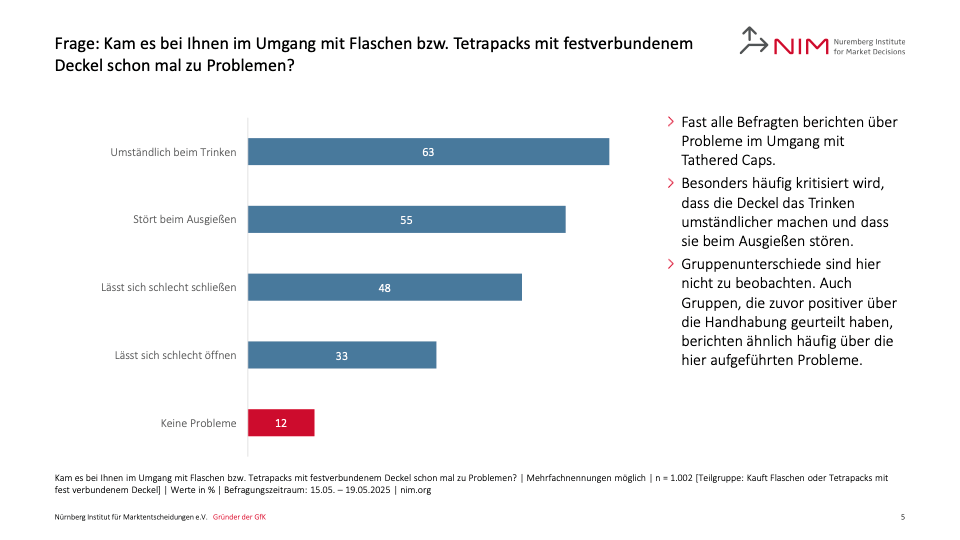
„The tethered bottle cap doesn't have many friends in Germany. Two out of three people find it worse to handle than lids without a band, and almost all of them report handling problems.“
Dr Matthias Unfried, Director of Studies and Head of Behavioural Science at NIM
However, there is no clear change in behaviour: The majority of respondents state, have not adjusted their consumer behaviour despite dissatisfaction. Only around a fifth specifically avoid such products. „As annoying as the lids are, Germans seem to have come to terms with them overall,“ summarises Matthias Unfried.
Source: NIM