Leak testing has become increasingly important in the pharmaceutical industry in recent years. As recent studies have shown, it is not only ampoules that are susceptible to defects. Other primary packaging such as vials, cartridges and syringes must also be thoroughly inspected.
26. June 2018
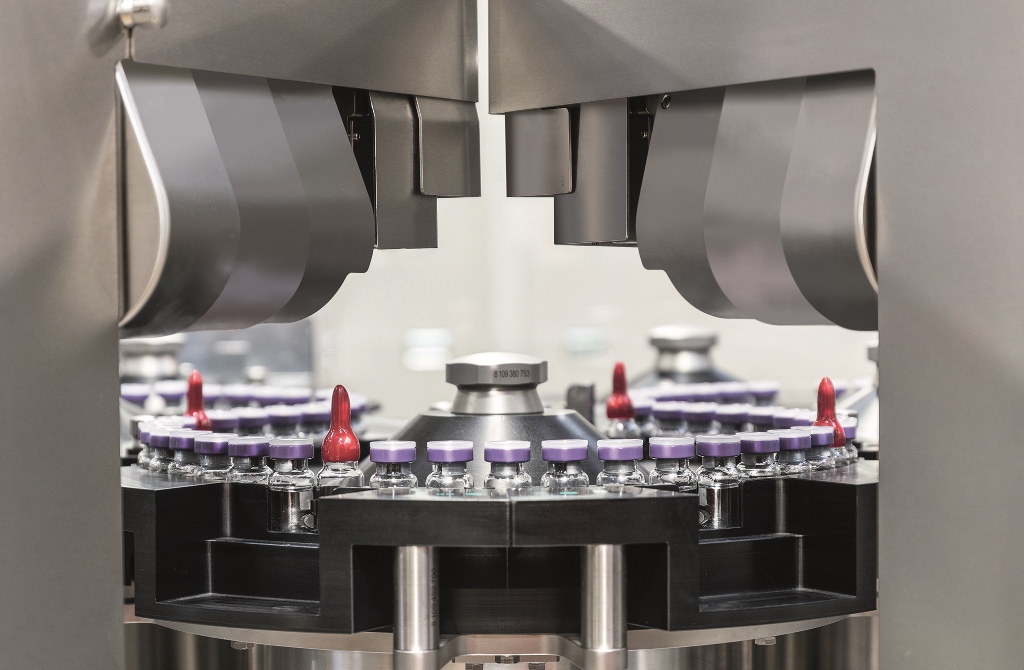
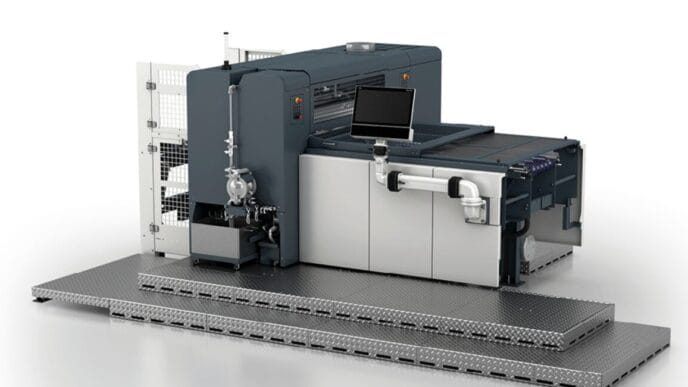
The AIM 3000 offers the option of performing visual inspection as a leak test using high voltage for ampoules and vials on one platform. Image: Bosch Packaging Technology
Leak testing has become increasingly important in the pharmaceutical industry in recent years. As recent studies have shown, it is not only ampoules that are susceptible to defects. Other primary packaging such as vials, cartridges and syringes must also be thoroughly inspected.
CCI (Container Closure Integrity) defects can pose a serious risk to patients if they are not detected before the drug is administered. Especially if the primary packaging contains lyophilised products. In fact, they pose an even greater risk than particles in pharmaceutical liquids, as they can jeopardise the change the active pharmaceutical ingredient can. Possible consequences include ineffective medication or undesirable side effects. CCI defects also jeopardise the Product stability, by favouring oxidation, hydrolysis or vacuum losses and having a negative effect on the efficacy and shelf life of the medicinal product.
The US Food and Drug Administration (FDA) defines containers and closure systems as „the totality of all packaging components that contain and protect the product“. The integrity of these systems is crucial for the Product and patient safety.
Mahmoud Hamada
„The United States Pharmacopeia (USP) has revised its General Chapter 1207 and requires More quantitative and tested CCI test methods (Container Closure Integrity). Non-destructive technologies are likely to play a central role here in the future,“ says Mahmoud Hamada, Bosch Packaging Technology, Business Development Inspection Technology.
Display
Probabilistic and deterministic methods
The current revision of USP Chapter 1207 aims to provide an overview of common CCI test methods and identify those that contribute most to product and patient safety. Probabilistic methods are based on qualitative Information including human judgement. Deterministic methods on the other hand are Quantitative and therefore less error-prone. Chapter 1207 also distinguishes between destructive and non-destructive methods. The test with methylene blue, for example, is a classic probabilistic, destructive method in which the packaging is immersed in blue-coloured water. The method not only renders the product unusable, but also proves to be susceptible to human error. Preferred deterministic methods include non-destructive technologies that protect the often expensive product inside the container.
Each product and manufacturing process requires a careful selection from existing methods and may consist of more than one technology for each process step. In view of new packaging formats and pharmaceutical formulations, regulations must also extended beyond its current scope be checked. According to Annex 1 of the European GMP, melted containers, such as glass or plastic ampoules, should be subjected to a 100 per cent integrity check.vials, syringes and cartridges place even higher demands on the integrity of containers and closures than ampoules, as they are made up of different components.
The KHS 1 is suitable for checking the integrity of ampoules, vials, bottles, cartridges and syringes. (Image: Bosch Packaging Technology)
Freeze-dried products
In terms of drug development and testing requirements, lyophilised products play a central role in drug production. Each lyophilisation process step carries its own risks and requires very precise control of both the product and the container and closure system. The actual filling process of vials is already proving to be a challenge in terms of Product sterility and Packaging integrity as particularly demanding. The stopper is placed on the vial but not immediately sealed. In addition, a wide variety of defects can lead to leaks in sterile vials, for example due to inaccurately placed stoppers or closures, fibres on the edge of the vial or stoppers and vials that do not fit together perfectly. Cracks in the container glass, improper handling or incorrectly adjusted machines can also cause leaks. In fact, the same reject rates can occur with freeze-dried vials as with ampoules. However, 100 per cent CCI control is only mandatory for ampoules, but not for other types of containers. However, experts expect that the guidelines will soon be adapted accordingly.
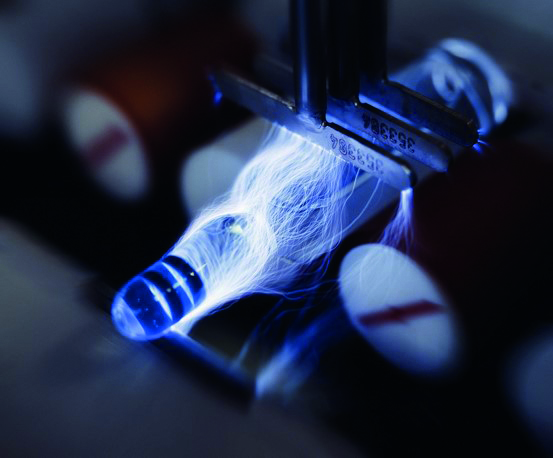
The high-voltage leak test (HVLD) detects leaks in the container wall. (Image: Bosch Packaging Technology)
Broad spectrum of CCI testing technologies
Numerous deterministic, non-destructive processes are already available on the market. Adapting the USP therefore does not require the development of entirely new technologies. Instead, it changes the way in which the industry assesses and applies these methods. Drug manufacturers are encouraged to do so, Technologies which Significantly increase quality assurance and inspection rates. Which technology is used for the leak test depends on the specific product and container properties, for example conductivity, headspace parameters, alcohol content and active pharmaceutical ingredients.
The leak test carried out using high voltage or. High-voltage leakage detection detects leaks in the container wall. HVLD is used to inspect container and closure systems, including parenteral vials, prefilled syringes and cartridges, as well as plastic containers, bags and pouches containing pharmaceutical liquids, suspensions and oily products. The non-destructive method for measuring vacuum or pressure loss is suitable for liquid dosage forms, freeze-dried products and dry powders. It can be used to identify leaks in the packaging.
The Headspace analysise (HSA) is suitable for freeze-dried products and pharmaceuticals that have been filled under vacuum or purified with gas. Using laser spectroscopy, it measures the amount of light that flows through the gas space and checks for changes in the gas composition in the headspace or its total pressure.
New solutions inspect upright and non-upright containers at outputs of up to 600 pieces per minute and offer a combination of headspace analysis, near-infrared (NIR) measurement and coding. To ensure maximum reliability and accuracy, the measuring modules are automatically monitored using certified reference containers.
Selection of suitable technology
In order to determine the appropriate test method for each product and container, a Comprehensive product knowledge elementaryDoes the product react sensitively to oxygen or moisture? Does it require a specific vacuum value? What is the structure of the molecule? What critical defect size needs to be determined to ensure sterility and integrity of a product throughout its shelf life? By carefully selecting the appropriate technologies, drug and equipment manufacturers can work together to find suitable solutions that fulfil the regulatory requirements. The next step is to Speed and accuracy of the required system to determine.
Machine manufacturers who are familiar with both the market and the legal requirements provide valuable support in all of these steps. Together with validation and qualification concepts as well as additional consulting services, customers receive much more than just a machine. While the pharmaceutical industry is increasingly focussing on 100% CCI control, leading equipment manufacturers such as Bosch Packaging Technology already have a comprehensive portfolio of visual inspection and CCI control processes. This provides every pharmaceutical manufacturer with a customised solution that meets the requirements of the active pharmaceutical ingredient, dosage form, container type and size.