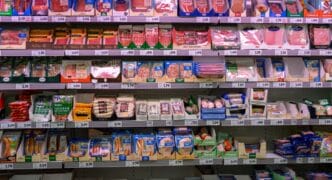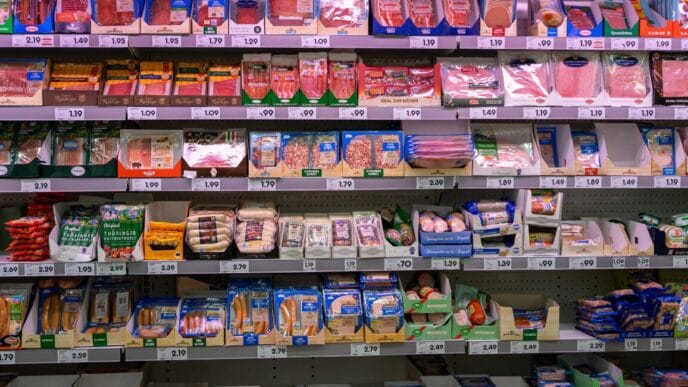
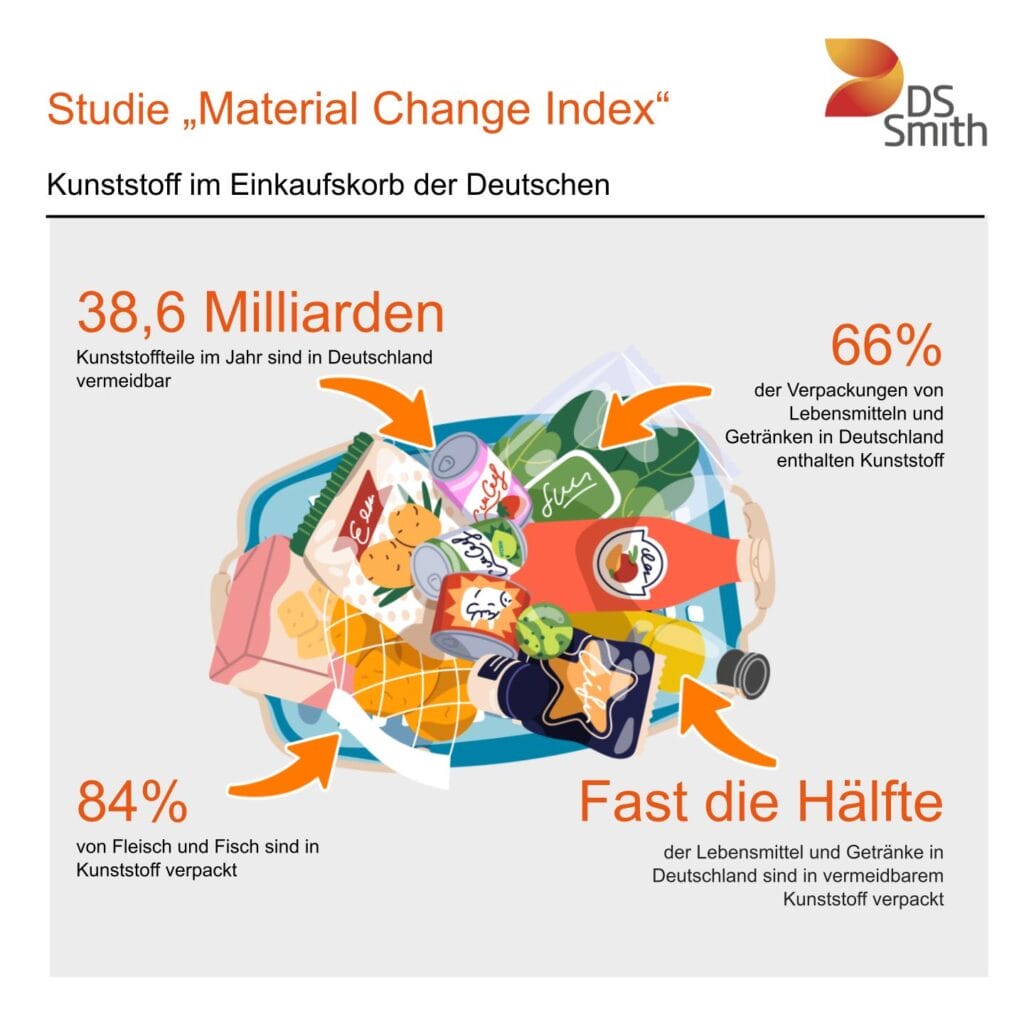
Almost half of the products in German supermarkets are unnecessarily packaged in plastic. This is according to a study conducted by Retail Economics on behalf of DS Smith.
Food manufacturers and retailers fear that a change in packaging will make them uncompetitive. Seven out of ten (72 %) believe that customers would not be prepared to pay more for sustainable packaging, and almost two thirds (65 %) are of the opinion that they would not be prepared to sacrifice comfort for sustainability.
Many rely on plastic packaging
The study analysed packaging materials in 25 of the most popular supermarkets in six European marketsThe countries surveyed are the UK, France, Germany, Italy, Spain and Poland. The results show that the proportion of plastic packaging in Germany is around 66 per cent, putting it in third place together with Italy. The United Kingdom is most dependent on plastic packaging70 per cent of all food and drink on UK shelves contains plastic, followed by Spain (67 %), Germany and Italy (66 %), Poland (62 %) and France (59 %).

„Food manufacturers have committed to replacing plastic packaging. However, the reality shows that this is often is not implemented as long as objectives are voluntary. The EU has already introduced a number of rules for a gradual ban on certain plastic packaging. We welcome this approach in principle, but we have observed that many companies fear that they could be confronted with additional costs and competitive disadvantages as first movers of a change in product packaging. In order to drive forward a comprehensive and rapid transformation, we would like to see standardised global regulations, including with regard to the necessary food safety requirements. This is not about banning all plastic - it is about Not all plastic packaging can or should be replaced. However, the fact is that too much plastic is not recycled. For this reason, the legal framework should provide for prevention and reduction in our supply chains.”
Uwe Väth, Managing Director DS Smith Packaging Germany and Switzerland
DS Smith estimates that already now 85 per cent of unnecessary plastic in packaging in Germany could be replaced or significantly reduced by fibre-based alternatives. The company continues to invest in the development of new solutions. This includes the global research and innovation centre „R8“ near Birmingham, England, which accelerates innovations in packaging and carries out pilot programmes with some of the largest FMCG companies.
SourceDS Smith