When it comes to complex, resource-intensive customer orders, traditional project management methods reach their limits. The frequent consequences are missed delivery deadlines, resource conflicts and project delays that quickly exceed the approved budget. This is why many companies, for whom adherence to deadlines, short lead times and capacity control are critical to success, rely on Critical Chain Project Management (CCPM).
The focus is not only on the tasks themselves, but also on the dependencies and resources required for them. CCPM uses buffers and focussed control to ensure that projects are completed more reliably within the time frame. If the CCPM philosophy is to be actively implemented in the company, specific CCPM functions and a visualisation of the information that is crucial for the management and prioritisation of projects not only provide clarity, but also have a strategic benefit. The CCPM functions and visualisation of the CCPM method are not included in the standard scope of classic SAP modules such as the SAP Project System. This is why the packaging machine manufacturer Koch Pac-Systeme decided to introduce add-ons that map CCPM in SAP when it switched to SAP.
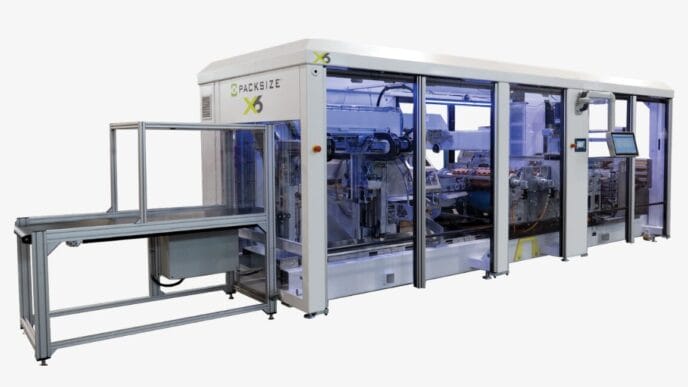
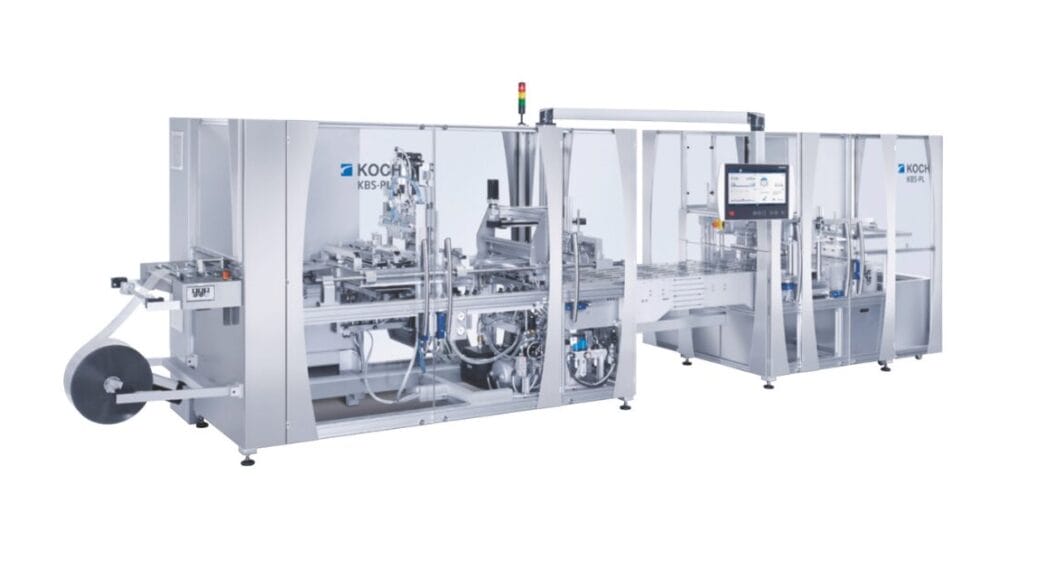
Koch Pac-Systeme GmbH is one of the world's leading manufacturers of packaging machines in the field of blister machines, carton packaging machines and packaging lines. Thanks to their modular design, the packaging technologies of the special machine manufacturer enable customised solutions for consumer goods, healthcare products and contact lenses. Today, the technology leader employs around 450 people at its production site in Pfalzgrafenweiler and in service branches worldwide. With more than 50 years of experience, the company became part of the Uhlmann Group. This was accompanied by the switch to SAP S/4HANA in order to navigate projects company-wide with standardised data. „In our old ERP solution, we had integrated functions that allowed us to live the CCPM philosophy. With the transition to SAP, the question arose as to how we could also map CCPM in the new system,“ says Hans-Martin Keppler, responsible for Business Processes and Applications at Koch Pac-Systeme, explaining the situation that led to the search for a suitable add-on provider. This was carried out by an external project manager, who also accompanied the SAP migration. In particular, a graphical capacity utilisation per workstation was to be integrated, which was to be distributed over the entire remaining project duration in order to be able to make statements about any backlogs. „There was not a large selection of suitable solutions. With SAP Lean/Critical Project Management and the PS capacity evaluation app, the overall package from Milliarum convinced us,“ says Christoph Mogath, key user at Koch Pac-Systeme, describing the selection process. The decisive factor was the opportunity to visit a reference user and experience the integration of CCPM in SAP with the Milliarum add-ons live on site. „The applications mapped the logic of how we plan and process projects, including the graphical display of worklist items,“ adds Hans-Martin Keppler.

Traffic light controls project progress and prevents bottlenecks
With PS capacity analysis and SAP Lean/Critical Project Management, project and production managers are always in control of their resources. Like an intelligent traffic light that not only controls the current traffic flow but also prevents delays, the project status is visualised graphically. Green stands for optimally utilised machines and employees: Everything is running to time here. Yellow indicates an emerging over- or under-utilisation, where targeted countermeasures can be taken. Red indicates impending bottlenecks or delays. Early identification of the critical chain, visual analyses based on SAP data and integrated buffer management not only shorten throughput times, but also significantly increase adherence to deadlines.
The CCPM methodology is based on the Theory of Constraints, which assumes that every value chain is determined by at least one limiting element, the bottleneck. By specifically controlling this bottleneck, the performance and efficiency of the entire chain can be optimised. „Our solutions provide users with a control tool that enables them to manage their projects stably, efficiently and with maximum transparency,“ says Steffen Wester-Ebbinghaus, Managing Director of Milliarum. Project managers can prioritise quickly, eliminate bottlenecks and make reliable decisions before things come to a standstill. „The worklist is the crucial point for CCPM: with Milliarum, we have implemented a traffic light logic there. Instead of controlling deadlines, we control the flow,“ says Hans-Martin Keppler. The dynamic capacity views were particularly convincing, as the team at Koch Pac-Systeme lacked corresponding graphical representations in the SAP standard.
Good interaction brings CCPM to life in SAP
To introduce the add-ons, it is necessary to prepare the projects in SAP so that Milliarum can process the data. The Milliarum CCPM solution is fully integrated into the SAP Project System (PS) and SAP Enterprise Resource Planning (ERP) and utilises the existing SAP data without redundancy. This means that data is available along the entire value chain and extensions, such as to service orders, can be mapped flexibly. The Milliarum tools access the SAP database for all process steps. This was closely supported by Milliarum on site at Koch Pac-Systeme.

The close collaboration between the internal project team, external SAP consultants and Milliarum was crucial to the successful implementation. „It was very good teamwork, which meant that we were able to use the CCPM methodology and the capacity views even after the changeover to SAP S/4HANA without any setbacks,“ summarises Hans-Martin Keppler. For Koch Pac systems in project management, this offers the advantage that planning works with buffers at the end so that delivery dates are protected. In this way, throughput times could be reduced. Projects are managed on the basis of buffer consumption instead of classic deadline milestones with the aim of optimally utilising the overall buffer and ensuring the end of the project. This allows project managers to recognise at a glance where bottlenecks occur and where attention is required. „This is ideal for our project business in special machine construction: you often have to adapt to new situations,“ says Christoph Mogath. This allows you to manage a wide range of trades simultaneously and react dynamically to the progress of the project.
Project management toolbox visualised in an appealing way
Around 80 users at Koch Pac-Systeme utilise PS capacity evaluation and SAP Lean/Critical Project Management. They particularly appreciate the capacity view, which they find flexible, clear and scalable. Individual customisation requests were also taken into account. For example, the remaining capacities were divided up according to the remaining term and it was possible to make more reliable statements about the project status. Active projects always run in the background. The entire project management toolbox is clearly available to those responsible: For example, the date can be changed, tasks extended or deadlines postponed directly on the screen. Koch Pac-Systeme has also initiated the colouring of the buffer traffic light. Today, the appealing graphic display is particularly appreciated. „Milliarum responded very flexibly to our customisation requests. These have now paid off,“ says Hans-Martin Keppler. They also appreciate the possibility of mass data changes via the worklist, so that several network operations can be reported back. The SAP standard does not offer this: it is necessary to make confirmations activity by activity. This means that changes can be summarised per project or work centre, which significantly reduces manual effort.
Manage total buffer with course to the target date
Before switching to SAP, Koch Pac-Systeme relied on flexible midmarket software. The step into the complex SAP world was a major project. „With Milliarum, we have found a counterpart to our previous solution that fulfils our requirements for implementing the CCPM methodology in SAP,“ says Hans-Martin Keppler. With the new tools, CCPM is not only understood, but also lived: instead of getting lost in the fog of vague schedules, the traffic light clearly shows where the project stands. Green means: everything is on track. Yellow signals: take a close look now. And red means: act together before things become critical. This means that project management is not a gut feeling, but a data-based decision: transparent, focussed and with a clear course towards the target date. The focus here is not on strictly controlling each individual task according to the deadline, but on managing the overall buffer that secures the end of the project. „We are pleased that our processes are stable and that we have mastered the changeover to SAP S4/HANA. There is no reason to change anything.“ Koch benefits from the continuous further development of the Milliarum solutions. For example, there are already plans to realise the SAP UI5 Overview Pages for CCPM and PS and to provide AI functions.