Uhlmann packs parenterals safely and sustainably

Suppliers such as the long-established German company Uhlmann Pac-Systeme meet the complex demands in the field of pharmaceutical packaging with innovative strength and solution expertise. With the new PTC 200 packaging centre and digital-based services, the Baden-Württemberg-based company is addressing the complex field of strategic requirements in which pharmaceutical companies, generics manufacturers, CDMOs and packaging service providers operate today.

Suppliers such as the long-established German company Uhlmann Pac-Systeme meet the complex demands in the field of pharmaceutical packaging with innovative strength and solution expertise. With the new PTC 200 packaging centre and digital-based services, the Baden-Württemberg-based company is addressing the complex field of strategic requirements in which pharmaceutical companies, generics manufacturers, CDMOs and packaging service providers operate today.

The pharmaceutical packaging sector is facing a whole host of strategic and technical challenges. Solutions that allow companies to react flexibly to changing market requirements are in demand - without compromising process stability or compliance with legal and regulatory requirements. Even before the COVID pandemic and the global increase in vaccine development and production, parenterals were one of the most dynamically growing segments in the pharmaceutical market. This has not changed even after the pandemic has subsided: The number and market share of drugs that do not enter the patient's body via the intestine, but are administered via the oral route, has increased significantly. as an injection, infusion or inhalation is constantly growing.

While vaccines are usually produced and packaged in relatively large batches, many other parenterally administered drugs fall into the area of personalised medicine. This means: The quantities produced and packaged here are significantly smaller than for other classes of medication. In addition, therapeutically successful parenterals often change their dosage form during the product cycle: manufacturers aim to develop an infusion, which may only be administered by healthcare professionals in a clinic, into a product that can be easily administered in a doctor's surgery or is even suitable for self-medication. This means for the filling or packaging companies: The products that run through the filling and packaging lines change more frequently. This means more retooling, cleaning and clearance work - and therefore a growing risk to the stability of the processes.

Increased pressure from politics and society

But Parenterals place particular demands on process safetyPrimary packaging such as syringes, vials, vials and ampoules are often made of glass and are fragile. Even minor inattentiveness or inaccuracies in the process can lead to failures in the machine running time or in the packaged products. The active ingredients are also usually highly sensitive to vibration or temperature fluctuations. In order to guarantee the effectiveness of the medication, packaging lines not only have to work precisely and stably. The entire process must also be fully monitored and documented. Added to this are the regulatory requirements for device tracking and counterfeit protection of the products: Depending on the regulatory requirements, all companies involved in the production, filling, packaging and delivery process must make the central process data traceable down to the individual vial or ampoule.

Display

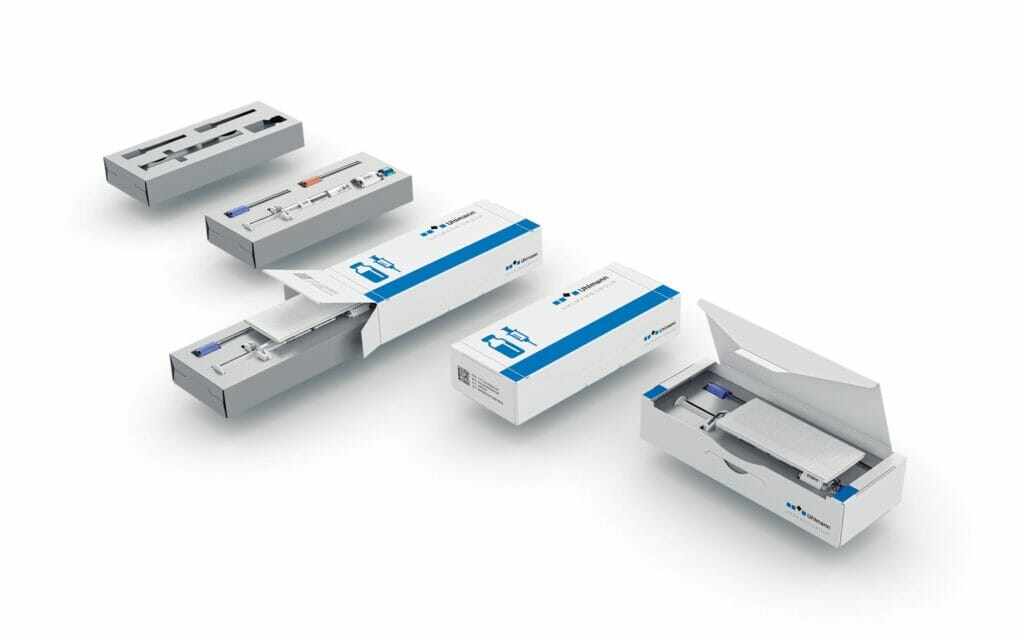
With the PTC 200, Uhlmann Pac-Systeme offers a solution for packaging parenterals completely, from the tray to the outer packaging, safely and in compliance with regulations. (Image: Uhlmann)

Until recently, sustainability criteria played almost no role in the design and realisation of packaging for parenterals. Parenterals are therefore no different from other medicines and medical devices: From a regulatory point of view in particular, the focus in packaging development was sensibly on its protective function and safe handling. Conventional, often poorly recyclable multi-material packaging made of plastic and cardboard was hard to beat in terms of cost, process reliability and user-friendliness. This situation is currently changing: Worldwide, the focus is on recyclable and environmentally friendly packaging solutions with the lowest possible CO2-Footprint significantly increased, and pharmaceutical and medical products are no longer exempt from this. After all, the pharmaceutical industry is responsible for more than four per cent of annual net greenhouse gas emissions - putting it ahead of even the automotive industry. Doctors, patients and the general public are also increasingly demanding more sustainable processes and solutions from the pharmaceutical industry.

Politicians are also increasing the pressure and are in the process of introducing new regulations for greater sustainability. A plastic tax has been in force in the UK since April 2022, for example, while a similar tax will come into force in Italy and Spain in 2023. Other EU countries are using other financial or regulatory mechanisms to significantly reduce the amount of non-recycled plastic waste. The EU states are thus responding to a requirement of the EU Commission as part of the European Green Deal. However, the reduction of plastic and plastic packaging is also a high priority in the climate and environmental strategies of many countries outside the EU. Strict plastic bans are already in force in some African countries. In the Asian economic area, the introduction of taxes and levies on plastic packaging that is difficult or impossible to recycle is expected.

Flexible packaging of medicines thanks to modular design

For less process-sensitive products such as tablets, it is relatively easy to switch to packaging materials that are easy to recycle. Especially as there are now enough suppliers on the market, particularly in the area of mono plastics such as mono PP film, to ensure a second-source supply. And the success of packaging solutions such as the BEC 400 from Uhlmann Pac-Systems shows that even the challenging handling of mono PP films has been reliably solved in the Solida blister range.

Designing sustainable packaging for parenterals places even greater demands on the process and material. This is because the parameters of parenteral packaging described above do not change: fragile primary packaging, sensitive active ingredients, high demands on track-and-trace processes, smaller batches and changing product formats. With the Parenteral Tray Centre PTC 200 pharmaceutical manufacturers and service providers now have a cartoning solution at their disposal, which can process a wide range of packaging materials, formats and closure mechanisms as well as up to six parenteral products.

With the PTC 200, Uhlmann Pac-Systeme offers a solution for packaging parenterals completely, from the tray to the outer packaging, safely and in compliance with regulations. (Image: Uhlmann)

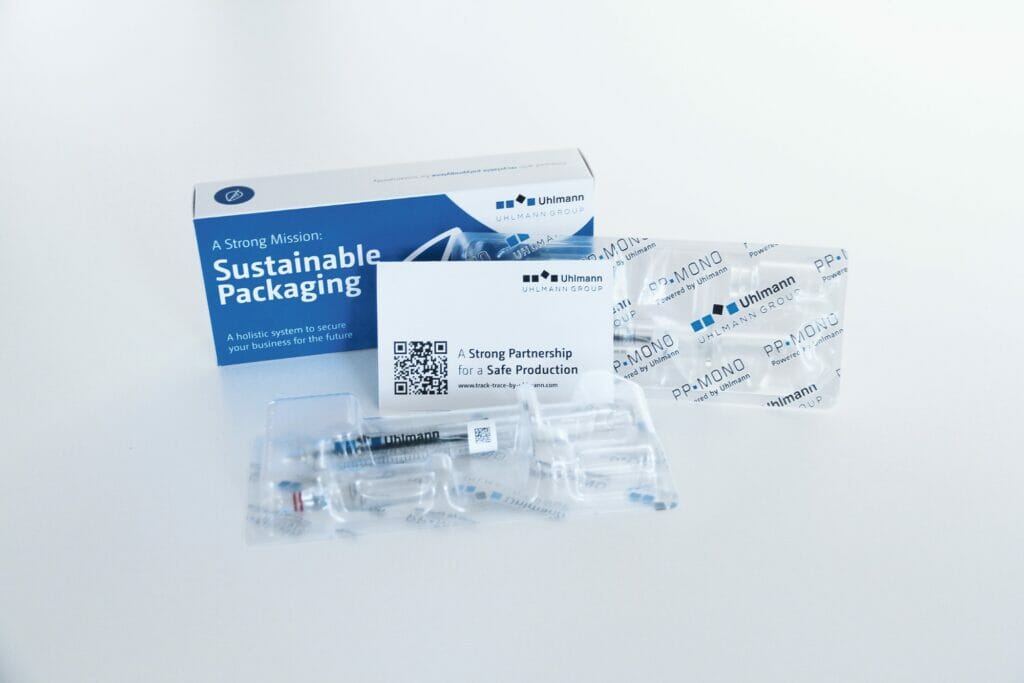
The main benefit in terms of sustainability lies in the flexibility of the packaging material: the PTC 200 loads plastic trays just as reliable and safe as trays made of cardboard or paper fibre. Cardboard or paper fibre trays are available in numerous formats and are aligned with international guidelines on climate protection - such as the Carbon Disclosure Project (CDP), the United Nations Global Compact (UNGC) and the Global Reporting Initiative (GRI).

But the flexibility of the machine concept is also impressive beyond this: The modular design of the machine enables the use of up to three different feed modules and up to six different automatic or manual product feed systems. Thanks to the different, quick-change feed systems, the PTC 200 packages syringes and needles, vials, ampoules and cartridges just as safely as pens, injectors or other products. This means that the entire life cycle of a medication can be covered. Customers with the PTC 200 have a similarly broad range of locking options: Push-in closures and tamper-proof closures with hotmelt standard up to the fourth flap are possible, as are top-opening folding boxes.

The PTC 200 is amazingly fast when set up or converted to new product or packaging formats: A complete changeover is possible with two people in half an hour. When operating the PTC 200, no special training is required for the machine operator. The SmartControl operating system guides the operator intuitively through the format changes and provides support during operation. This ensures Optimum process reliability and fast commissioning also by less experienced employees.

http://www.uhlmann.de