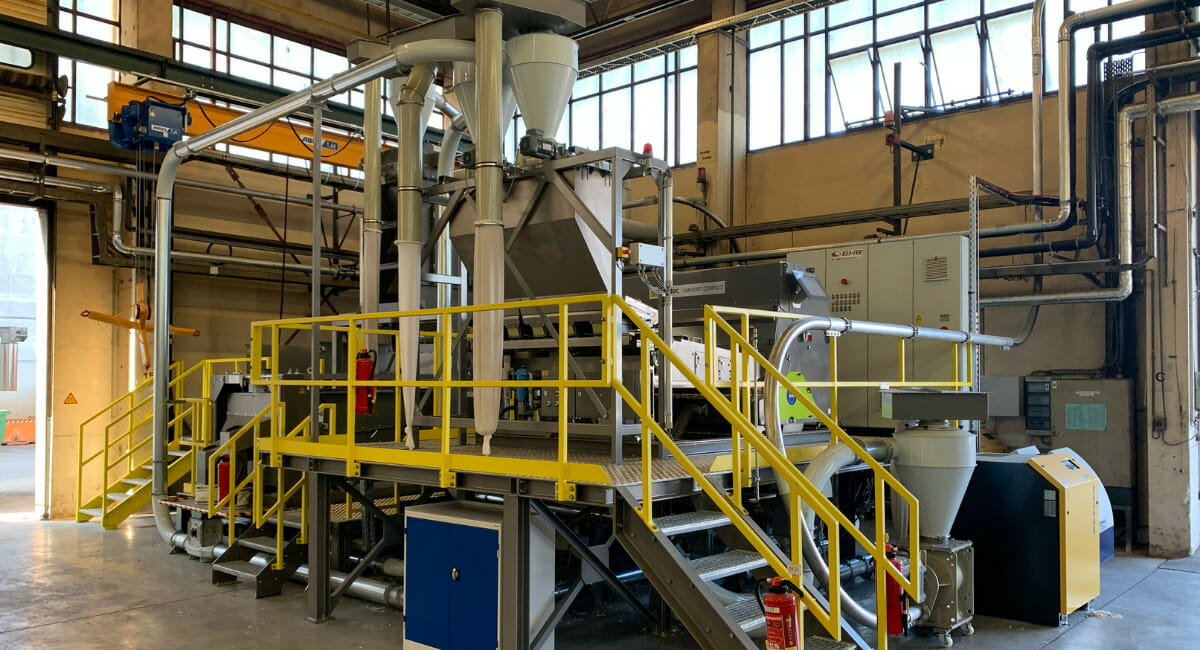
Veolia subsidiary Multiport GmbH is investing in a plant for processing recycled HDPE from packaging waste and will be able to separate rHDPE regrind by colour in future.
It is possible thanks to modern technology and an automated process, rHDPE regrind to be sorted separately by colour, This means that regrind and then compounds can be processed and customised accordingly. Multiport GmbH in Bernburg, Saxony-Anhalt, is one of the first companies in Germany to utilise this technology.
„By using this new sorting module, we are able to fulfil the requirements of the packaging industry. after light-coloured recyclates for reuse in packaging.” Herbert Snell, Managing Director of the Veolia subsidiaries Multiport GmbH and MultiPet GmbH.
Since Multiport GmbH was founded 30 years ago and the PET recycling plant was commissioned 20 years ago, the Bernburg site has been continuously invested in the development of plastics recycling. „We started processing mixed plastics in 1991 and used them to manufacture concrete and wood replacement products for the construction industry,” says Herbert Snell, describing the beginning. “We are now one of the most important compound manufacturers for rHDPE and, together with MultiPet GmbH Part of the European competence network in the field of plastics of the globally active Veolia Group”.

Veolia operates one of the largest plastics recycling sites in Europe
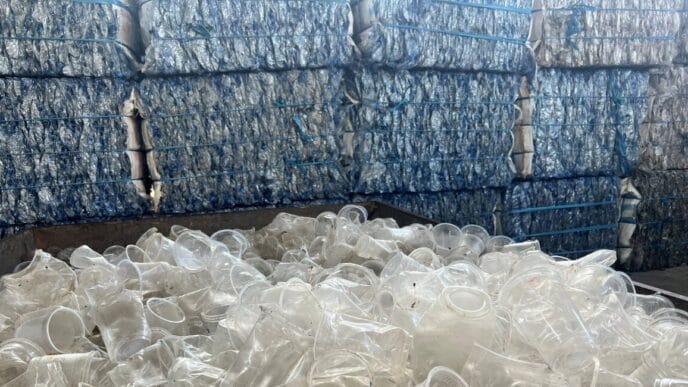
In Bernburg operates Veolia with its two subsidiaries, is one of the largest recycling sites for plastics in Europe with a Total capacity of around 70,000 tonnes per year. Multiport GmbH manufactures compounds and regrinds from post-consumer HDPE waste of various origins, which are reintroduced into the manufacture of plastic products either on their own or as an admixture, thus replacing virgin material.
MultiPet GmbH also uses a special recycling process to produce PET flakes in different colours and qualities which serve as a starting material for new products in the plastics industry.
According to a recent study by the University of Magdeburg-Stendal, 1.40 kg of CO₂ equivalents can be saved per kilogramme of compounds produced by substituting virgin plastic with compounds from Multiport GmbH. During the production process This means that 77 per cent fewer climate-relevant emissions are released compared to the production of the same quantity of new goods. Using the rPET produced by MultiPet instead of virgin material even saves 2.18 kg of CO2 equivalents. The combined annual savings potential of both companies corresponds to 74,556 tonnes of CO2eq.
[infotext icon]The Veolia Group with over 179,000 employees worldwide, plans and implements solutions for water, waste and energy management in the interests of sustainable development for local authorities and the economy. In Germany, Veolia and its subsidiaries employ around 10,500 people at around 250 locations. They work in partnership with local authorities for more than 13 million people. They also provide customised services for private and commercial customers, retail and industrial companies. In 2020, Veolia generated an annual turnover of 1.85 billion euros in Germany in its three business divisions.Source: Veolia