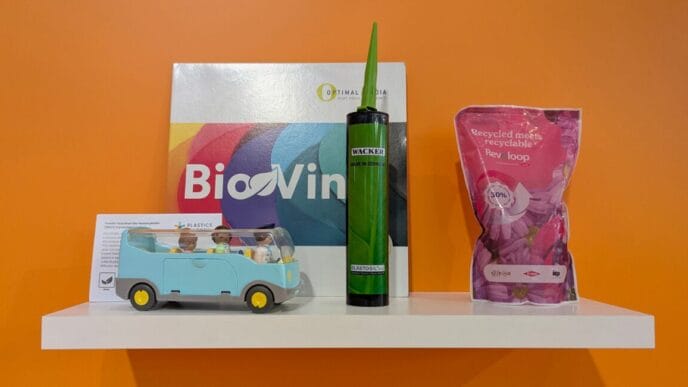
Whether screws, batteries, stationery, flower bulbs, electronic accessories or DIY items - non-food products place special demands on packaging. Folding cartons, trays, bags or blister packs not only have to guarantee protection and functionality, but also attract attention in retail, withstand shipping in e-commerce and become increasingly sustainable.
Unlike food products, many non-food products remain in their packaging for longer. Stability, resealability and simple opening mechanisms therefore play an important role. Office supplies are often sold in folding cartons or plastic boxes, batteries in blister packs and screws in transparent plastic bags. At the same time, the packaging often serves as a presentation surface: Euro perforations enable hanging placement on the shelf, while viewing windows or transparent materials provide a clear view of the product.
Alternative to classic plastic straps
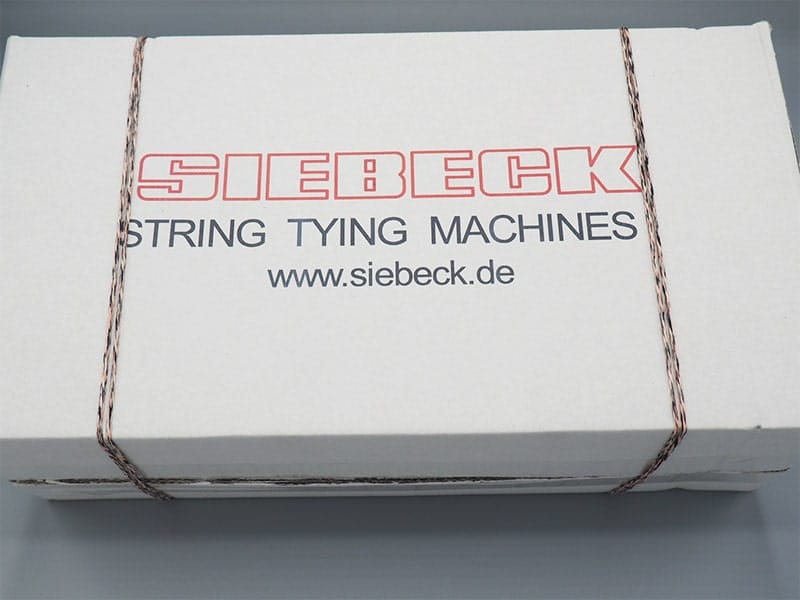
Sustainability is also a key issue for non-food packaging. Materials should be recyclable, the use of materials should be reduced and machine solutions should work more efficiently. According to interpack exhibitor Siebeck, its fully automatic strapping machine JET A50 S follows such an approach. Instead of plastic strapping, the system uses a compostable cord made from 100 per cent cotton. Different packaging heights and freely programmable lacing patterns can be realised automatically. According to the manufacturer, the technology can also be used to secure products in shipping cartons, replacing traditional padding materials.

Air cushion with reduced material usage
In the mail order business, product protection and material efficiency are particularly important. Flöter Verpackungs-Service relies on its AirWave systems for this purpose. The protection is mainly created by trapped air, which means that comparatively little material is used. In addition to classic variants, the company also offers more sustainable alternatives, according to its own information: AirWave Bio-Film is based on renewable raw materials and is biodegradable, while AirWave ClimaFilm is made from post-consumer recyclate. With AquaWave, Flöter has also developed water-soluble paper air cushions whose coating completely dissolves in the recycling process.
Sustainable additives are gaining in importance
Another starting point is auxiliary and operating materials. For example, interpack exhibitor Follmann is developing bio-based dispersions, hot melts and PSA adhesives. According to the company, the use of renewable raw materials and certified mass balance processes allows fossil resources to be reduced without having to adapt existing production processes. In addition, water-based printing inks are used, which are considered a VOC-free alternative to solvent-based systems. This aspect is becoming increasingly important, especially for eye-catching printed non-food packaging.
New concepts for primary packaging
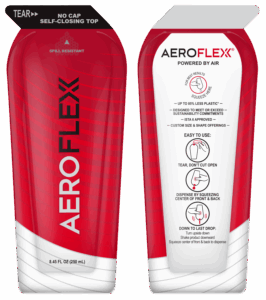
New solutions are also being developed for primary packaging. The company AeroFlexx combines flexible LDPE film with an integrated air chamber structure. According to the manufacturer, this should reduce plastic consumption by 50 to 70 per cent compared to conventional bottles. Self-closing valve technology also enables the packaging to be emptied almost completely. The concept was recently honoured with a German Packaging Award.
Tubular packaging for technical products
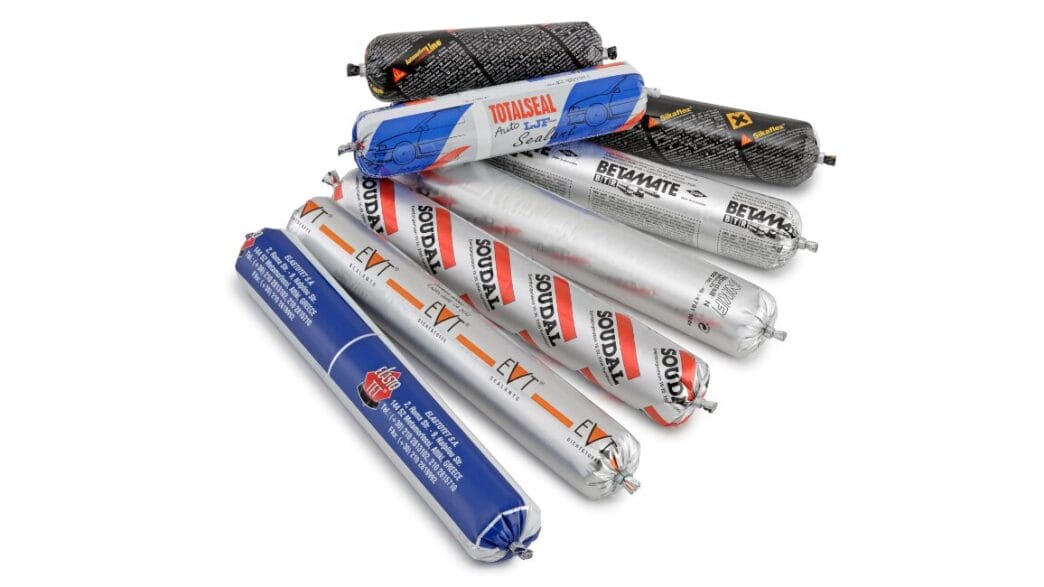
Poly-clip System is increasingly transferring its experience from the food industry to industrial non-food applications. With the automatic double clipper FCA 80, the company is presenting a machine that closes collagen, fibre or plastic casings and, according to the manufacturer, is particularly suitable for pasty or viscous products such as sealants or construction chemicals. The portions are transferred accurately to the gram and closed into individual sausages or chains using a clip.
The TSCA 120 sealing and clipping machine also processes flat film from the roll into a ready-to-fill tube. This is then sealed in an integrated clip unit. According to Poly-clip System, the process is suitable for technical products such as sealants or civil explosives and enables flexible processing of various composite films.
Reusable solutions for transport and storage
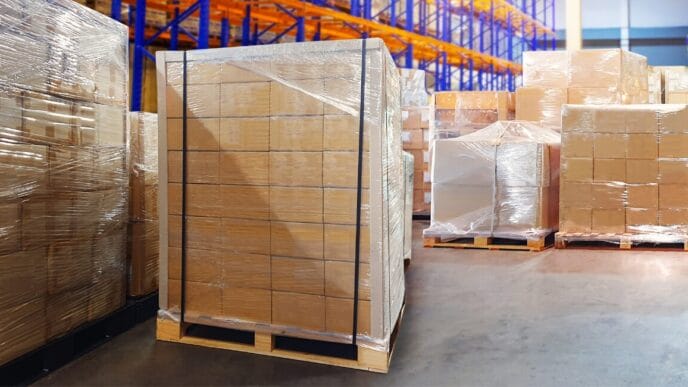
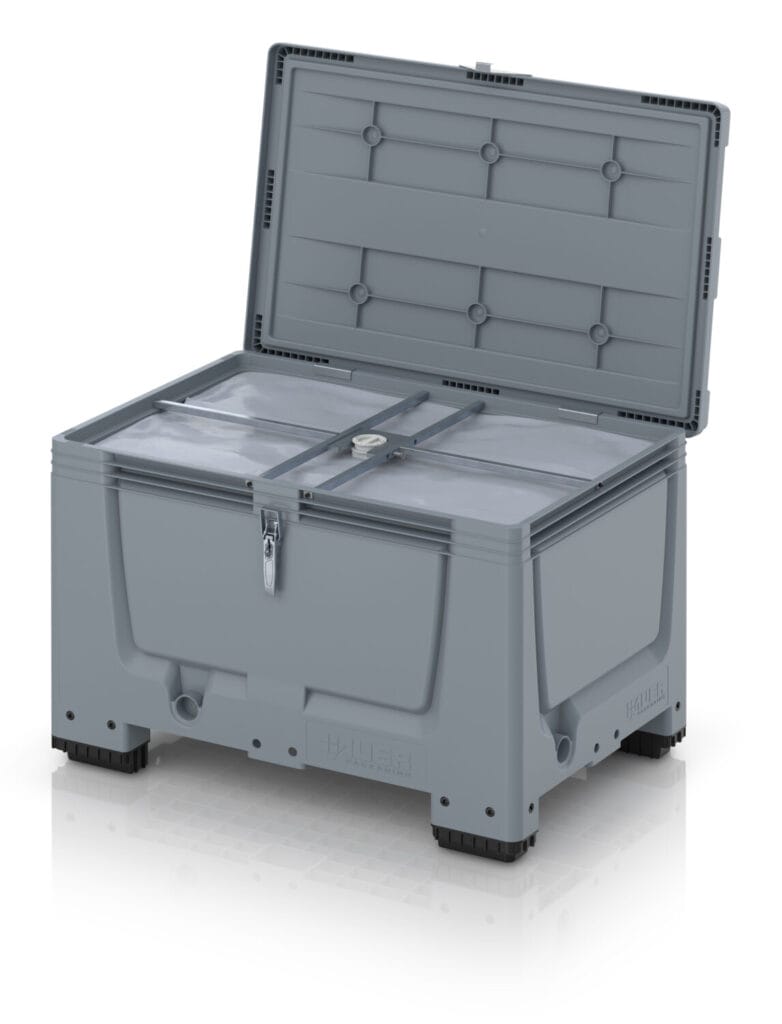
Transport packaging is also evolving. For example, Auer Packaging is showcasing the Euro container with hinged lid Pro, which is designed for applications with increased protection requirements. According to the manufacturer, an integrated rubber seal and clamping lever closures ensure protection against splash water and dust. For larger quantities of liquids or granulates, the company also offers a bag-in-box IBC, which combines a sturdy reusable container with exchangeable inliner bags.
Non-food packaging therefore fulfils far more tasks today than just product protection. It contributes to brand presentation, supports efficient logistics processes and must also fulfil increasing requirements for sustainability and recyclability.
Note: This article was written on the basis of a technical article produced by packaging journal for free use by interested media on behalf of interpack 2026. You can find the original article here. You can find out more about packaging solutions for confectionery live at interpack 2026 from 7 to 13 May in Düsseldorf.